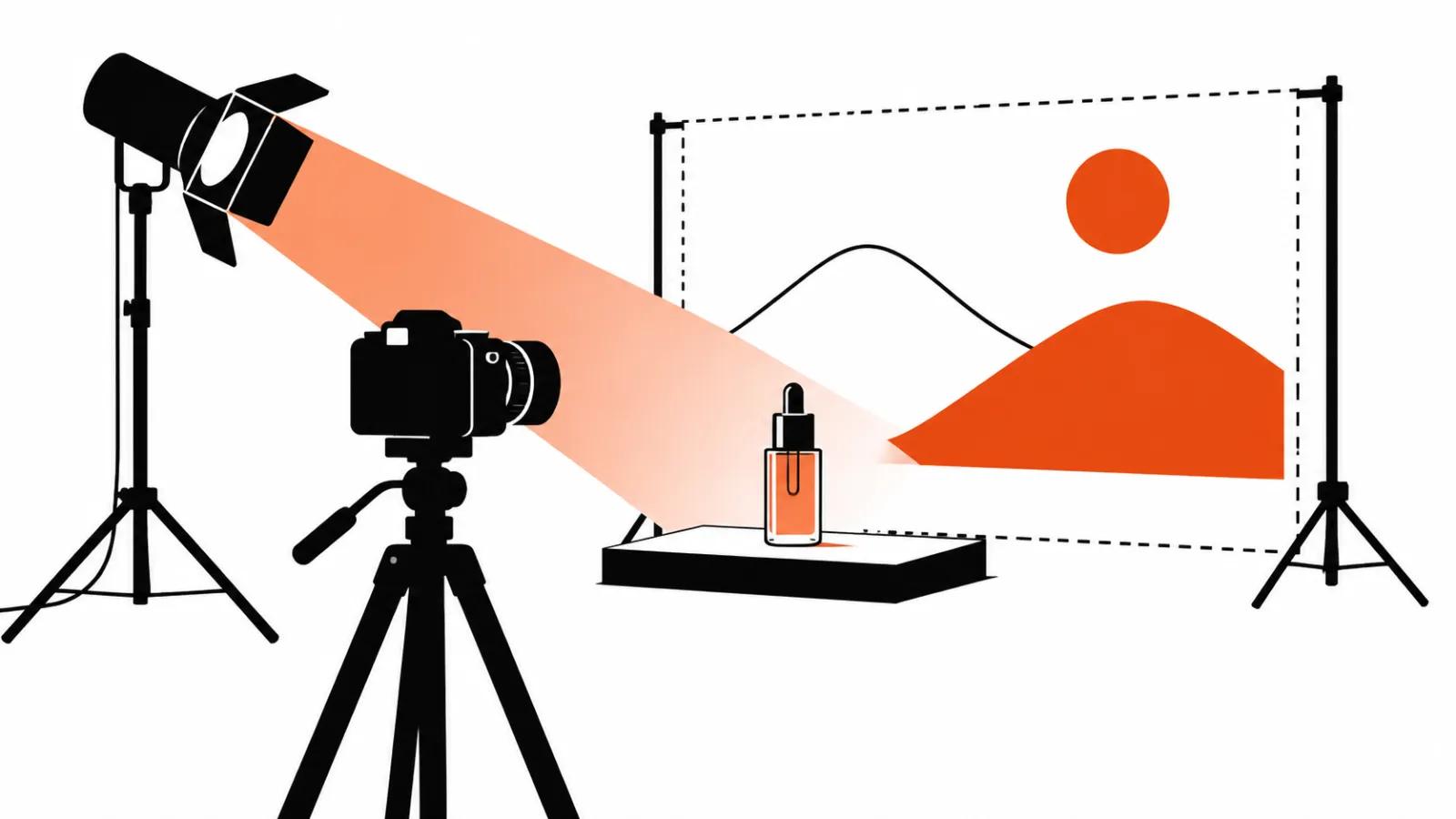
A shoot is not about the camera
Arguments about a commercial shoot usually turn to gear: which camera, which lens, how much light. Gear matters and it rarely decides the result.
Three things decide it: what is shown, why a viewer should believe it, and what they do next. The camera covers part of the image quality, while the first two are settled before it.
My position is simple. A commercial shoot produces evidence. A frame that does not prove a product claim is decoration, however beautiful. The project gets built around the list of evidence.
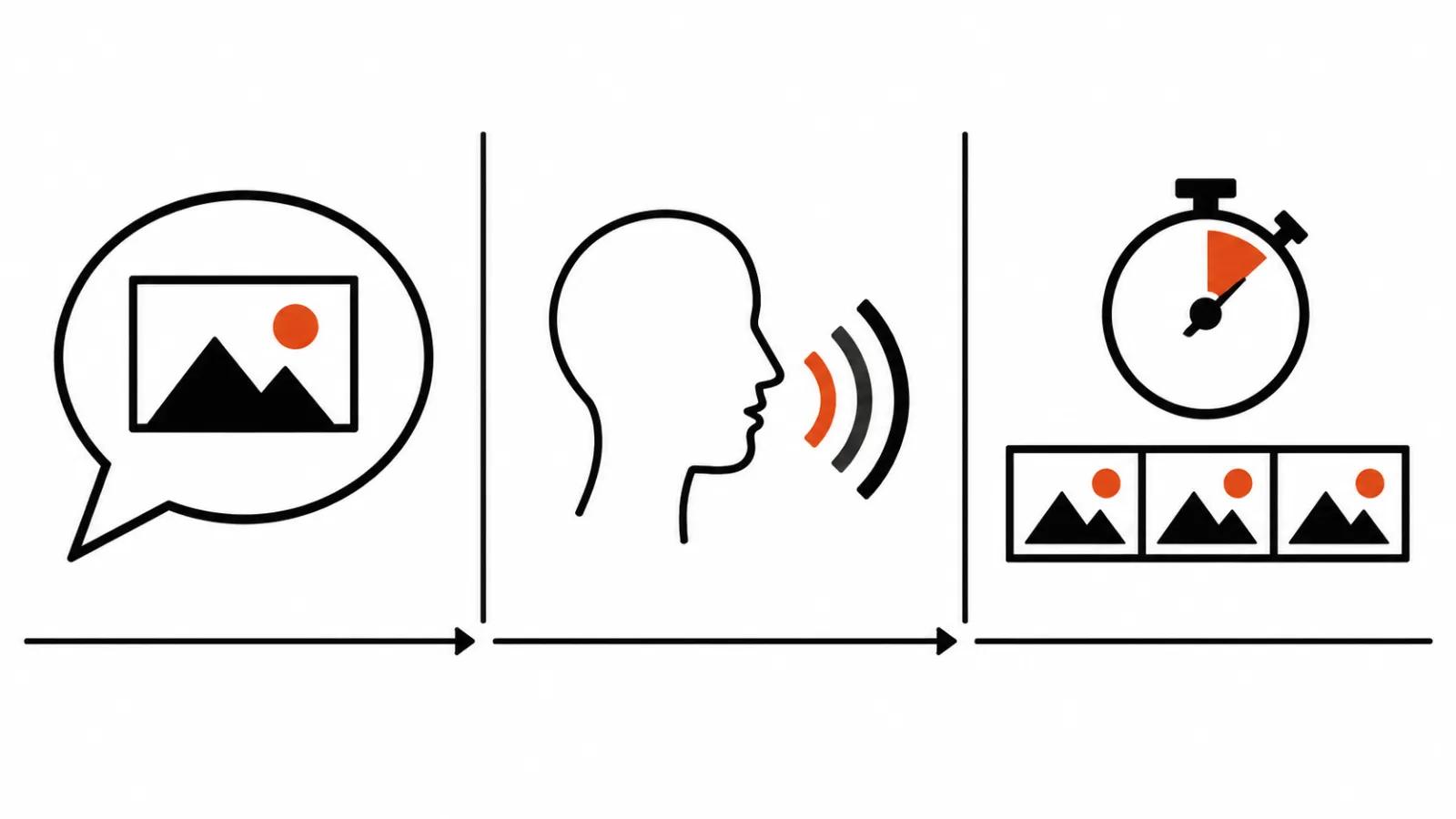
Three stages that decide the result
Stage one: prep. Shot list, storyboard, references, location, props, casting. This is also where the split happens between filmed and generated scenes.
Prep reveals the quality of a production company. If you see a portfolio and no questions about the product, the result will look good and sell nothing.
Stage two: the shoot day. Lighting, camera, takes, product control in frame. A good day follows the plan and improvises little. Improvisation on set is expensive, because every new idea costs crew time.
Stage three: post. Selects, edit, colour, sound, graphics, versions per placement. This is where viewers find quality: rhythm, cleanliness, clean cuts.
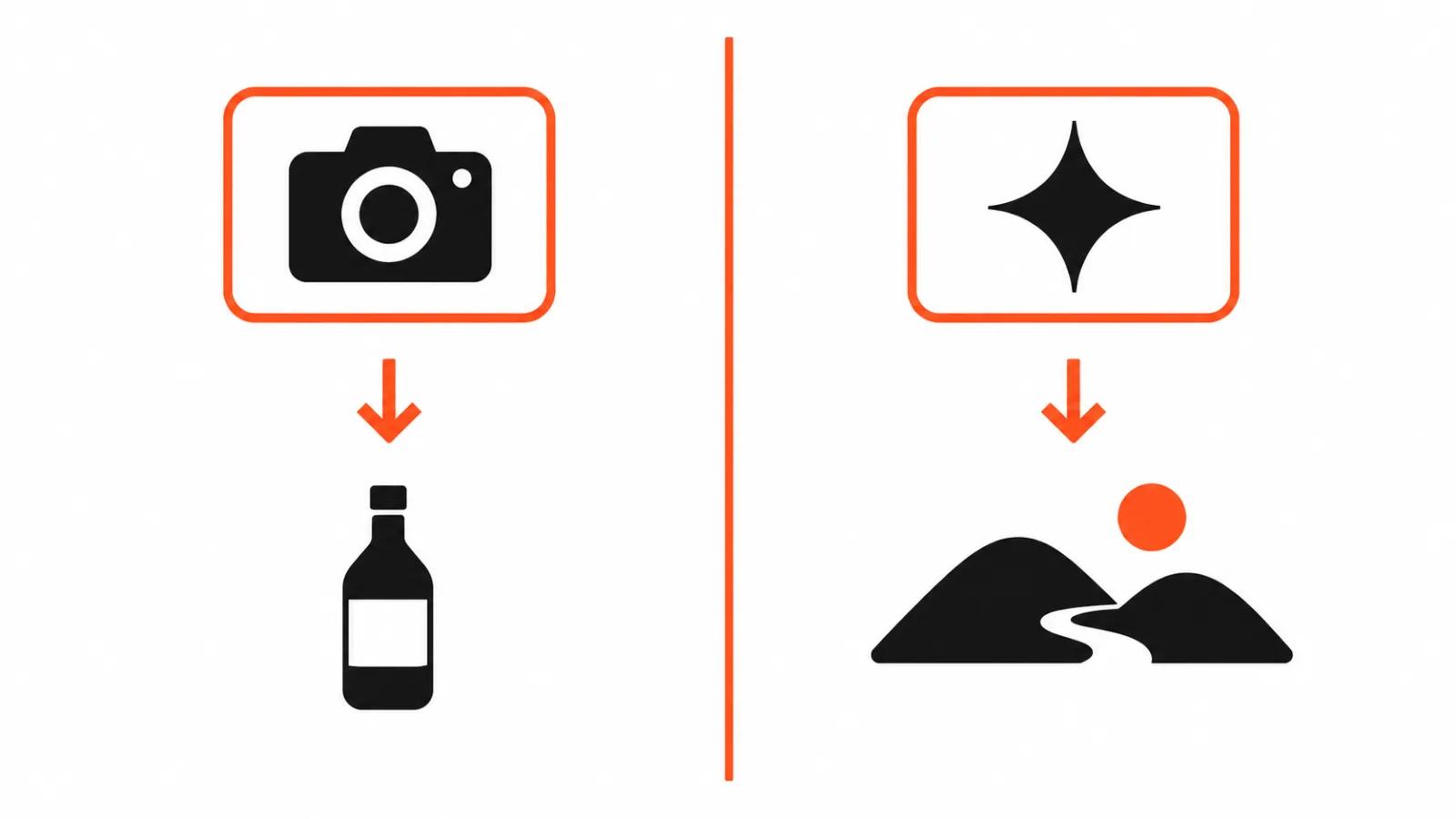
Product footage: where the camera holds
Product footage stays with the live camera. Macro texture, droplets, smoke, liquid movement, reflections in glass, hands opening a package. These either get filmed or look like an illustration.
The reason is physical. A model learns image statistics and reproduces them. When a drop must land on a surface at a specific angle, a camera and timing are simpler.
The second argument is credibility. In categories judged by eye, viewers notice substitution. A cream that does not dispense and fabric that does not crease read as a lie, even when the claim is technically true.
What is worth generating
Generation covers three jobs well.
First: environment. Backdrop, interior, landscape, season. A scene that is expensive to build and carries no proof goes to a model.
Second: impossible transitions. A product opens, shatters, reassembles. These used to be 3D work, and part of them is now faster to generate and finish in compositing.
Third: format versions. Once the main spot exists, vertical and square cuts can be extended at the edges with generation, which costs less than a second shoot.
The border sits at evidence. Anything that proves a product claim gets filmed. Anything that builds atmosphere can be generated, and the audience does not need a lecture about it when the scene never pretends to be documentary.
Where the budget goes
Clients are often surprised that the shoot day is a smaller line than prep and post. The logic is plain.
Prep is the work of a director, production designer, producer, casting and clearances. It runs for weeks and is billed regardless of how long the day lasts.
The shoot day is rental, gear and crew. Expensive and short.
Post is hours of editing, colour, sound and graphics. It stretches with the effect list and the revision count written into the contract.
So the cost question means little without a shot list. The same budget buys ten simple frames with strong lighting or three complex frames with graphics.
Rights and disclosure
Three items belong before publishing.
Image. A signed release covers models and employees. Generated characters need no release, while the model licence and likeness rules still apply.
Music. A track from a library needs a licence for advertising use. That is a separate budget line and a commonly forgotten one.
Generated content disclosure. YouTube asks creators to label realistic content generated or meaningfully altered with AI, with a setting at upload. Non-realistic scenes and minor edits stay unlabelled. When a spot contains a generated scene that reads as footage, the setting belongs on.
Advertising claims sit on top of all this. A claim about a product has to be substantiated, and a generated image does not create evidence.
How to accept the footage
Acceptance starts with the shot list. Each frame gets three checks: the product is recognisable, the property is visible, the copy is legible.
Then the technical part. Files in the right resolution and aspect ratio, clean audio, source files, versions without titles. If generative finishing is planned, frames need room at the edges.
Last, the promise check. If the product looks different from real life, that is a risk for the platform and for returns.
My conclusion
A commercial shoot is now a division of labour between camera and model. The camera produces evidence, the model produces environment and effects. Projects that make that split during prep cost less and look better.
For a commercial video built this way, start with the shot list and the list of evidence. Production then assembles like a kit: some scenes are shot as handcrafted videos, some are covered by AI video production, and vertical video ads in 9:16 come from the same material without a second day.