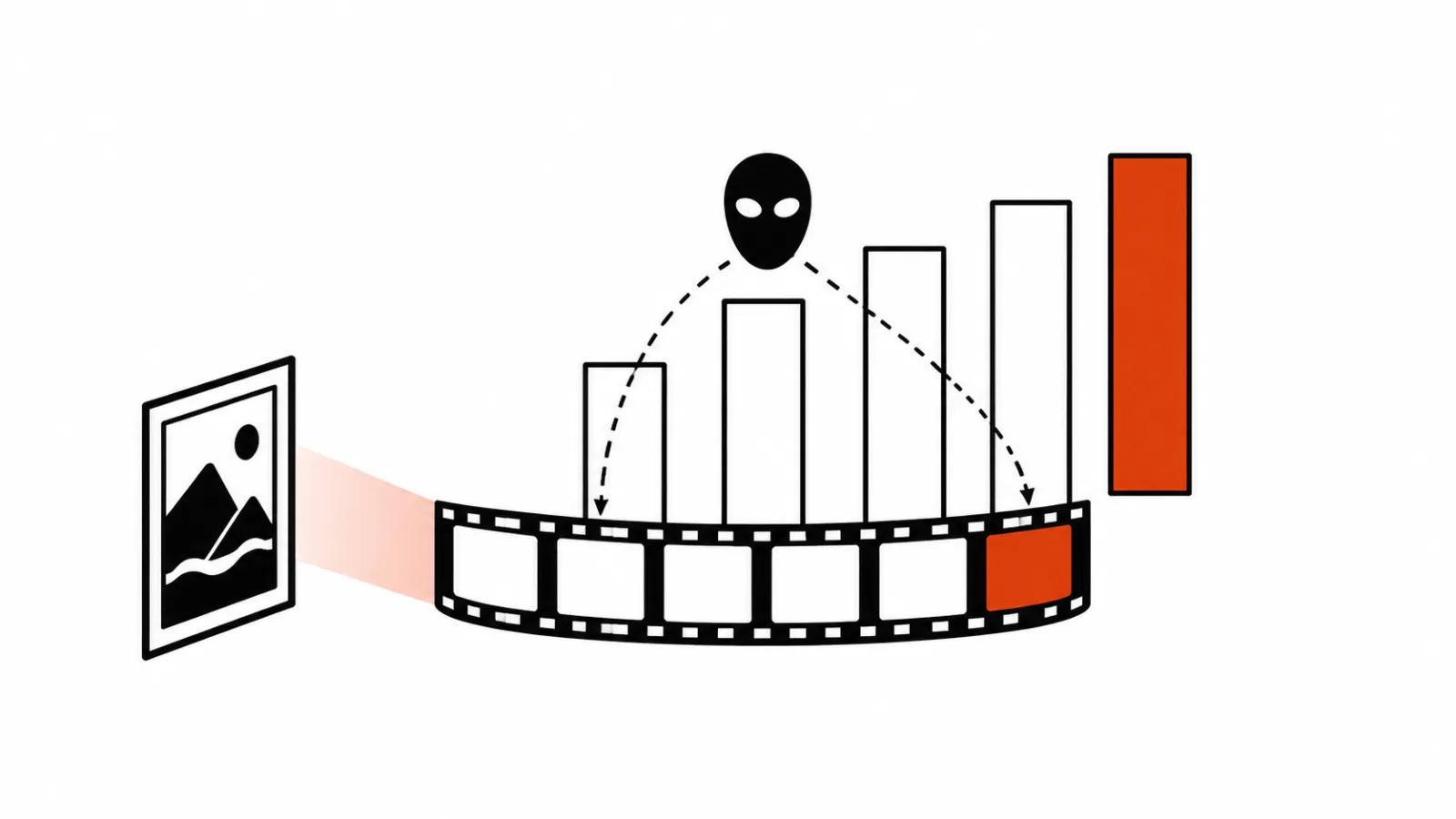
What Artificial Analysis launched on October 28
AA-Video-I2V v2.1 went live on October 28 at 16:39 UTC, the small hours of October 29 in Beijing. A silent version, AA-Video-I2V-Silent v2.1, shipped alongside it. Both handle video up to 1080p and compare models blind and pairwise: a rater sees two clips generated from one start frame and picks the better one without knowing the authors.
The announcement breakdown sits on hub.baai.ac.cn, and AA linked it from X and LinkedIn. The point is simple. Until now people argued about models using demos posted on social media. This is one shared score with a described method and a closed task set.
The AI video ranking and how points are counted
Prompts and votes. v2.1 runs on 1,000 prompts and more than 58,000 votes. The silent version uses 500 prompts and more than 44,000 votes. Raters are private panelists in the US and the UK. Five percent of prompts are public, the set rotates monthly, and votes from the open Arena stay out of the ranking.
The task. A model receives a 1920×1080 PNG start frame plus a prompt for it. Tasks are split across 10 scenarios (Marketing & Advertising among them), 10 capabilities (Human Anatomy, Text Rendering) and 8 styles.
Watching. Each clip is viewed for at least 8 seconds, audio runs through headphones, and loudness is normalised to minus 18 LUFS.
Scoring. Elo under a Bradley-Terry model, with Kling 3.0 1080p (Pro) pinned at 1000 as the anchor. The price column is the cost of one minute of video through the API.
Head to head: the top five
The five rows span 40 points, and AA states plainly that the leading positions sit within statistical error. I would not read the first row as a settled fact. Any list of the best AI video models is now a two-axis thing: the model and the job.
| Model | Elo | What stands out |
|---|---|---|
| Seedance 2.5 | 1148 | the priciest in the top ten, 34 dollars a minute |
| Seedance 2.0 | 1132 | best audio sync |
| MiniMax H3 (768p) | 1126 | open weights, 4.80 dollars a minute |
| MiniMax H3 Max | 1116 | fine-tuned by fal, top of the silent board |
| Wan 3.0 | 1108 | first in text-to-video |
Who wins what
Seedance 2.5 leads 11 categories, among them anatomy, camera control, retail and e-commerce. Seedance 2.0 takes audio sync and the light and materials group. MiniMax H3 (768p) wins text rendering. MiniMax H3 Max owns the silent board, and audio sync is its weakest spot.
Among open models H3 (768p) leads by 209 points, with LTX-2.5 Fast at 917. The price gap mirrors the score gap: 34 dollars a minute against 4.80 for the open model, roughly seven times cheaper.
Why generating video from a photo has a different leader
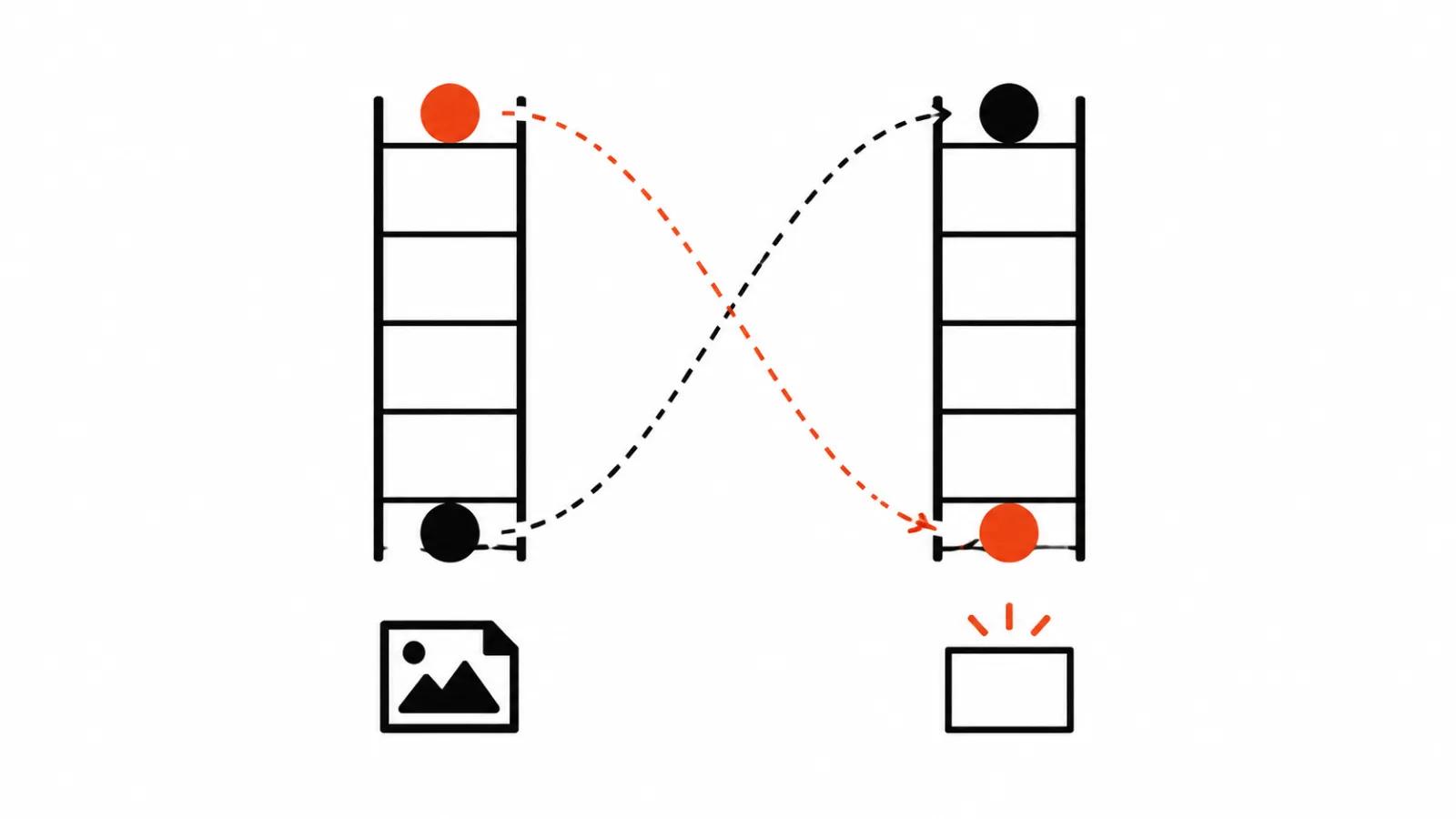
The interesting part of the release is the shuffle between the two boards. Wan 3.0 is first in text-to-video (AA-Video-T2V v2.1) and fifth in image-to-video. Seedance 2.5 runs the other way: fifth in T2V, first in I2V. In cartoons and anime it climbs from 7th in T2V to 1st in I2V. The ranking is recomputed continuously, and those jumps show how much the order depends on the kind of task.
The business read is short. Animating a finished frame (a product, a character, a still from a shoot) and generating a scene from nothing are separate jobs with separate winners. If you have a product photo and need a 5 to 8 second clip, read the I2V board. If the script starts on a blank page, the T2V board applies. For AI video production the practical question is which table to open first, and that question did not exist before this benchmark.
The Utopai claim and how to read it
On October 29 the studio Utopai said its model Utopai X took 2nd place in AA-Video-I2V v2.1 based on that day's results. Utopai X runs on MiniMax H3, per the studio. Nobody outside can check the claim, and AA recomputes the ranking hourly, so 2nd place may capture one evening of results. That does not make the model permanently second. Treat it as a company statement.
What the ranking leaves out
The benchmark cannot be reproduced from outside: the prompt set is closed, the raters are anonymous, and there is no way to push your own clips through the same procedure. Error is the second limit. Forty points across five models look like a dense pack, and the order inside that pack can move month to month. AA says it takes no money for placement, and that statement is the main thing keeping the table honest.
My own check is coarser and cheaper. I take two product frames and one character, run them through two or three models near the top, then look at the price of a minute and at how many takes I had to throw away. That sample is far smaller than a thousand prompts, yet it answers the question a budget actually asks.
Choosing a model for the job
Animating products and characters. MiniMax H3 (768p): open weights, 4.80 dollars a minute, first among open models. For a steady stream of short clips it is the most predictable line in the budget.
On-screen text. H3 (768p) again, the leader in text rendering. For ads that carry a price and a brand name this matters more than the overall Elo.
Audio sync. Seedance 2.0. When a person speaks on camera the difference is audible at once.
Maximum quality with no budget limit. Seedance 2.5 at 34 dollars a minute and first place in 11 categories.
Volume decides the rest: vertical video ads at scale and episodic series need another setup, one template, many versions, a price per unit. Where a real person has to be on camera, handcrafted videos carry the stable part of the budget. For a step-by-step walkthrough, our guide covers how AI video gets produced, and a separate piece shows how a clip is built from a single photo.