What shipped on October 20
SolarRenderer: Few-Step Generative Reference Rendering (https://arxiv.org/abs/2610.28630) appeared on arXiv on October 20 at 17:59 UTC, a technical report running to 28 pages. The same day the authors published weights on Hugging Face, code on GitHub, a training set in its own repository and a project page.
The idea is simple to state. Game engines and coding agents can set layout, motion and camera, yet the image they produce is a grey blockout. What is missing is a renderer that follows the structure and fills in what the structure leaves open: materials, light, surface.
What came before. Open renderers are tied to one engine's representation, need tens of denoising steps or an expensive distillation per case, and learn from conditions that do not match the target video. The authors claim to clear all three limits at once: one control path for arbitrary structures, four steps, frame-aligned training.
How structure-guided rendering works
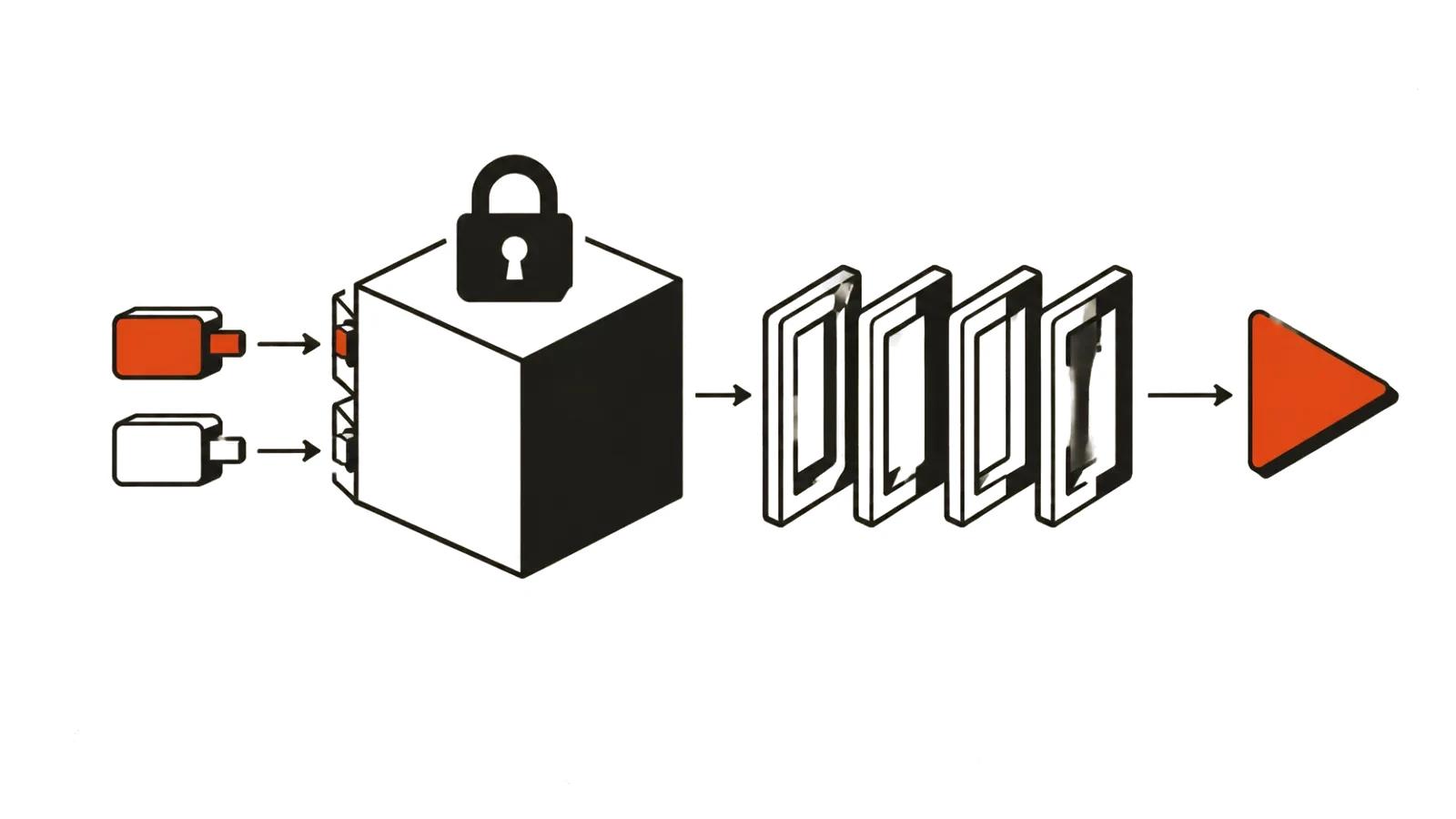
No new model was trained from scratch. The authors took a frozen MiniMax-H3 with 33 billion parameters and added two lightweight LoRAs. The first handles control: a structural video enters the model's native reference pathway at the frame positions it describes. The second handles speed, starting from a pretrained four-step LoRA and fine-tuned by structure-guided distribution matching.
One detail carries the design. The model is never told what kind of structure it is looking at: no tag saying depth or skeleton, only plain text. A single control LoRA therefore covers grey boxes, semantic maps, skeletons, depth maps, body meshes and pencil sketches. Sketches never appeared in training, and the model still accepts them.
The model card lists output at 1344 by 768 or 768 by 1344, 24 frames per second, 158 frames, and about 3.5 minutes of sampling on one GPU. The card does not name the card.
Four steps and 12.3 times: what the numbers mean
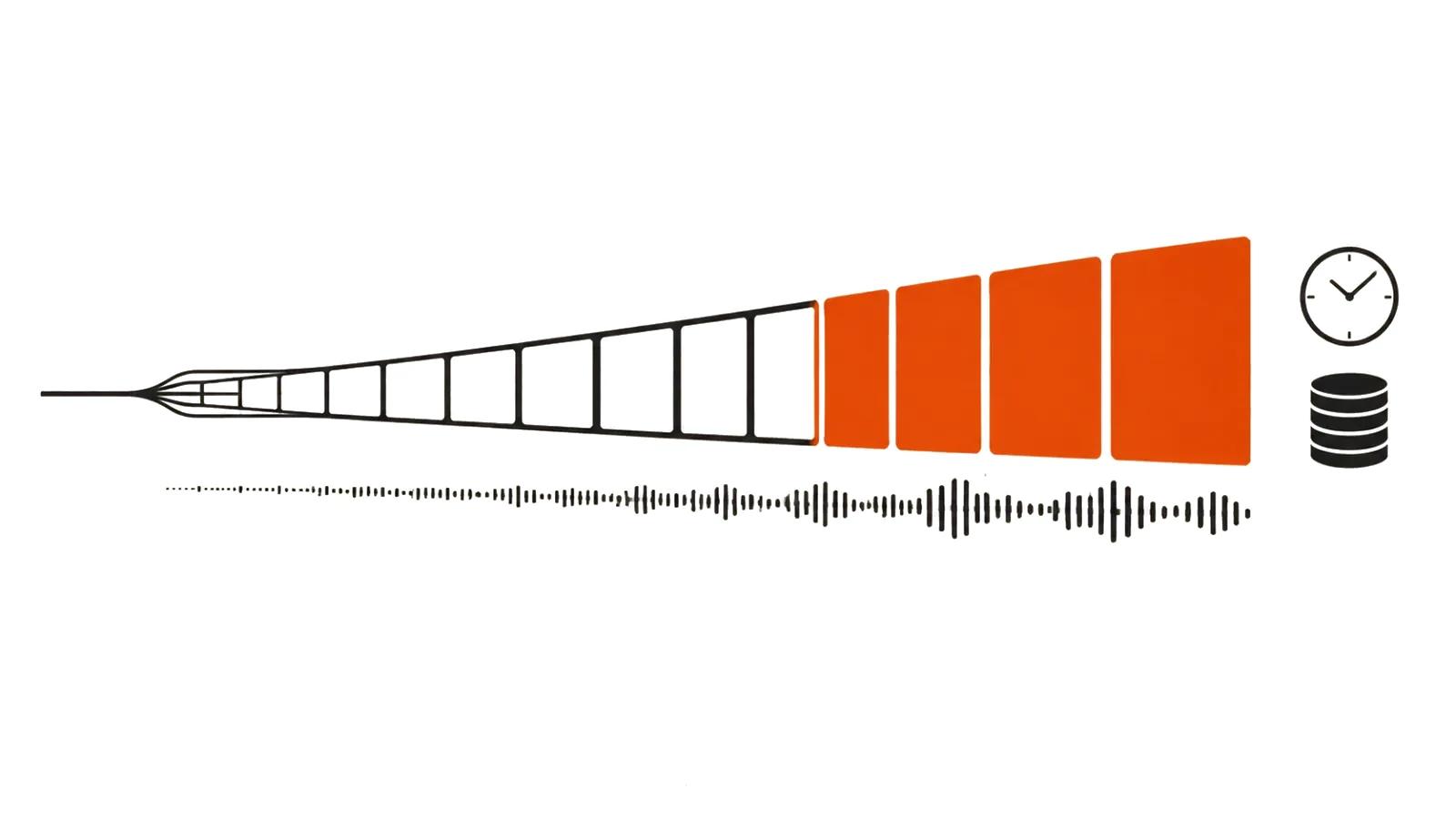
Step count is the paper's main claim. The authors report four denoising steps, 12.3 times faster than 50-step sampling, with control preserved.
The comparison is fair on method: both figures come from the same test set, only the step count changes. But the authors ran both, with no independent party involved. How far 12.3 times travels to another GPU and other settings does not follow from the preprint.
Training used a corpus of 136 thousand clips from game engines, simulators and YouTube. Frames are aligned by structure: every structural frame has a matching frame of finished video, which is how control is learned without type labels.
The streaming variant: 768p in real time
A separate branch of the work covers streaming. The causal version renders video in blocks of up to five latent frames. Each block sees the prompt, the first frame, the structure of the last six blocks and the five blocks already rendered, and never sees the future. Frames can be shown as soon as a block is done.
According to the authors, this variant renders 768p video in real time. The abstract gives no conditions: no card, no clip length, no definition of real time. That is the most interesting promise here and the least verified.
The licence carries a long list of exclusions
The weights are LoRA adapters on MiniMax-H3 and ship under the MiniMax H3 Community License. The model card spells out territorial limits: the European Union, the United Kingdom, the Republic of Korea and the United States. Code is Apache 2.0, data sits in a separate repository.
For a buyer this matters more than speed. A team in Berlin or Seoul cannot simply take the weights into production. Teams elsewhere should still read the full licence with its appendices, because it carries other terms too.
What counts as use under that licence is a question for a lawyer: the text points to a separate acceptable use policy, and the territorial limits sit in their own clause. Check where the model will run as well as where the client sits.
The ecosystem around the release
Third-party tooling appeared within a day. A ComfyUI node from an outside developer was created on October 20 at 12:15 UTC, the same day as the paper. A quantised build of FastH3 Omni as GGUF landed that evening at 21:12 UTC, aimed at running a related model on consumer hardware.
The code repository on GitHub was created on October 15 and passed two hundred stars by the morning of October 21. Stars measure attention, not quality, yet they show how fast this crowd moves.
What this means for commissioned video
Open video models become practical where structure already exists. A storyboard blockout, a room layout, a camera move through a set: each can turn into a draft in minutes, where it used to cost an artist's day.
For AI video production this creates a new way into a project: a client brings rough geometry instead of a reference and gets an image that follows the plan. In that scheme handcrafted videos do not disappear, because acting and story are still shot with people, from $394 per video up to 90 seconds, about a week.
For volume work the streaming variant is the interesting one: if 768p in real time holds on ordinary hardware, vertical video ads can be produced in batches without a render queue. For now it is the authors' promise.
Anyone choosing tools should keep a guide to AI video models at hand: it sorts models by task, and a loud name does not replace a test on your own footage.