What NVIDIA released
On October 28, 2026, at 14:58 UTC, NVIDIA published a Hugging Face blog post covering Nemotron 3.5 Transcribe and a dataset called Granary v2. The weights are on Hugging Face and ModelScope, and the dataset is published alongside them.
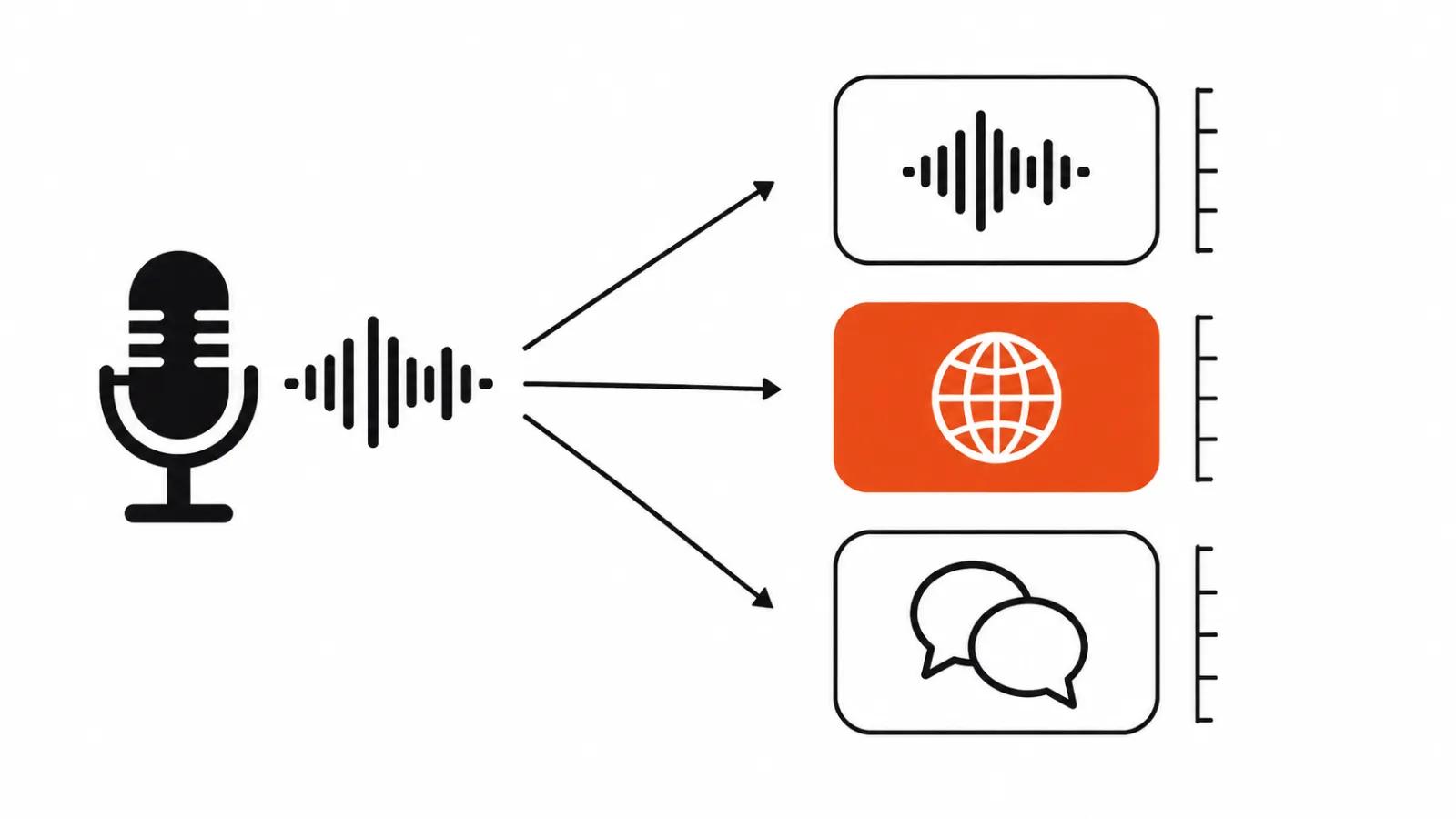
The framing in the post is direct: this is an open-weight model that developers steer with a prompt. One checkpoint covers four jobs at once, transcription, speaker attribution, translation and audio question answering.
For the market this means part of the work that used to be billed per minute can move onto your own hardware. Whether that is a good trade depends on the numbers below.
The scope is broad for a single checkpoint. NVIDIA says it transcribes 40 languages, translates 31 of them to and from English, attributes speakers in 13 languages, handles recordings up to an hour long and separates up to eight voices.
You steer it with plain text: transcribe this recording and label each speaker, translate this audio into English, what decisions were made in this meeting. A developer can also pick where the audio is processed and give the model domain vocabulary.
The output is not word-for-word stable between runs, and that is normal for a generative model. What matters for editing is different: the model returns word-level timings, so subtitles can be built straight from its output.
The leaderboard numbers
On the English track of the Hugging Face Open ASR Leaderboard the model takes first place among open-weight entries with 5.33% average word error rate. The multilingual track shows 4.62% across seven languages. The long-form track shows 10.98%. All three are described in the post as the lowest among comparable open models, with a note that API models are excluded from the comparison.
Artificial Analysis ranks speech models by its own AA-WER index. Here the model lands at 2.8% and shares first place among open-weight systems while running about 4 billion active parameters against 24 billion for the model it ties with. On AA-AgentTalk, the held-out set of voice-agent speech that makes up half of that index, it scores 1.8% against 2.3% for the next open model.
The architecture explains the size. A speech encoder feeds a hybrid Mamba-Transformer mixture-of-experts language model, so roughly 4 billion of its 30 billion parameters are active per token.
Speaker attribution
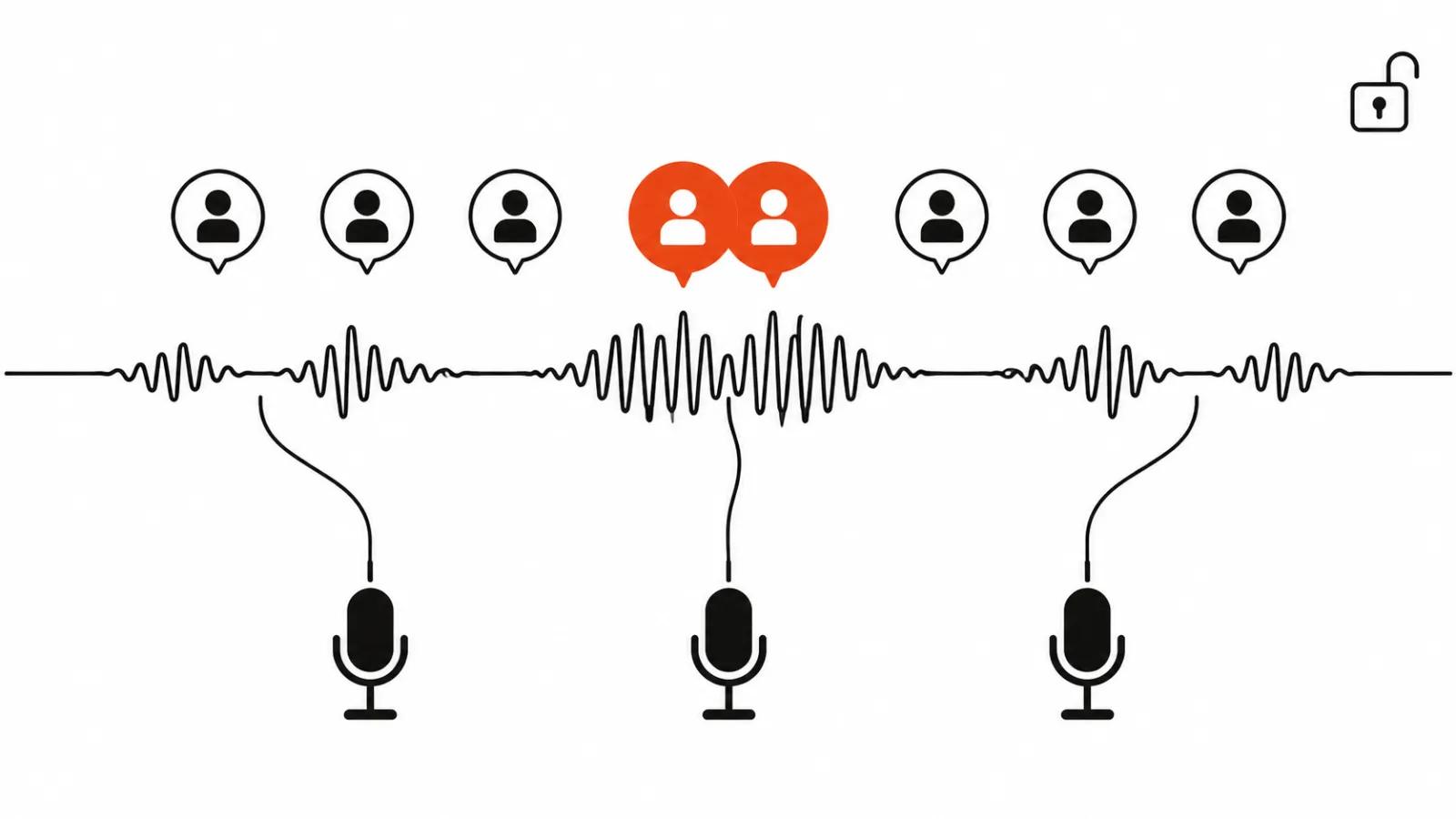
Who said what matters more than the words for video. On David AI's multilingual diarisation leaderboard the model posts the best result of 14 systems, an 18.26% diarisation error rate across 21 languages, followed by the dedicated Nemotron 3 Diarization at 18.38%.
On VoiceArena's English full-session benchmark it has the lowest cpWER of 14 systems at 32.4% and drops the fewest words: 8.32% deletions against a median around 31%.
The mechanism is described plainly. Sortformer speaker cues reach the language model together with the acoustics, so a speaker tag is produced during generation, without a separate pass afterwards. That is why overlapping turns do not collapse into unlabelled blocks.
The dataset behind it
Granary v2 was built with NVIDIA NeMo Curator, and its public manifest covers 463,062 hours across 48 languages and 16 source corpora. The first version covered 25 languages, the only growth the company states outright.
The pipeline produces three transcript forms for each recording: verbatim, normalised and clean. It also generates short audio captions, restores loanwords across code-switching, builds speech-grounded question and answer pairs, and produces translations with automatic quality scores.
Adaptation is a separate step. In a medical case study, fine-tuning cut word error rate on held-out speakers by 45.8% relative to the best prompt. That is not a promise for other domains.
Speed and local deployment
In benchmarking, the model processed 100 hours of audio in under three minutes on a single RTX PRO 6000 Blackwell card, using the forthcoming NVFP4 quantised version and 30-second clips at high concurrency. Those are lab conditions, and the post labels them that way.
Quantised builds are promised later, together with local deployment through NeMo-Speech.cpp. Today the checkpoint is served with vLLM. One caveat matters: the model is built for recorded audio, and live streaming is not claimed.
Where it still slips
NVIDIA asks users to spot-check names, speaker changes and answers against the recording. That is not boilerplate: diarisation struggles on overlapping speech, and audio question answering is trained in English, so quality differs elsewhere.
Two more things to keep in mind. Language support depends on the task, and the full task-by-language matrix sits in the model card, while the blog post only links to it. And open weights do not mean free commercial use, so the licence needs reading before anything ships.
What it changes for AI video production
The first use case is obvious: subtitles and timings for interviews, lectures and podcasts. That work used to be an external service billed per minute. Now the model can sit next to the edit and client recordings never leave the building.
The second use case is volume. When teams run AI video production in batches, every version needs a transcript, and per-minute pricing starts to matter. A local run removes that line item.
The third case is diarisation in interviews and panels, where attribution is the point. Handcrafted videos with a hired actor do not need it, since the voice is known, while documentary conversations save hours of manual labelling.
If you run AI YouTube channel management across long episodes, the timings from this model feed chapter markers and short cutdowns directly.
The bottom line
NVIDIA shipped a working model with honest numbers and with caveats that most vendors bury. For a production team it is a reason to recalculate what transcription costs per month.
My practical advice is simple. Take one of your own clips with noise, overlapping speech and jargon, run the model and compare it with what you use today. If the error gap is a couple of points, local running pays for itself at volume.