Three papers that landed on the evening of October 21
After 15:00 UTC on October 21, three papers appeared on arXiv, and all of them circle the same problem: generative video runs into the cost of a frame and the amount of context a model can hold.
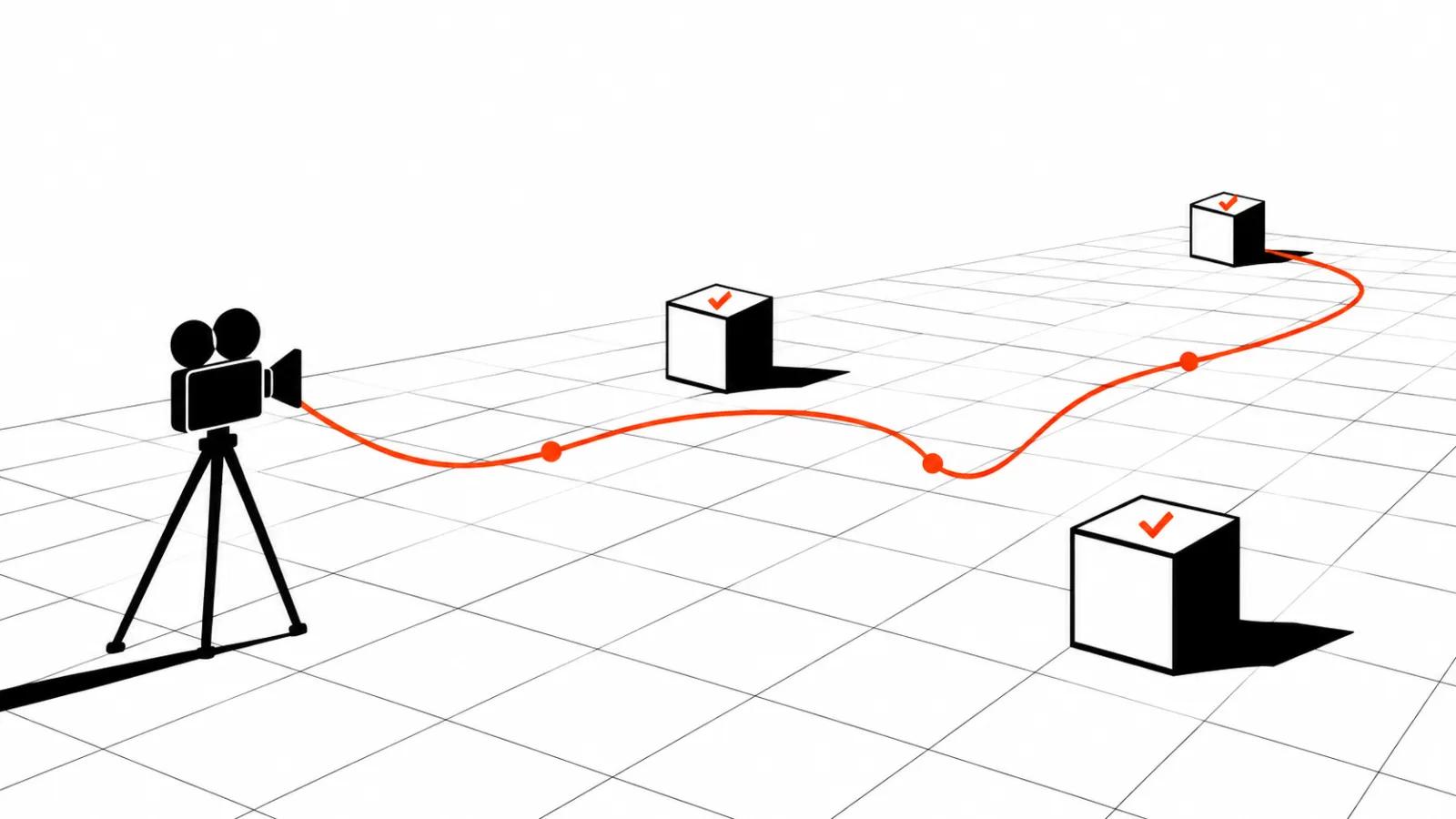
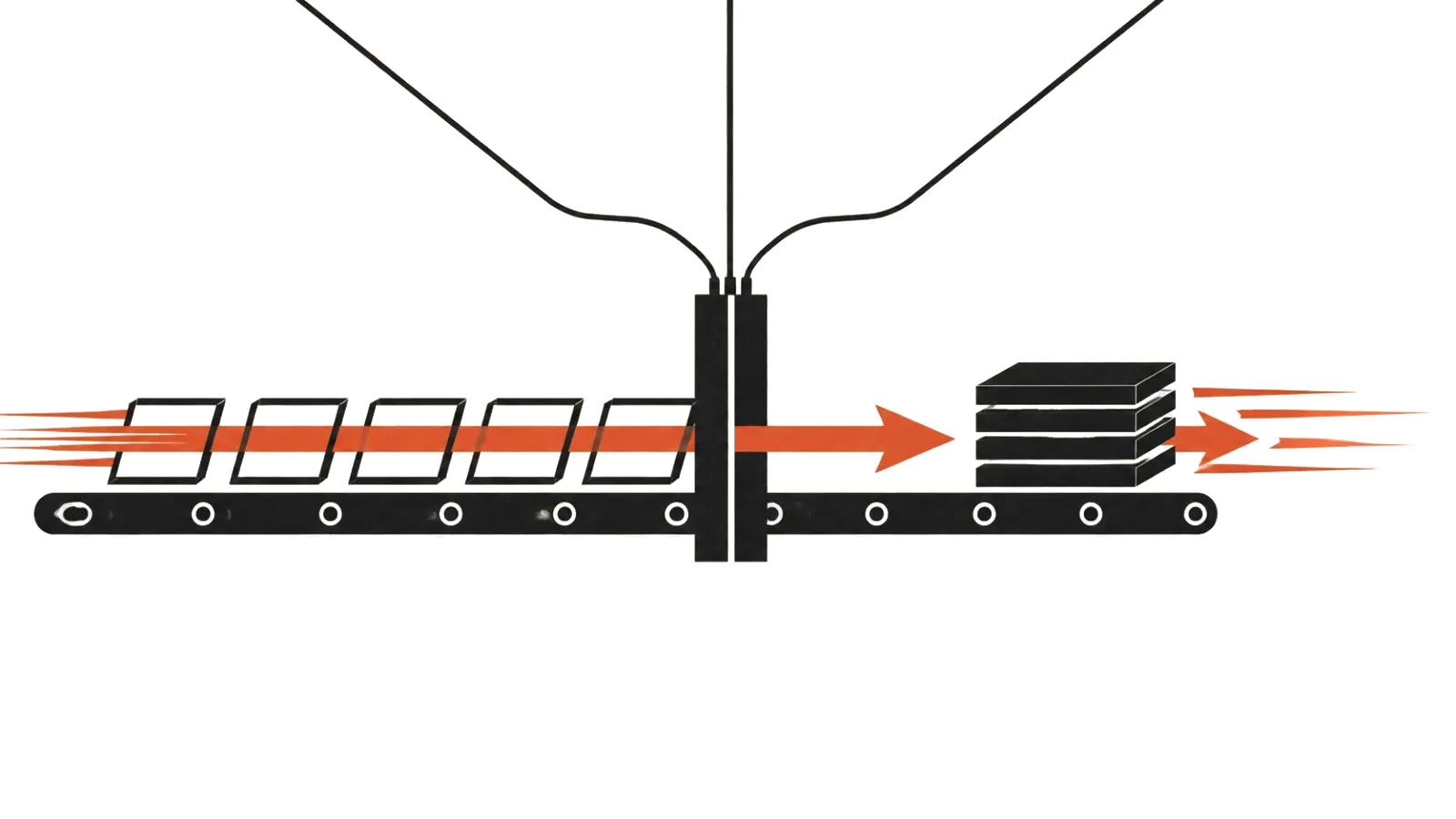
CausalAlign (https://arxiv.org/abs/2610.29915) arrived at 15:54 UTC. It deals with why the camera in a generated clip drifts towards the end and what can be done about it. Attn-Forcing (https://arxiv.org/abs/2610.30036) followed at 16:59 UTC and tackles memory in streaming generation, where frames keep arriving and the whole history cannot stay in the model. CADRE (https://kyutai.org/blog/2026-10-22-cadre/) came at 17:58 UTC: the Kyutai team studies compression for interactive world models and releases code, weights and a live demo.
Why it matters: the three papers push on the same wall from different sides, and together they mark where the line between a nice demo and a working product currently sits.
CausalAlign: why the camera drifts towards the end of a clip
The CausalAlign authors, Kai Zhu and colleagues, started with diagnostics. They trained linear probes on the internal representations of a diffusion video model and looked at where camera motion is stored. The picture was uneven: the precision of that representation rises through denoising and then falls again.
Then they intervened causally, amplifying and suppressing individual layers and watching what happened to the trajectory. That located the layers where camera motion is actually formed. On those layers they aligned representations with a 3D foundation model, using the delta between consecutive frames. The delta describes how the scene changes, so the alignment latches onto camera motion and does not spend capacity on static detail.
The results are shown on Wan2.2 fine-tuned on DL3DV and RealEstate10K. By the authors' measurements, geometric consistency improves by more than 20% over the base model, and the success rate of world action models on mobile manipulation in RoboCasa365 gains 10 points.
Why it matters: a drifting camera is the first thing a client notices in a video about a room or a product, and the first thing an editor has to fix by hand.
Attn-Forcing: holding context while frames keep coming
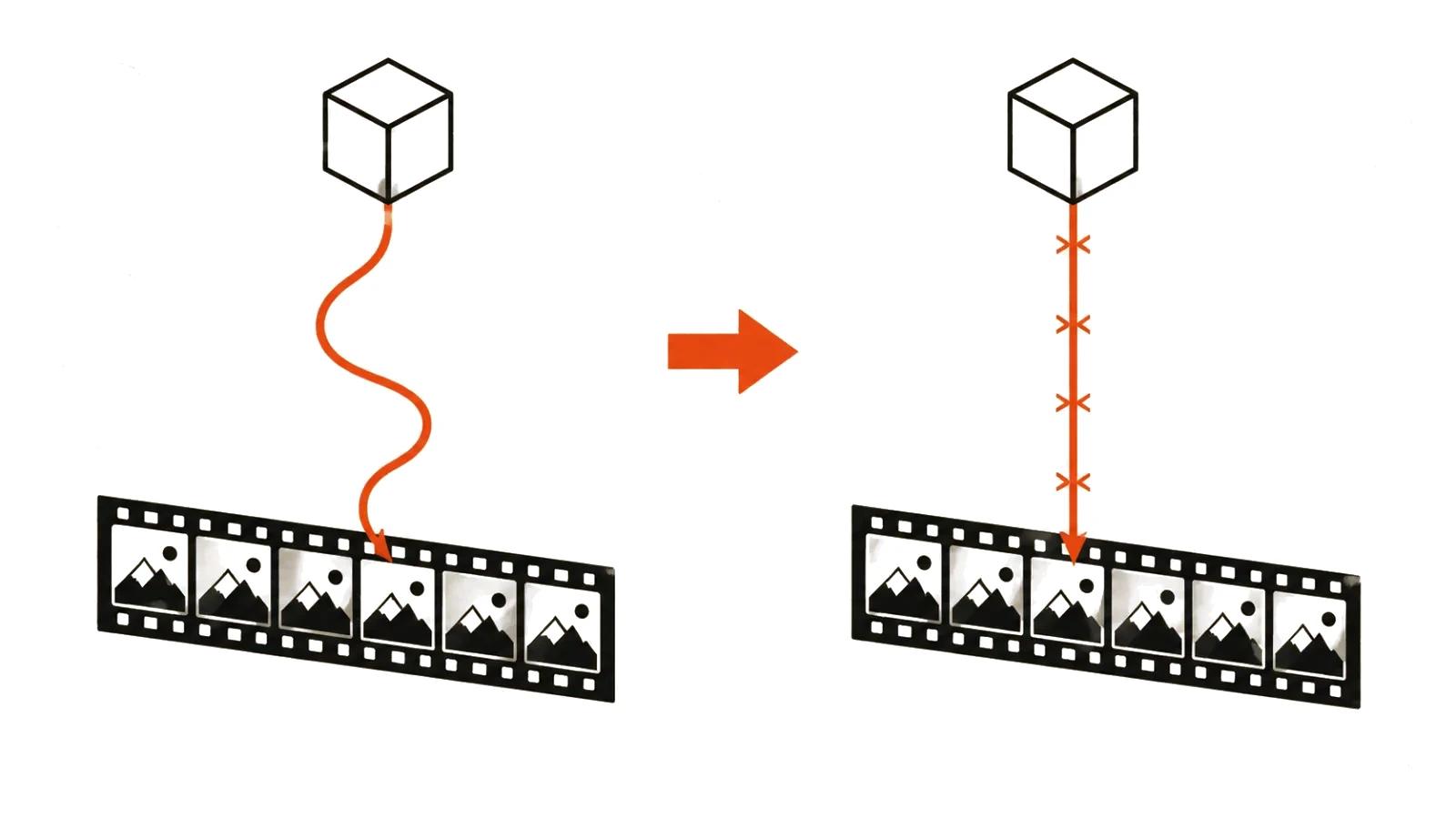
Streaming generation works differently from clip generation. Frames arrive one after another, and the model has to remember what came before: a face, the light, where objects sit. The longer the history, the more compute goes into attention, and at some point memory runs out.
Attn-Forcing proposes a compromise. The model does not keep the full context. It keeps a set of learnable visual latents that progressively approximate the attention response produced by the entire history. A separate module updates those latents as new frames arrive, and an attention matching loss keeps the approximation close to full-context behaviour.
That sounds like an engineering detail, but the claim is substantial: the authors report quality on par with the strongest baselines under bounded memory and compute. The paper runs to 16 pages with six figures and compares against existing approaches to selecting and compressing context.
Why it matters: memory decides whether a long scene can be generated in one pass or has to be stitched from pieces, and stitching always shows.
CADRE: the autoencoder as a part worth designing on purpose
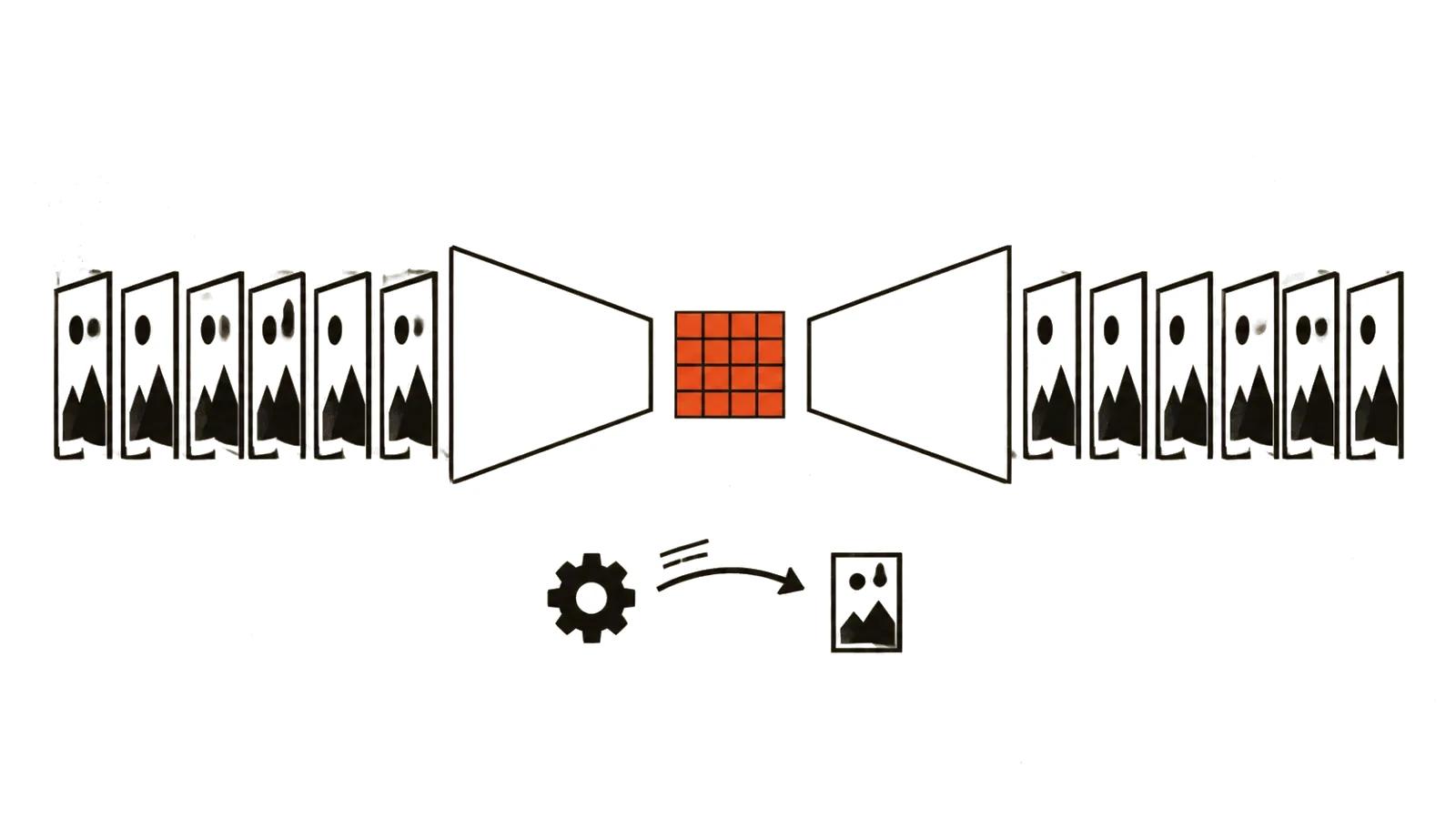
The Kyutai work, with LIGM, ENPC and UC Berkeley, starts from an everyday observation. Video world models do not generate pixels directly: an autoencoder compresses frames into a compact latent space, and the model predicts there. Almost everyone borrows that autoencoder from a text-to-video generator built for offline clips, where nobody is waiting for a reaction to an action.
CADRE is a family of open causal autoencoders with different compression along time and space. Inside there is a frozen DINOv3 ViT-B/16 encoder, a small trained bottleneck and a diffusion decoder that reconstructs in one or two steps. The authors trained the same world model on every compression setting, across two domains, manipulation and navigation, with two environments each.
The numbers easiest to check: input at 288 by 512 pixels at 20 frames per second, real-time generation on a single H100, and a delay between action and picture of about 321 milliseconds in the example with 16x spatial compression. Code, weights and a demo are open, but the model licence is CC BY-NC 4.0, which rules out commercial use.
Four findings that will outlive any single checkpoint
First: under strong compression, a diffusion decoder produces a sharper picture than perceptual regression. Second: in robot manipulation, temporal compression is better placed in the autoencoder than in the world model itself. Third: manipulation and navigation want opposite compressions. Fourth, the least obvious: with a still camera, coarse spatial tokens hurt motion far more than they hurt image quality.
Why it matters: this is a rule for budgeting a frame, and it will outlast any particular checkpoint. Pick compression for the task and the same GPU returns more frames per second.
What this changes for a business
For anyone commissioning a video, all of this turns into three things: the price of a second, camera stability and how long a scene can run without cuts. AI video production has long been limited by the cost of re-rendering failed takes, and any work that lowers the price of a frame changes the estimate.
The second effect is subtler. A stable camera and long context are what an AI YouTube channel needs: episodes run back to back, and the host has to look the same in episode twenty as in episode one. For the same reason, batches of vertical clips built around one face benefit from stability more than a single brand film does, and video versioning at scale gets cheaper when the camera holds still.
The third effect is about tooling. A guide to AI video models usually compares the picture, and these three papers are a reminder to compare latency, memory and cost per frame as well. A model that renders ten beautiful seconds and a model that holds a face for a minute are different engineering problems.
Where this does not help yet
None of the three papers ships a product with pricing and support. CADRE is a research release under a non-commercial licence, while Attn-Forcing and CausalAlign are papers that promise code. The measurements come from the authors on their own datasets, with no independent check on outside tasks.
The domain matters too. CADRE is trained on manipulation and navigation, CausalAlign is tested on Wan2.2 and two scene datasets. Carrying those conclusions over to an advertising shoot with actors and edit cuts is only a rough guide.