Why people watch them
Three causes, and none of them is image quality.
Recognition. Everybody knows a fruit, so nothing needs explaining. The first frame lands in half a second, which is all the feed gives you.
Conflict. A fruit character is always in mild trouble: sliced, peeled, dropped, compared with a rival. The trouble is small and safe, which is why children and adults both watch.
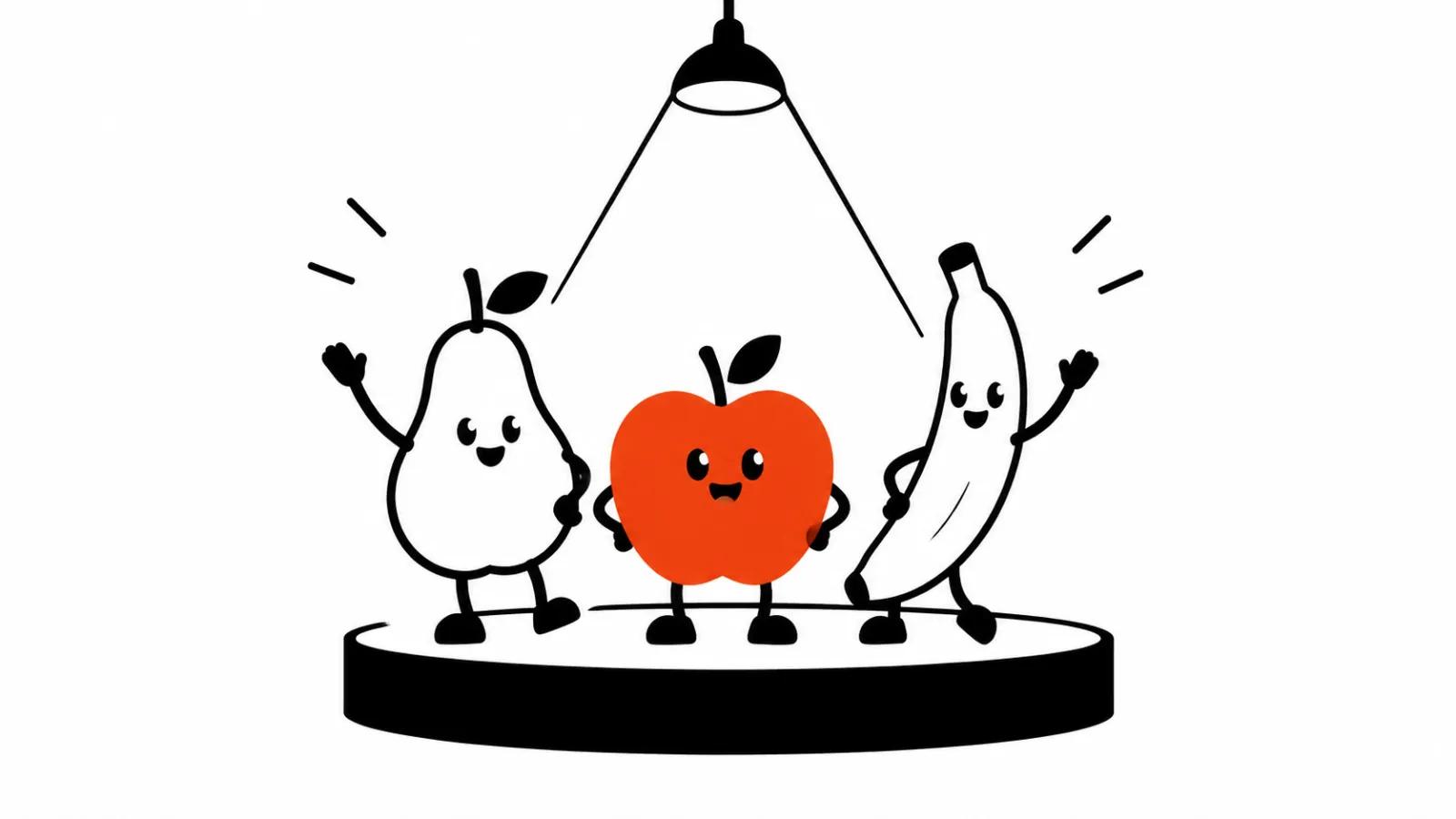
Anthropomorphism. Eyes and a mouth on an object trigger social attention. The brain reads a face even when it was drawn with two dots.
AI cat videos proved the same mechanic earlier: a familiar animal, a household problem, a ten-second resolution. Fruit added a simpler shape on top.
Then the series does the rest. Viewers come back for a familiar character and his everyday problems, and the fruit is only the excuse.
What actually works in the frame
The mechanic is simple once you cut a clip into pieces.
One hero. A single object with a face, never a crowd.
A problem. Something happens to the hero in the first two seconds. A fly, a knife, another fruit, a human hand.
A reaction. The hero overreacts. Exaggeration matters more than realism here.
A resolution. The problem closes in five to ten seconds. Sometimes badly for the hero, and that is funnier.
A caption or a sound. One line, often none.
That is the whole format. There is no three-act structure, and it does not need one.
Why a brand should skip the orange
First: you are doing what everyone does. Hundreds of these clips run in the feed, and your orange competes with a thousand oranges that already have subscribers.
Second: the fruit is not connected to the product. If you sell software, a talking lemon sells nothing. It collects views and no leads.
Third: audience. Fruit clips are watched for entertainment, which is a perfectly good audience for advertising, and it is not looking for your product.
Take the other parts instead: a recurring hero, a small conflict, a ten-second resolution. Put your own object where the fruit sits. A component, a tool, a package, a piece of interface.
What it looks like for a brand
Three versions I have seen work in different niches.
An object hero. A product component with a face runs into an everyday situation. Works for tools, electronics, stationery.
An employee hero. A cartoon person in company uniform deals with a typical customer problem. This one needs a character sheet and a stable face.
A customer hero. A composite character travels from pain to result in twenty seconds. That lands in vertical microdramas, and the genre needs a script.
All three share one trait: a short scene, one conflict, familiar texture. The fruit was convenient because nobody had to explain it. Your object has to be staged so it reads without a caption.
What the platforms say about sameness
Here the boring part starts, and it is better known in advance.
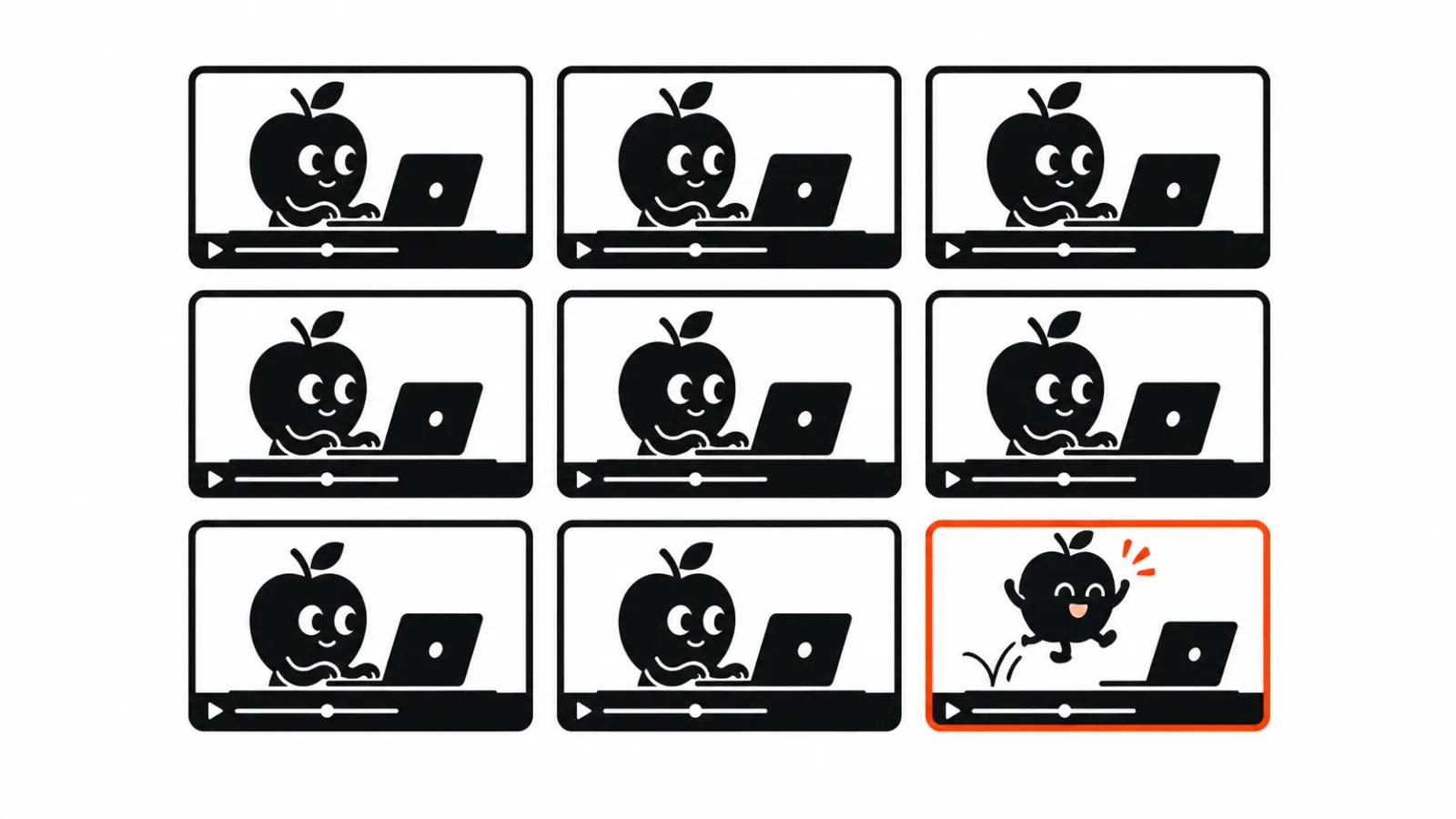
On 15 July 2025 YouTube renamed its repetitious content policy to inauthentic content and listed what cannot be monetised: mass-produced videos from one template, content with minimal variation between videos, slideshows with no narrative or commentary. The policy applies to the channel as a whole.
The wording is useful because it draws the line. Allowed: the same intro and outro while the bulk differs, similar videos where each one discusses specific qualities of the subject. Not allowed: a template conveyor where only the object changes.
For a fruit series that means one thing. Twenty clips of an orange blinking fall under the rule. Twenty clips with different problems and different jokes pass.
There is a second rule. YouTube requires creators to disclose realistic AI-generated content: scenes that look like a real event, a real person saying something they did not say, footage of a place altered. A cartoon fruit is out of scope because it does not look real. That does not remove the ad label when the clip is an ad.
The risks nobody mentions
Sameness. The first ten clips grow, the twentieth and thirtieth fall. The mechanic does not develop, and viewers tire of the joke.
Rights. A fruit that resembles someone else's character is a claims conversation, and inspiration will not save you. Check that your hero does not repeat an existing design.
Quality. Cheap generation flickers and drifts. On a phone screen it shows, and brand trust drops with the picture.
Metrics. Views without retention and without clicks mean nothing. Watch how many finish the clip and what they do afterwards.
If you want to try it
Build a pilot of five clips and stop there.
One hero, one object, one problem per clip. Five different jokes. Different angles and a different rhythm. If the fifth is weaker than the first, the mechanic is not yours.
Shoot vertical and short: ten to fifteen seconds. For a stream of similar scenes it pays to build a scene template in advance, so each release differs in content while the settings stay put.
If the picture has to arrive faster than editing allows, AI video production covers the work in an evening. After that the question is discipline: who writes the jokes and who makes sure they do not repeat.
Budget and verdict
Five pilot clips take two or three days including selection. For a monthly series, describe the hero and the scene once.
Handcrafted videos start at $394 per video, including script, shoot and edit. For a character with a face and a voice that is more honest than ten generation attempts.
My verdict is short. Fruit clips proved what works in the feed: a recognisable hero, a fast conflict, a quick resolution. Everything else, the fruit included, is packaging borrowed from someone else's success.
Short-form video at scale is easy to produce with this pattern, and it carries one risk: the simpler the template, the faster viewers recognise it and stop watching.