Where distribution starts
TikTok builds a feed for each viewer separately. The help center states it plainly: recommender systems predict how relevant a video will be to a specific person and rank content by that prediction.
Two uncomfortable consequences follow. The same video gets different reach with different people. Comparisons against someone else's numbers mean little, because the audiences differ.
A new account sees popular content first, filtered by language and location. After that, the viewer's own behavior takes over.
The three signal groups in the official documentation
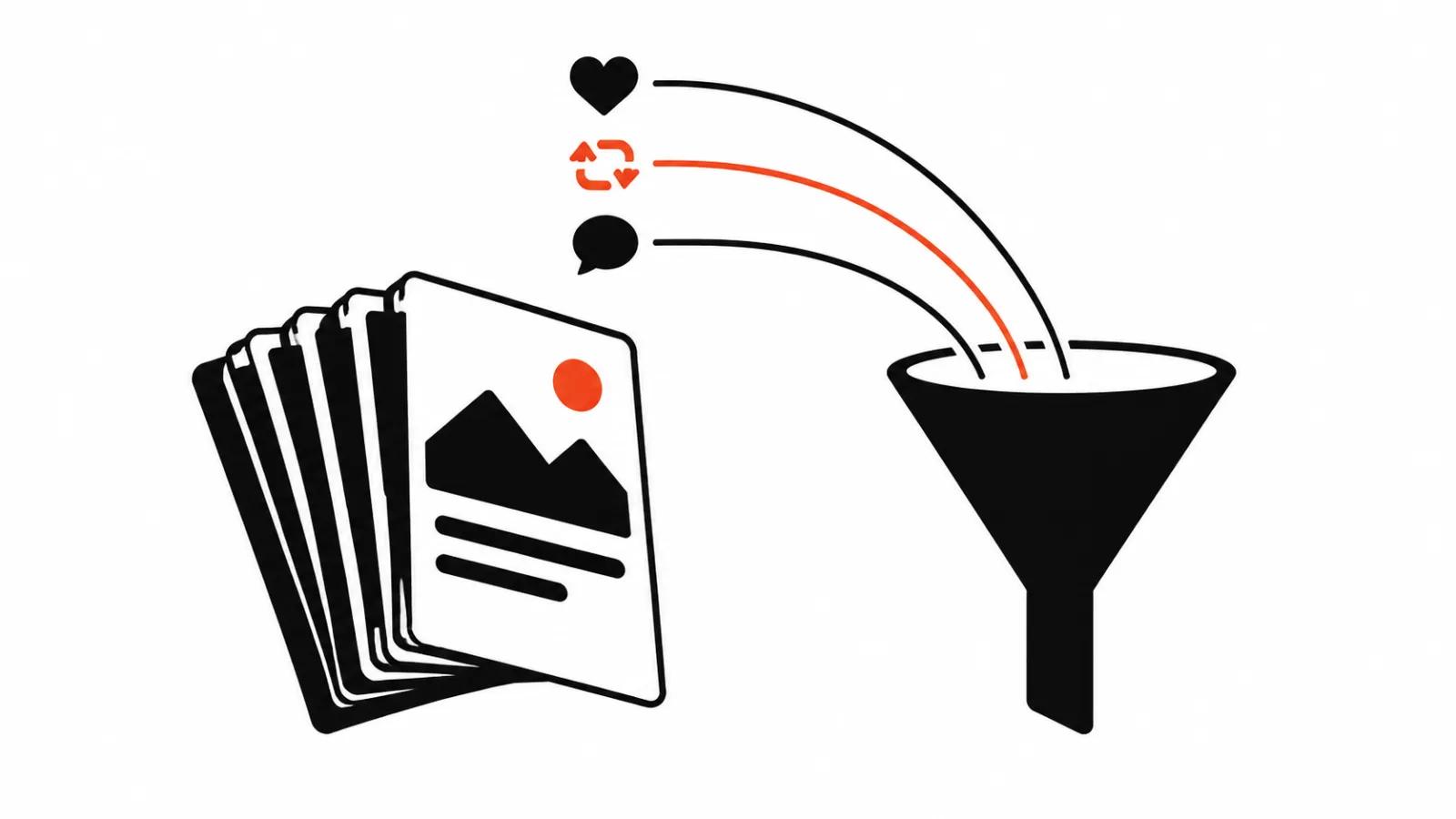
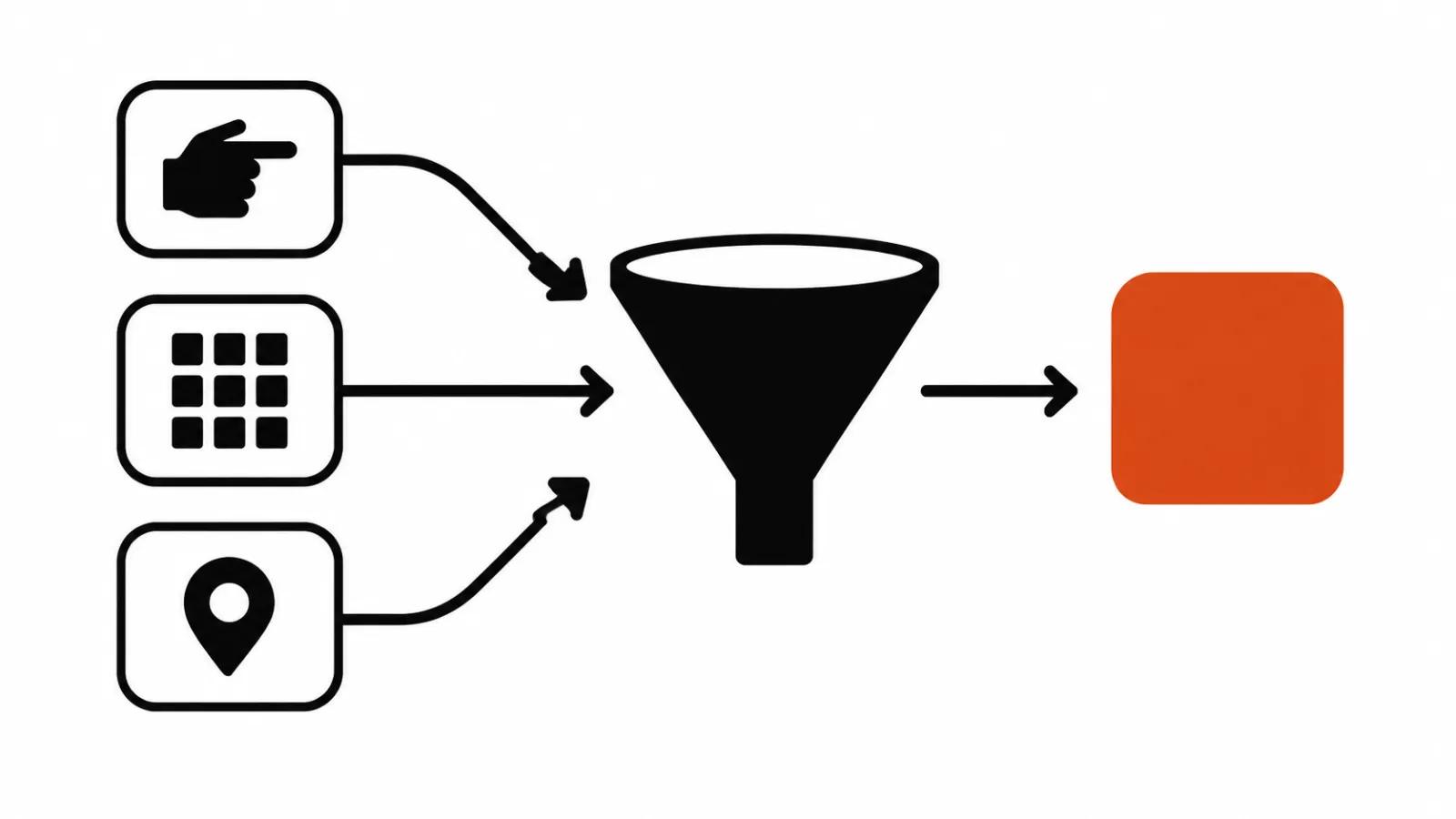
TikTok's help center names three groups of factors: user interactions, content information and user information.
User interactions cover likes, shares, comments, watching a video in full and skipping it fast. For the For You feed the list also includes accounts the viewer follows back.
Content information covers sounds, hashtags, the number of video views and the country where the content was published.
User information covers device settings, language preference, location, time zone and day, and device type.
The same page notes that for most people user interactions carry more weight than the other groups, and that the weight of each factor changes over time.
What a creator controls and what stays fixed
Controllable: the content itself, its sound, its captions, its hashtags, its length, the moment it goes out.
Fixed: the viewer's language and location, their device, their time zone, their watch history.
The practical conclusion is short. Everything a creator does works through interactions and through how well the system reads the topic from sound and text. The rest is a set of conditions to work with.
Completion and replays
Watching to the end sits in the same list as a like. Skipping fast sits there too.
That is the argument for short videos: they are easier to finish, because they ask for less time. The same short video is also easier to flick past when the opening seconds fail.
Replays are a hidden signal the help center does not discuss separately, and I will not pass a guess off as documented fact. What is visible: the interface offers a replay control, and a video people rewatch hands the platform more watch time.
The practice is simple. The first two seconds should promise something specific, and the ending should leave a detail worth checking twice.
Sound and hashtags
Sound appears in the documentation as content information. It is reasonable to assume the system uses it to understand the topic and to connect videos to each other.
Two consequences. A trending sound places a video inside an existing stream of similar posts. An original voice builds recognition and offers no free reach.
Hashtags work as a topic label. The documentation promises no impressions for a count of tags, so five meaningful ones beat fifteen random ones that blur the subject.
The opening seconds and the cost of getting them wrong
The beginner mistake is a long introduction. While the viewer waits to find out what happens, the thumb has already moved.
The second common miss is opening on a logo. A logo says who you are and says nothing about why anyone should watch.
The third is silence at the start. Sound is one of the signals, and a muted opening wastes the seconds that decide completion.
A workable pattern: an action in the first frame, an explanation in the second, a detail in the third. Skip the title card.
How many videos a conclusion needs, and what never helps
No magic threshold exists, and the help center publishes none. One video with two hundred views says nothing at all.
A series is the sane approach. Five to seven videos on one hypothesis show a direction.
Change one variable at a time: the kind of opening frame, the length, the sound, the call. Change everything at once and the conclusion looks tidy and tells you nothing.
On the things that do not work. Bought views raise the counter and add no interactions, which the help center says carry more weight than the other signals.
Posting the same video under different hashtags. The help center notes that content already seen is typically not recommended again.
Volume without variation. When content ships in runs, the difference between versions becomes part of production, which is what short-form video at scale is built around. Campaigns with paid delivery follow a different logic, and that is where vertical video ads come in. For topic planning there is a set of TikTok video ideas for business, and the wider case for cadence and volume sits in vertical videos for business.
How to read the result
Three numbers: reach, average watch time, interactions.
Reach answers whether the video found people. Watch time shows whether it held attention. Interactions show whether it landed on the right subject.
YouTube, for comparison, has counted Shorts views on starts and replays without a minimum watch time since 31 March 2025, and renamed the earlier metric to engaged views. That is another platform with its own rules, and its logic does not transfer to TikTok. The principle does: look at the metric that reflects completion.