What researchers in Chicago measured
PhyRubric: Rubric-Grounded Diagnostic Evaluation of Physical Commonsense in Text-to-Video Generation landed on arXiv on 10 November 2026. The authors are at the University of Illinois Chicago, and they asked an awkward question: how do you tell that a model broke physics when all you have is your own eye on the clip.
The bench holds 245 descriptions, 34 categories, five areas of physics (mechanics, optics, heat, electricity, acoustics) and 2,433 generated clips. A separate training set of 3,788 videos produced PhyRubric-Judge, an open 8B model built from Qwen3-VL-8B-Instruct. On agreement with human raters it sits level with the closed Gemini 4 Argon, so a cheap open judge is enough for this kind of check.
Why one score out of five explains nothing
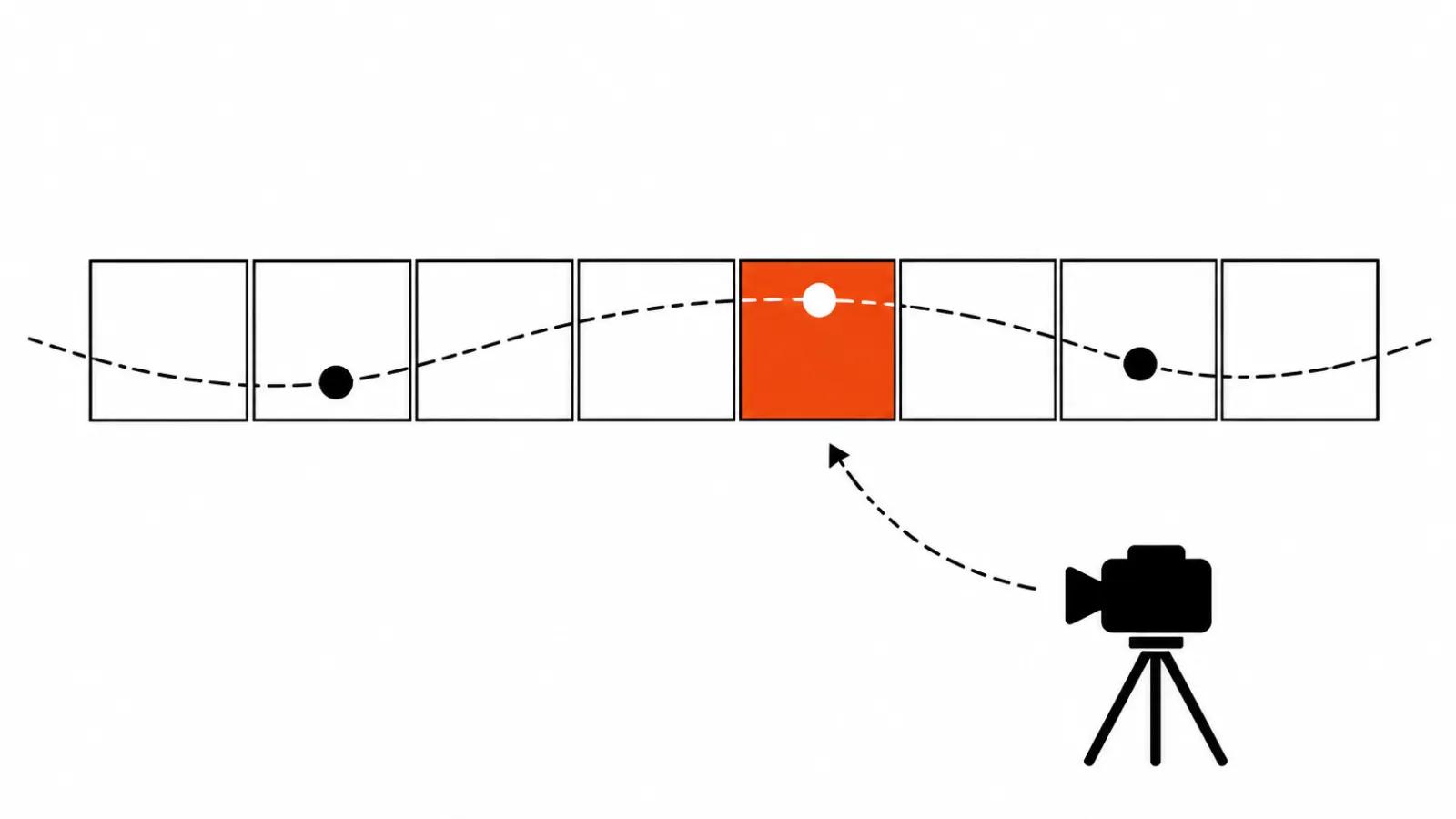
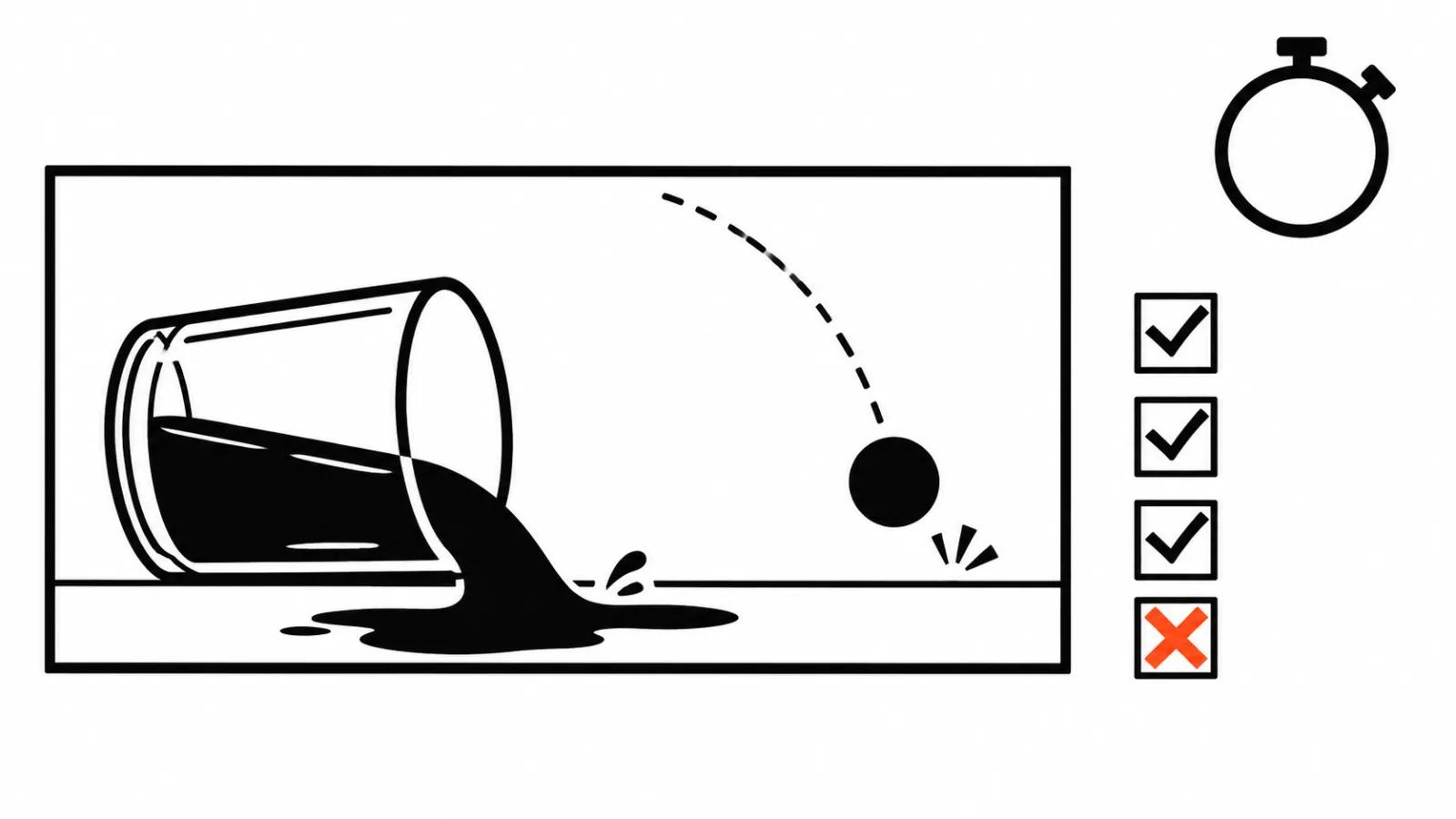
The old routine: a person watches a clip and gives it a mark. The mark is subjective, a second viewing gives another number, and it never says which principle broke. A clip where a dropped glass bounces like a ball gets a three. Whether that three is about the collision, the weight or the arc stays a guess.
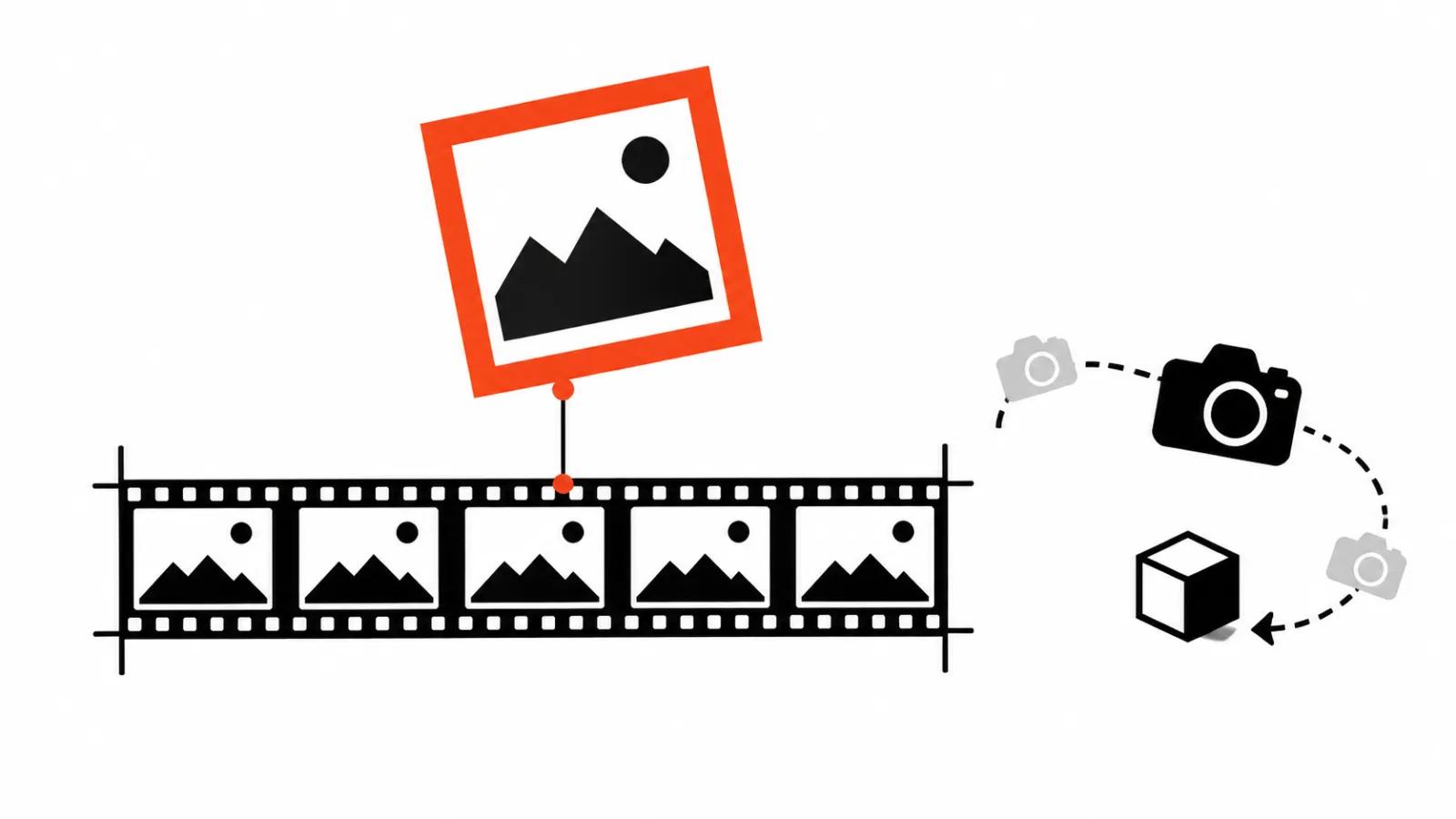
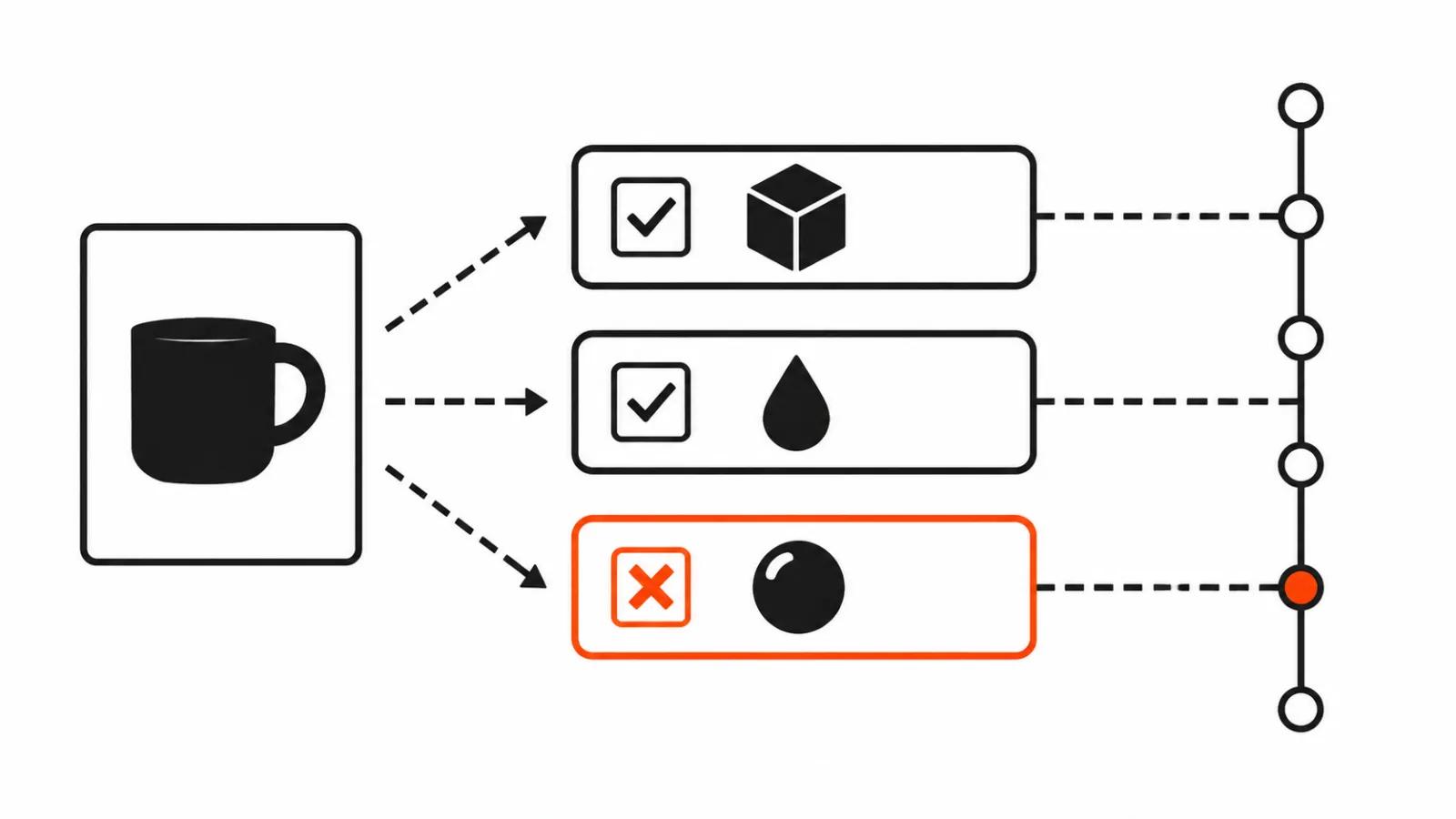
PhyRubric works before anyone watches anything. Each description is split into points, some about content (what was asked for) and some about physics (what has to hold while it happens). Then the video is checked against every point separately, with a timestamp on the failure. What comes out is a diagnosis you can act on with the next prompt.
How many models keep the story and the physics
Ten models were tested. Credit only counts when a clip matches the description and stays physically plausible. Seedance 2.5 lands 44.2%, Veo 3.1 36.2%, the best open model HunyuanVideo-1.5-8B 14.9%.
The sharper number sits next to it. Runs where the requested event never appears at all run from 20.0% to 44.5% on open models and from 5.7% to 8.6% on closed ones. That is a different failure from clumsy staging: the requested event is simply not in the frame.
Errors land at two poles
40.8% of the scored videos get 1 or 2 out of 5 on physics, which means a gross violation. 52.9% get a clean five. The middle is rare, and for production that is convenient: a clip either passes or it is badly broken and needs a fresh run.
What breaks most often
The top failure is the missing consequence at 24.0% of all failures. You ask for water being poured and the water never leaves the jug, the level in the glass never rises. You ask for a drop and the object hangs in the air. The shot exists, the cause and effect does not.
Second comes object permanence and counting at 20.4%. Things vanish between frames, double up, two glasses melt into one. In the authors' table Seedance 2.5 misses a consequence in 11.3% of videos and Veo 3.1 in 14.7%. On permanence and counting the gap is even wider: 5.2% for Seedance 2.5 against 12.9% for Veo 3.1. So it pays to compare models on the type of error that matters for your own scene.
What this means for buyers of realistic video
Right now physics in AI video comes down to consequence: pour, spill, drop, fall. The authors close with physical commonsense remains far from solved, and that is a fair summary, since the leader fails more than half the time.
The practice I build into a quote. Scenes with cause and effect (pour, smash, drop, open) get doubles, because the consequence often goes missing on the first run. The number of objects in frame gets counted by eye on every run, since two glasses where one was ordered is a defect viewers catch while the author does not. One good run proves nothing and needs a repeat.
When a brief says realistic video, the client usually means light, skin and texture. Physics shows up later, at approval, when the glass does not fall. That is why I show a test of the hardest scene before the main work starts.
AI video production follows the same rule: a scene is done when it repeats. For ad work with causality (a product hitting water, cream leaving a tube, a lid opening) it is cheaper to budget extra runs up front. Where physics matters and runs are tight, handcrafted AI videos take over, because there the consequence is staged by a person and shot close.
One habit that protects a reputation: quality check before publish. We already have a separate guide on that, and it pairs well with this paper. If a scene is written as code, the breakdown on a video coder is worth reading too, since some of these errors are visible before the render.
My take
PhyRubric earns its place because it kills the taste argument. Instead of someone saying the water looks fake, there is a point with a timestamp.
My bet for the next year: closed models still have not solved physics, so I plan scenes from simple to complex. Static shot with one object first, then motion, then two objects interacting. Interaction scenes get extra runs and a checklist at approval, with nobody grading from memory.
One more thought on client expectations. The line physically plausible gets checked on the finished file, so the person who wrote the script should be the one checking it. Showing a test of the hard scene before the main work costs less than explaining, on a locked edit, why the water is standing still.