Why an hourly rate explains very little
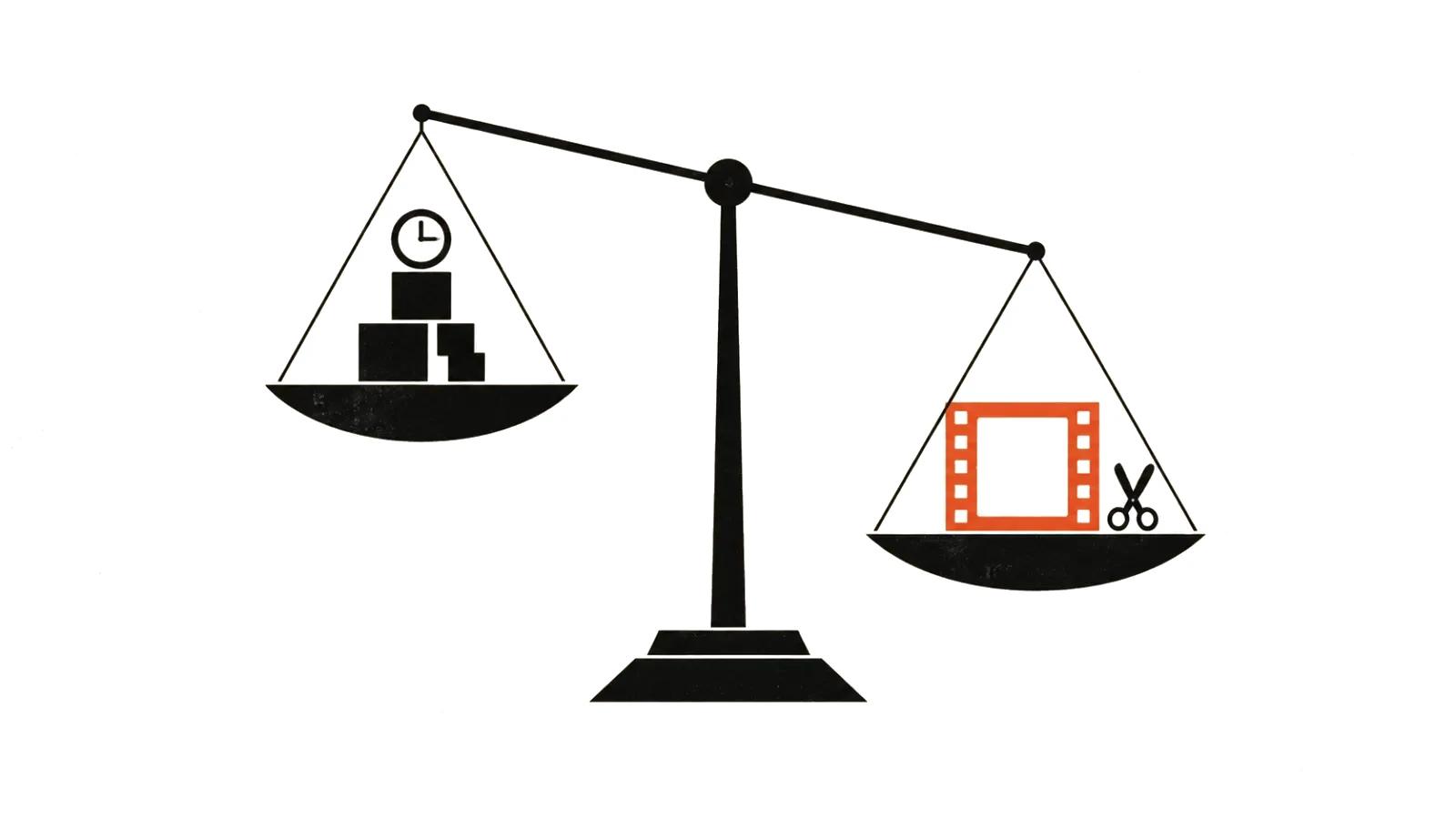
A videographer rarely works for an hour. They travel to a location, wait for people to gather, set the light, check the sound, shoot takes, then review the material and hand it to an editor. Divide the fee by the time the camera was actually in hand and you get one number. Divide it by the whole working day and you get another, closer to reality.
That gap causes most of the friction in the first email. The client counts time on set, the freelancer counts travel, preparation and review. Both numbers are honest, they describe different things.
Ask what the hour includes and how many hours the job needs. The second answer moves the budget far more than haggling over the first.
What a shooting hour includes
The minimum is predictable. Arrival and unloading, lighting, sound check, several takes, checking the material on the spot. A good videographer spends more time on this than on the shot itself, because a mistake on set costs more than an extra twenty minutes.
Then come the details worth settling in advance. Who owns the lighting and whether there is any. How many locations. Whether a second operator is needed. Whether there is a lavalier and a backup recorder. Who watches the wording when a speaker stumbles.
One more line is invisible and always billed: preparation. References, a shot list, coordinating with the venue. Those hours never appear on screen.
Project pricing: a day, priced whole
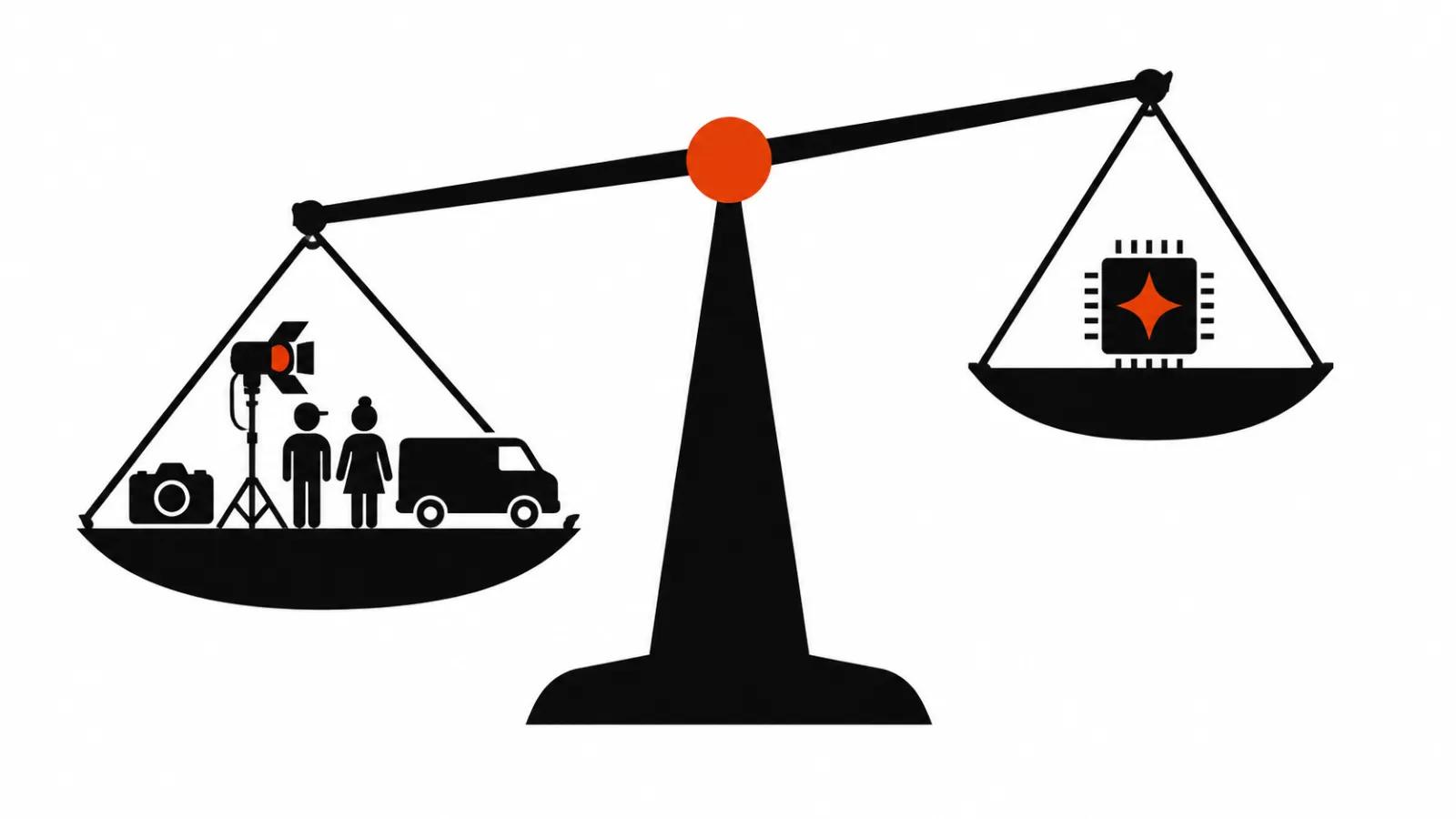
Most corporate work is priced in shoot days. A day covers the location, the crew, the gear and slack in the schedule, without a stopwatch. The client stops counting minutes, the videographer stops rushing the material.
Inside a day there is a fork. One speaker against a wall and eight employees in eight offices are different days, even when the calendar shows one. Logistics eats time, and time eats budget.
Post production is priced separately. Footage without an edit is close to useless, and the edit is often its own line. Ask before signing, or the final invoice will arrive twice the size of the estimate.
Where live footage cannot be replaced
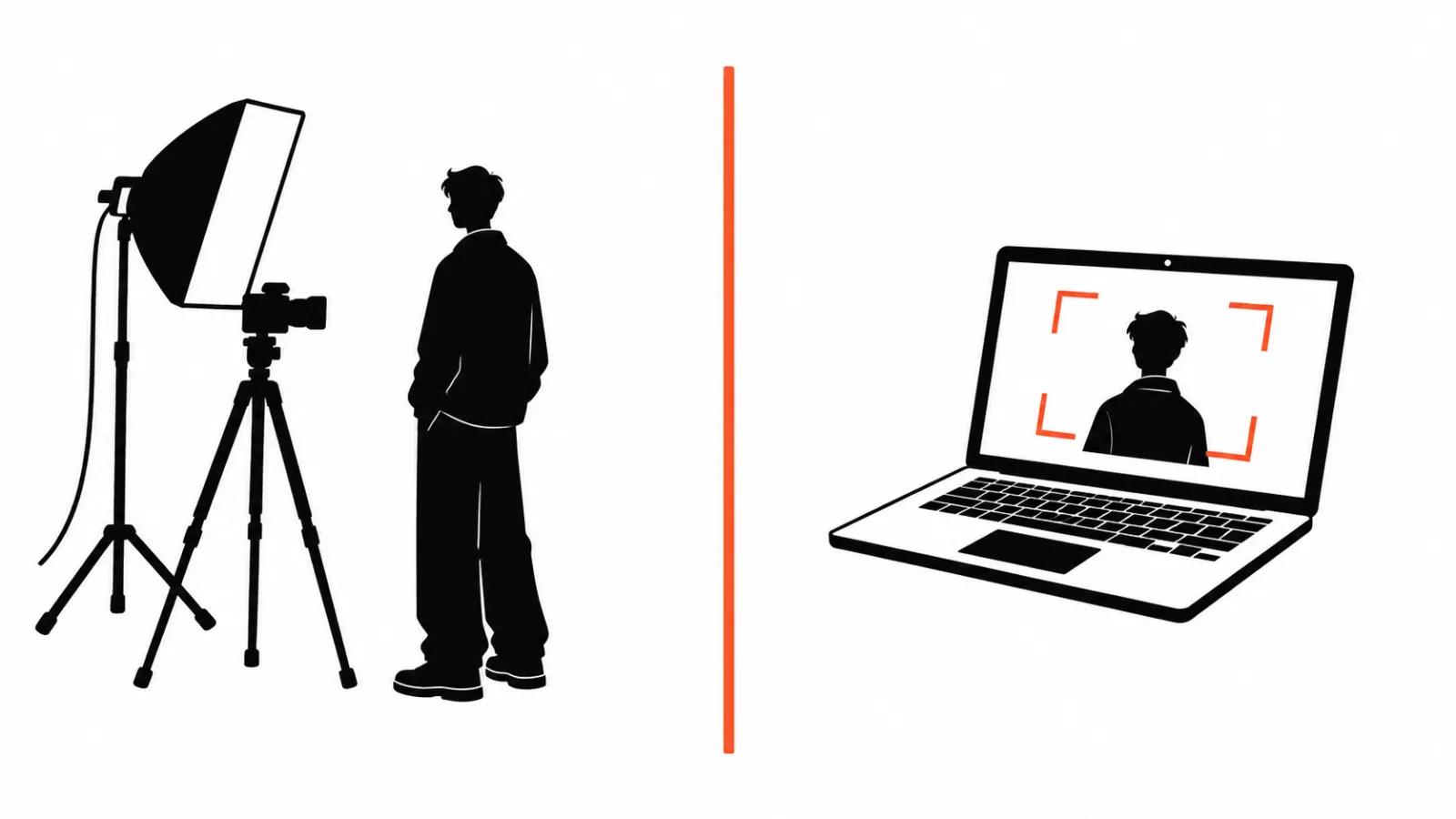
Some jobs have nothing to do with picture quality. People first. A real employee, a real customer, a real expert. Once a viewer senses a stand-in, trust leaves, and no grade brings it back.
Events second. A conference, an opening, a production line. Here the point is the record of a specific day.
Product in hand third. Texture, weight, a small detail, a human reaction to an object. Generation cheerfully draws what is not there, and a close up exposes it.
Faces and voices that cannot legally be synthesised fourth. Consent for a person on camera is a separate document and a separate liability.
When an AI clip is enough
The opposite case is just as common. You need a film about a process that cannot be filmed. You need ten versions of one offer for testing. You need a visual to sell the idea before anyone approves a budget. You run a channel three times a week and shooting every episode is physically impossible.
Here handcrafted videos cost less than a shoot day and arrive faster. Ours start at $394 per video, script, assembly and sound included, with no location, cast or logistics.
A regular channel is priced differently. An AI YouTube channel costs from $200 per month when the need is a stream of episodes, since the economics rest on a repeatable format that works for months.
How to compare honestly
Compare the cost of a finished minute that reached a viewer. The table shows what belongs in the comparison.
Live footage costs more up front and saves little on revisions. An AI clip is cheaper to start and demands checking on details, which is also time.
| Parameter | Live shoot | AI clip |
|---|---|---|
| Preparation | references, shot list, location | brief and storyboard |
| Production | shoot day, gear, crew | generation and assembly |
| Post | edit, colour, sound | assembly, sound, captions |
| Revisions | limited by the footage | faster and cheaper |
| Limits | people, events, real product | product detail, speech, hands |
| Timeline | days to weeks | days |
What this means for the budget
When finance asks for the cost of a video, put three options side by side: a shoot day, a mixed workflow, a generated clip. A one-off job with real people is a shoot day plus an edit. A recurring job that tolerates synthetic frames is the cost per episode multiplied by the monthly count, usually several times lower. An AI commercial for a campaign sits in between: it needs a script, graphics and adaptations, and often a short shoot for the product itself.
Mixed workflows are the most common outcome. An interview or a product is filmed, then assembly, graphics and format versions run through an AI pipeline.
For teams pushing clips at scale there is a different unit, from $2.47 per 1000 views. Comparing it with a shoot day is meaningless.
A checklist before calling a videographer
State the task in one sentence and name the placement. Say how many people are on camera and whether any of them hate being filmed. Ask whether sound comes from a lavalier or a separate recorder. Ask whether the edit is included and how many rounds it covers.
Ask for a sample on a similar job, a showreel will not help. And ask what happens if the shoot falls through: who pays for the location and the gear. Answers to those five questions give a better picture of the budget than any rate card.