
A format people trust
Unboxing, before and after, a reply to a comment, a first-person review. For DTC brands.
Product video for your own storefront and paid ads. Your store sells on your terms, with no marketplace rules, but the same job: answer doubts before checkout.
Product video for your own storefront and paid ads. Your store sells on your terms, with no marketplace rules, but the same job: answer doubts before checkout.
Unboxing, before and after, a reply to a comment, a first-person review. For DTC brands.
A stylized hero or an AI creator, synthesized voice, edit and captions.
We post through mass posting across accounts and geos, and version every copy.
Up to $2.47 per 1000 views with production and publishing included. A single crafted video from $394.
Two steps are yours: tell us about the product and approve the pilot. The rest is on us.
Tell us about the product, the market and the platforms. We price it on a call.
We handle scripts, generation, voiceover and editing.
A pilot batch comes first. We scale the volume once you approve it.
We upload to your channels and to accounts in your geos.
Metrics after every batch. Whatever performs, we scale.
An example of a studio clip in the UGC format: product unboxing, generated with AI. This shows the format, not a client case for any specific online store.
Frames from internal batches. Client names stay hidden, we work under NDA.




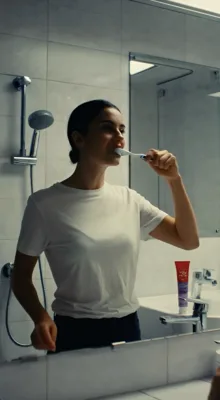



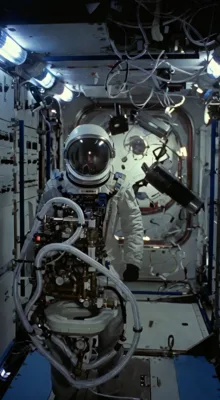
UGC video for an online store is short product clips in a live-demo style: unboxing, use, detail shots, side-by-side comparison. They run on your own catalogue pages, in ad accounts and in email. One script becomes versions by SKU and audience, and a catalogue batch ships in days: the studio runs up to 3,000 videos a day.
In your own store you are not bound by marketplace rules, but the product page does all the selling. Shoppers scroll the catalogue and compare similar items: colour, size, how the product behaves in hand. A short clip answers that inside the page, before the shopper leaves for a competitor.
The UGC production is the same, the jobs are not. On a marketplace you compete for ranking inside the platform. In your own store you control the product page, the email list, repeat purchase and retargeting, so the clip works not only as a storefront but as an ad creative.
| Where | What matters |
|---|---|
| Marketplace card | platform rules, ranking in search |
| Own online store | product page, email, repeat purchase |
| Ads and social | creative per audience, hypothesis tests |
| Both | a real product demo instead of stock |
The script follows what a shopper wants to check before buying. For apparel it is fit and fabric, for cosmetics texture and application, for home goods assembly and where the item lives on a shelf. One universal clip answers the wrong question, so we build a set by catalogue category.
| Category | Script |
|---|---|
| Apparel and footwear | fit, fabric, movement |
| Cosmetics | texture, application, volume |
| Home goods | assembly, use, spot on the shelf |
| Electronics | unboxing, setup, screen |
| Kids products | size, assembly, material up close |
One script becomes several aspect ratios: vertical grabs attention in ads and short feeds, square and 4:5 suit the feed and emails, widescreen works on the site and in the store blog. One production batch then covers both the catalogue and outside traffic.
| Where | Aspect | Job |
|---|---|---|
| Ads, Shorts, Reels, TikTok | 9:16 | reach and creative tests |
| Feed and email | 1:1 or 4:5 | product shown in the email |
| Site and store blog | 16:9 | description and trust |
| Video cover | 9:16 or 1:1 | stop the scroll on the preview |
Product photos in good light, a description and a list of items are enough. If you already have footage, we use it as the base. The sharper the photos of packaging and material, the smaller the gap between the clip and the real item, and the fewer returns and support questions.
We first sort the catalogue by category and script, then build the batch and map it to items. You get a folder of clips and a table showing, for each file, which item it belongs to and in which format. Acceptance runs against the table, not from memory.
The studio runs up to 3,000 videos a day, and roughly 1,000 clips a week per client, so a catalogue of hundreds of items does not stretch into a quarter. The mass format runs at a rate from 2.47 USD CPM, with batches starting at 100 videos a month. We do not post totals on the page: a catalogue quote is built after the brief, by number of SKUs and versions.
We do not promise a conversion lift in percent, guaranteed delivery of impressions, or first place in search. We do not pass a staged clip with an AI actor off as a real buyer review. Platform rules and ad regulations are cited with the source and the date they were checked.
The production is the same, the channel is not. On a marketplace the clip lives inside the card under platform rules. In your own store it runs on the product page, in emails and in ads, where you control the framing and the tests.
Yes: we build the scene from your product photos or a 3D model and place the item in frame with an AI actor. For complex textures and small details, photos in good light work better, or the clip will drift from the real item.
Usually 3 to 5 versions: different scripts, faces and lengths. More makes sense for seasonal items or products with several use cases. We fix the exact volume in the quote before we start.
Paid advertising needs disclosure where you run it, and the advertiser files it. We build the creative so the disclosure can be added without re-cutting the clip, and we flag the spots where it is usually missed.
The studio produces up to 3,000 videos a day, and roughly 1,000 clips a week per client. The timeline depends on the number of versions per item and the pace of acceptance, and we fix it in the quote.
The mass format is priced at a rate from 2.47 USD CPM, with batches starting at 100 videos a month. The total depends on the number of SKUs and versions, so we build the quote after the brief and fix it in the contract.
We price your task on a call
Tell us about the product, the market and the platforms. That is enough for a quote.
We'll say how many videos you'll get, at what price and by when.
what happens next