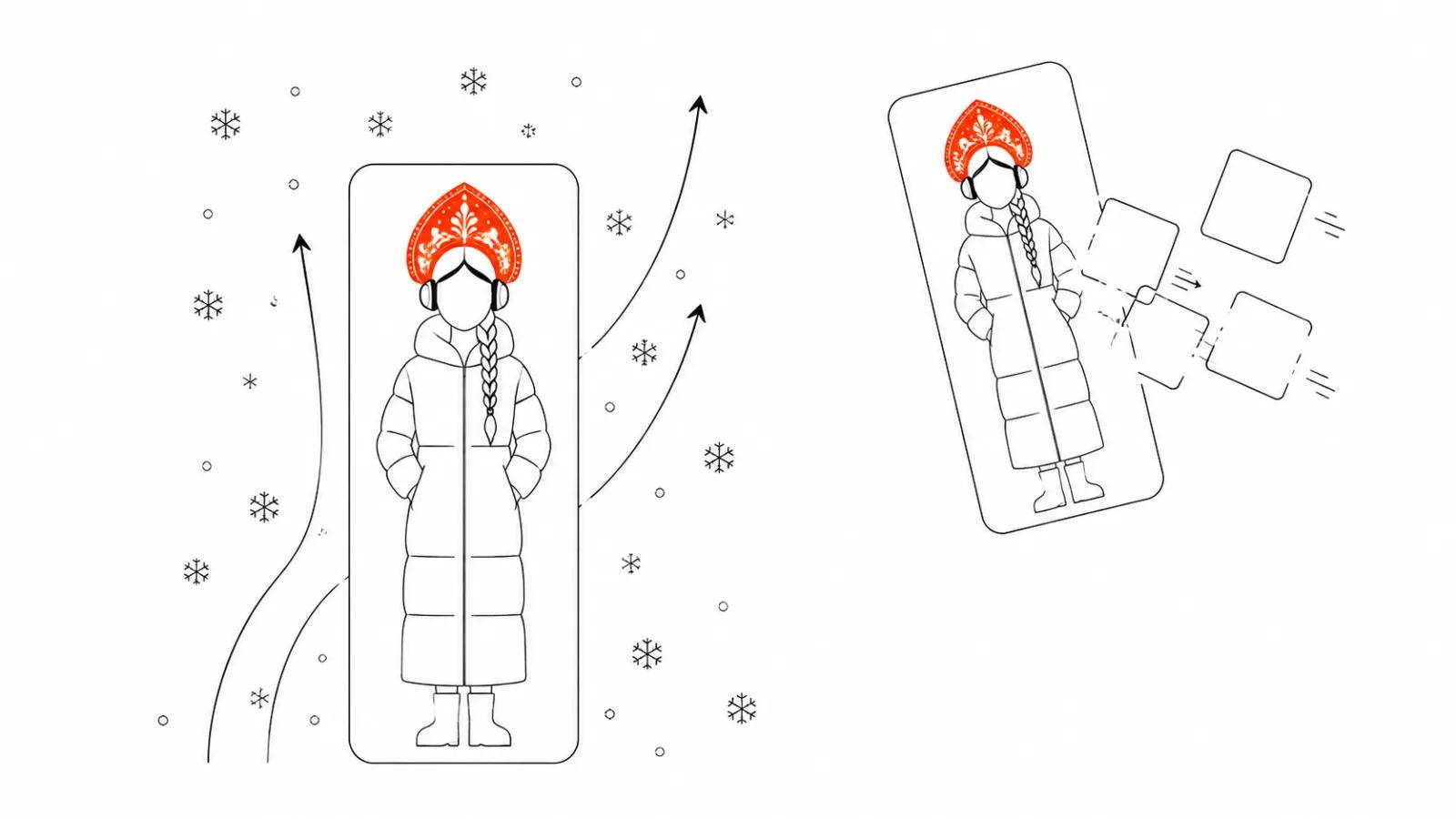
The AI Christmas music video that went everywhere
In December 2025 a clip built almost entirely with generators went viral. Snegurochka, the snow maiden of New Year folklore, sings the short song "Tell me, Snegurochka, where have you been" from episode eight of "Nu, Pogodi!", the 1974 cartoon, with lyrics by Yuri Entin and music by Gennady Gladkov. The author was Sasha Komovich, a photographer and blogger from Gelendzhik. She kept the original short theme and wrote a second part of her own, more lyrical.
Frames came from Midjourney. Motion came from Kling and Veo. Music and vocals came from Suno. The clip passed 40 million views in total, and the track reached a streaming service's popularity chart. A report on December 8, 2025 walked through the build step by step.
The look carried the rest. A kokoshnik and lace sit next to wireless headphones, glasses and a puffer jacket. Folklore beside fashion, and the character reads in half a second.
Why it travelled: a borrowed melody and a new look
Two things did the work. The first is a melody the audience already owns, and the theme from that cartoon is recognised before anyone remembers where it comes from. The second is a look that had never been attached to that melody: a headdress with earbuds reads as a costume of today.
The second part she wrote gave the piece length and a turn in mood. The original theme runs a few lines, and the continuation supplies the other half.
My read is simple. The clip travelled on a pair: a familiar tune and a fresh image. The familiar tune is also what ended the project.
December 12: the track came off streaming
On December 12, 2025 the track was removed from streaming platforms at the demand of a rights holder. Yuri Entin, who wrote the lyrics, said he had never given anyone permission to use his verses. A lawyer quoted by 5-tv explained the mechanics plainly: once the lyrics are used, the consent of the person who wrote the words is required. Reporting at the time described it as the first case in the market of an AI track pulled at a rights holder's demand.
Every element of the clip was synthetic: images from a generator, voice from Suno, motion from a video model. Rights live outside the toolchain. A person wrote those words, and they stay protected regardless of how the recording was assembled.
What to check for a 2027 holiday clip
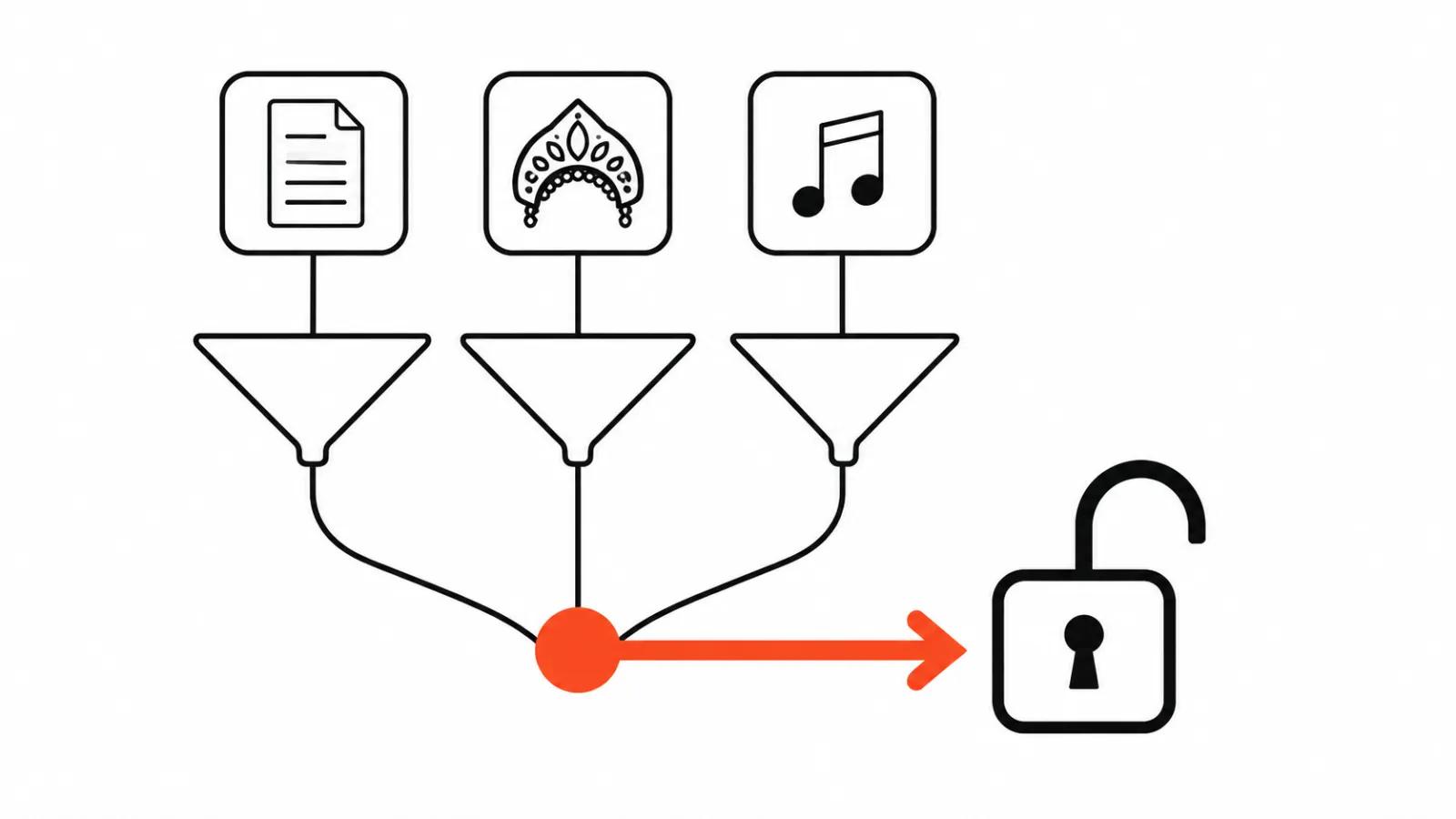
Three checks before the first generation, and none of them costs money.
The boring part takes an evening. It also removes the risk that a finished clip disappears from every feed a week after launch.
- Lyrics. Write your own or use text that has entered the public domain. Copyright terms differ by country and run for decades after the author's death, so material from the last century is usually still somebody's property.
- Characters. Keep them yours. A headdress belongs to nobody, an established character from somebody else's cartoon comes with somebody else's rights.
- The music service. Confirm the license covers commercial use. A listening subscription and the rights for a brand video are separate line items in the terms.
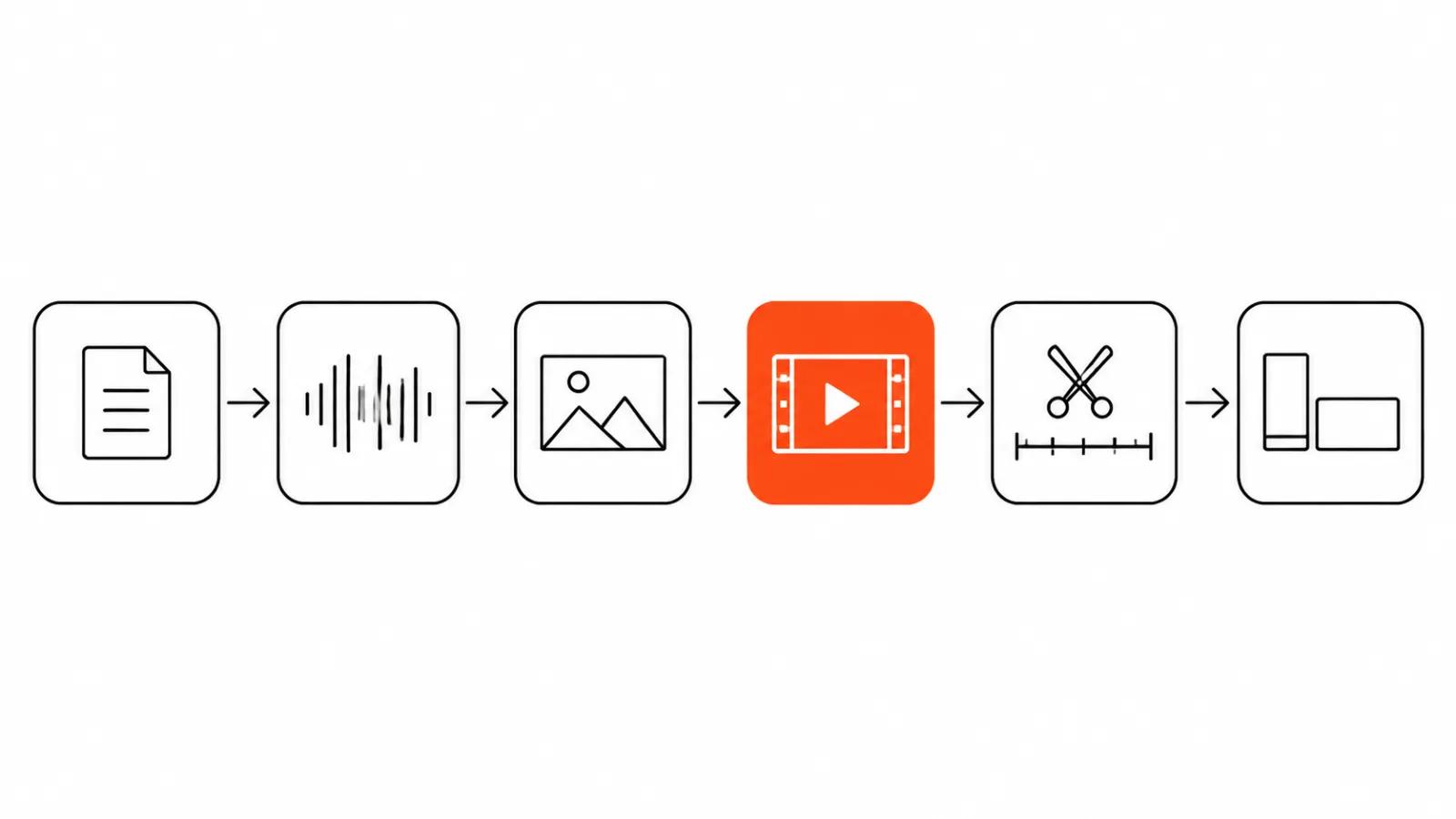
The pipeline: six steps from idea to final cut
The order of work stays the same, only the tools change.
The vertical cut comes out of the same material, so the pipeline does not double. The manual part starts where a real person has to be in frame: a generator supplies motion, while a face and spoken lines stay in human hands.
- Idea and lyrics. Beat sheet first, words for the song second.
- Music. Suno or an equivalent, and the track exists before the frames, because the edit follows the beat.
- Key frames. An image generator sets the character and the anchor frames for each scene.
- Motion. Kling 4.0 handles up to 30 seconds per generation, with Seedance 2.5 and Wan 3.0 alongside.
- Edit to the beat, cutting on the phrases of the song.
- Two deliverables: vertical and horizontal.
Holiday clips for brands: book in November
A holiday clip or a greeting to customers lives for one season, which is why the booking belongs in November. Brand versions of the Snegurochka idea follow the same pipeline as the viral one: original melody, original characters, two cuts at the end.
The same clip lives in two frames, one for a site and a presentation, one for feeds and stories. Then volume decides the rest. Where a real person has to be on camera and their face carries the trust, handcrafted videos from 190 USD come with a price fixed before the start. For a run of greetings across cities or stores the logic flips, and AI video ads built on one template cover a dozen versions.
If the whole thing should land as an AI music video, there is a separate walkthrough of that route. For the numbers behind a shoot, the breakdown of a music video budget covers the stages line by line.
Where the parody line sits
Here I genuinely do not know where the border runs. Parody and cover have case law behind them for human performers, and an AI track has almost none, so every argument ends up on the wording.
So I plan for the worse outcome. A person wrote the words, which means their consent is asked before a generation, ahead of the first complaint. Writing eight lines of your own is cheaper than a conversation with a rights holder.
A holiday clip takes an evening in a generator and a week in production. The mistake is expensive: the finished video comes down from every platform at once.