What happened with the Yesenin clip
SDP stands for "A verse worthy of a song". On December 23, 2025 the authors announced a track called "Syp, garmonika!" on a 1922 Yesenin poem from the cycle "Stikhi skandalista". A model wrote the music and the vocal. The video arrived on January 19, 2026, assembled the same way.
Two weeks later the clip had more than 88,000 views, and the track itself reached the charts of the two biggest local streaming services. Argumenty i Fakty covered it on February 9, 2026, and Komsomolskaya Pravda followed.
One person sits behind both dates, and this was no accident. The same author had already released songs on verse by Pushkin, Lermontov, Tyutchev, Blok, Kipling and Omar Khayyam. The pattern repeats: pick a poem, let a model write music and vocals, let another model build the picture.
Why Yesenin, Mayakovsky and Pushkin are public domain
In the Russophone market copyright runs for the life of the author plus 70 years, under article 1281 of the civil code. Yesenin died in 1925, Mayakovsky in 1930, Pushkin and Lermontov in the nineteenth century. All four have been in the public domain for decades, so their verse can be sung, read aloud, set to music and turned into video without asking anyone.
That is the whole appeal of an AI music video built on a classic text: the words are instantly recognisable, and no rights holder will send a claim. For a model the material is also convenient. The corpus is enormous, metre and rhyme were tested over two centuries, and lines split neatly into stanzas, which is to say into scenes.
The same logic travels. In the United States Poe (d. 1849), Whitman (d. 1892) and Dickinson (d. 1886) sit in the public domain, and the recordings, arrangements and translations around them are a separate question.
Lucomorye, Kolobok and Red Riding Hood: where the material comes from
The opening of Pushkin's "Ruslan and Ludmila", folk tales, European stories for children: three different legal situations that get mixed up constantly.
"Kolobok" is folklore, nineteenth-century recordings with no single author, and nothing there can be protected. Pushkin's "By the seashore a green oak" was written by Pushkin himself, the text is free in full, and a video built on those lines works exactly like the one on Yesenin. "Red Riding Hood" arrived through Perrault and the Brothers Grimm: the plot is common property, yet the specific retelling a studio reaches for can be somebody's protected text.
The rule is simple. Look at the author of the words, since plot is secondary and every translation or adaptation carries its own term. Kipling shows the trap clearly: the Mowgli stories are free in the original, and the translation everyone remembers by heart belongs to one translator. Find the name before you record.
Six steps from stanza to scene
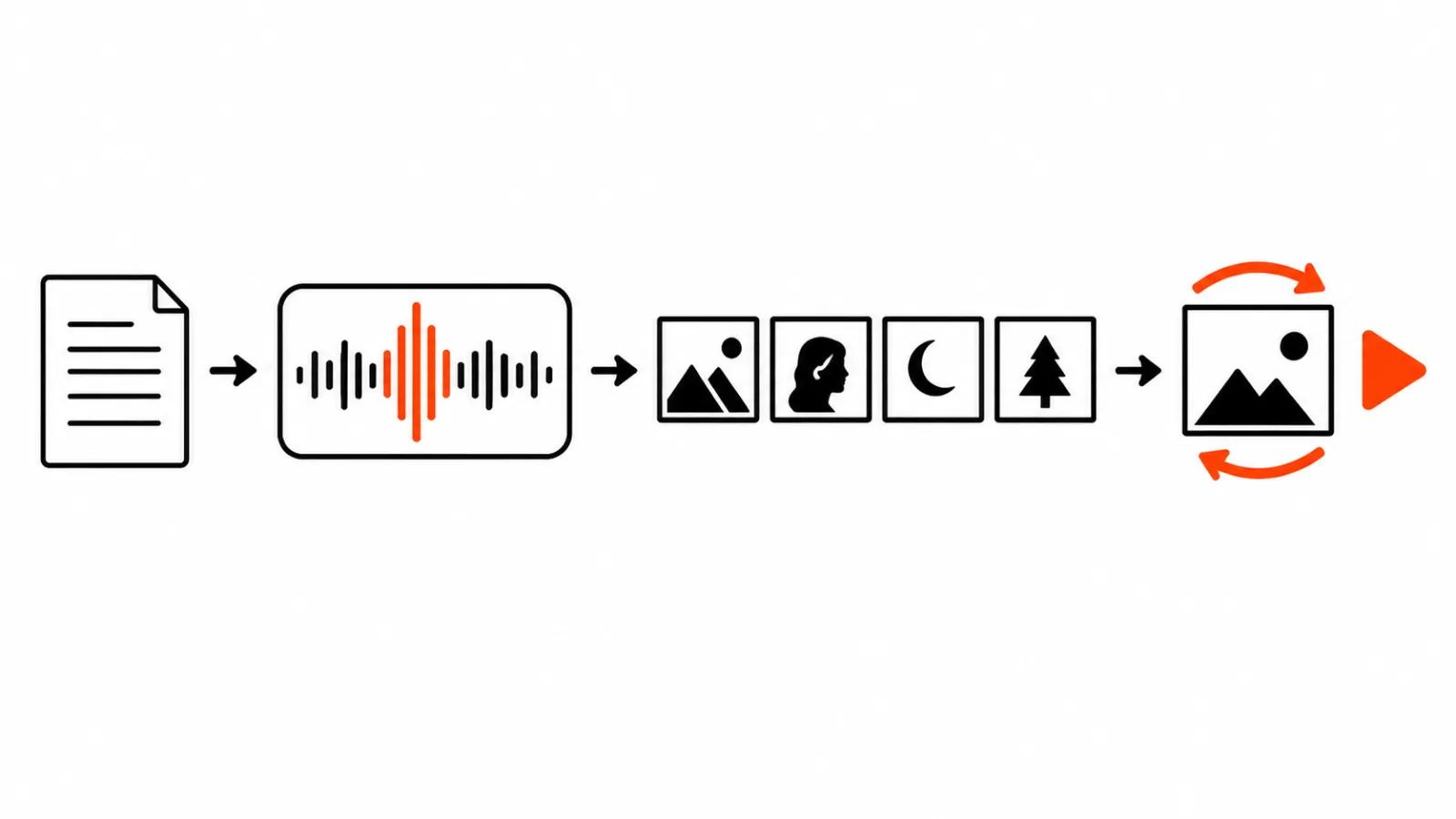
First, choose a text with metre and a refrain. A song lives on repetition, and a stanza that sits well against a chorus saves half the edit.
Second, make the music. Suno and similar services take style, tempo and vocal type, and the lyrics go in as they are. Two things deserve a check: how the model handles a long line, and whether it swallows the stress in proper names.
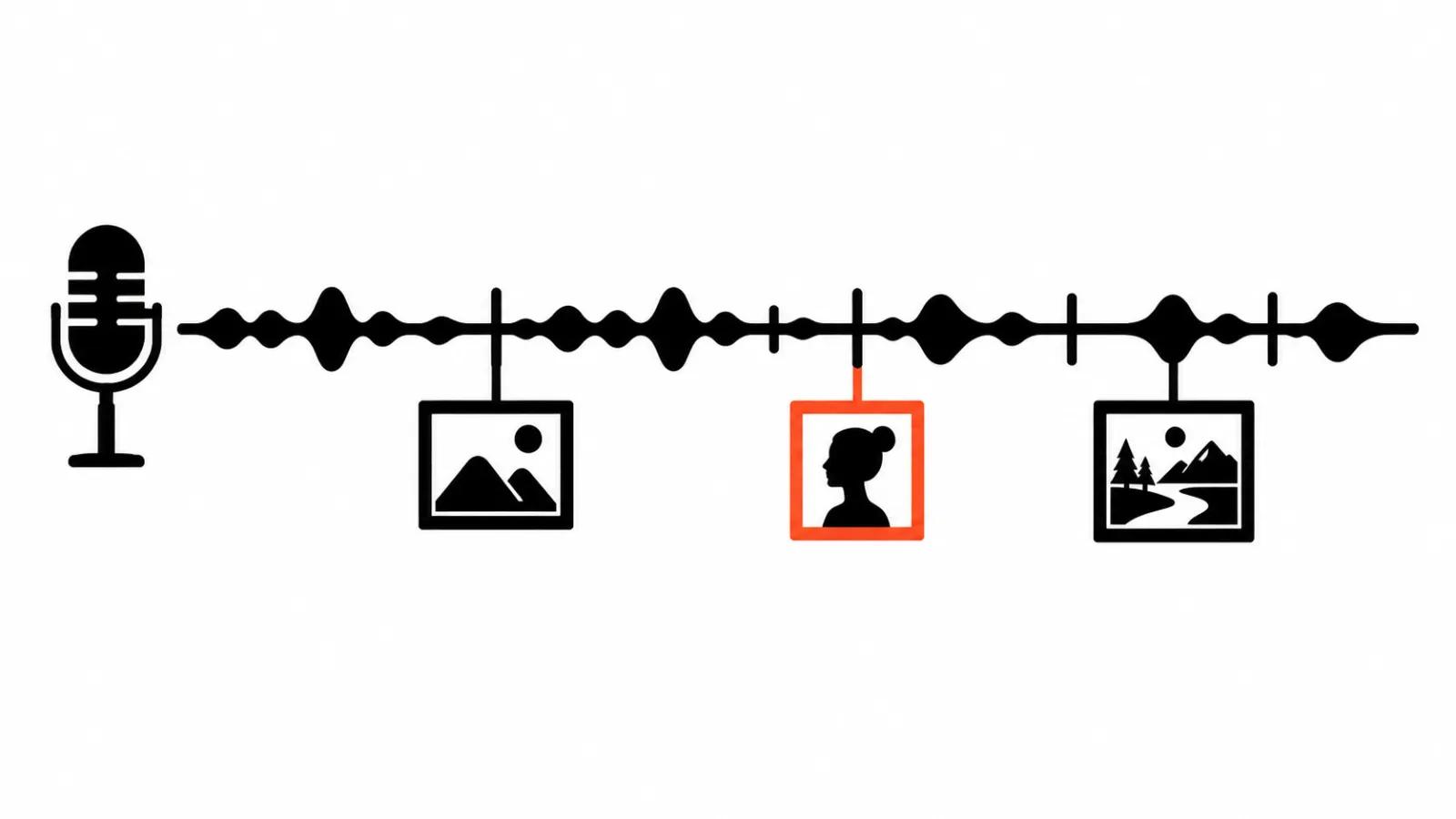
Third, cut the poem into scenes by stanza. One stanza, one shot, roughly four seconds per line. This is the point where you see whether you have more text than pictures.
Fourth, build the key frames in one style: era, palette, the look of the hero, the light. Twenty still frames plus animation later costs less than generating video blind.
Fifth, animate the frames. Image-to-video does the work, and the choice of model matters most here: Seedance 2.5 leads the Artificial Analysis board for animating a still, with the numbers in our photo-to-video model ranking.
Sixth, edit on the beat. A cut landing on a drum hit reads as a professional splice even where movement inside the frame stays small.
What happened to the cartoon song
The contrast to the Yesenin story showed up in December 2025. A track built on Yuri Entin's lyrics from "Nu, pogodi!" was pulled from streaming platforms at the writer's demand, since he said he never gave permission for his verse. The timeline sits in our breakdown of the Snegurochka clip.
The distance between the two cases fits in one line. There the author of the words was alive; here he died a century ago. Everything else, from the quality of the video to the reaction of the platforms, follows from that.
Who commissions these videos
Music videos made with AI left the experiment stage and entered the budgets of educational projects, libraries, museums and schools. A poetry film for a poet's anniversary, a city day, an exhibition or a literature course takes a week and costs less than a shoot with an actor.
Brands working with folk aesthetics use the same trick for seasonal campaigns: a shawl, a samovar, an accordion and familiar lines buy recognition with no licence fees. For a running series the maths changes, and an AI YouTube channel handled from 200 dollars a month keeps episodes on one rhythm instead of assembling them one by one.
Where the frame needs a real person, complex movement or a historically accurate costume, a model still loses. Handcrafted AI videos from 190 dollars cover those scenes, and they carry the projects where acting matters.
My take: classics as insurance against takedowns
A classic text gives you something instantly recognisable with almost no claim risk, which makes it the best entry point into music videos built with AI. Rights get checked once, and after that only production is left.
First doubt: the fashion for singing classics may fade as fast as it arrived. 88,000 views on one track promise nothing about a niche absorbing ten similar projects in the same month.
Second doubt: vocals over long stanzas still betray generation, especially on old-style material like "Syp, garmonika!" where a listener expects a rasp and a crack. Short forms and choruses win for now, while full poems rarely hold attention to the end.
The conclusion is narrow. Build the thing, and do not plan a catalogue on the supply of dead poets, since the supply is endless and attention is not.