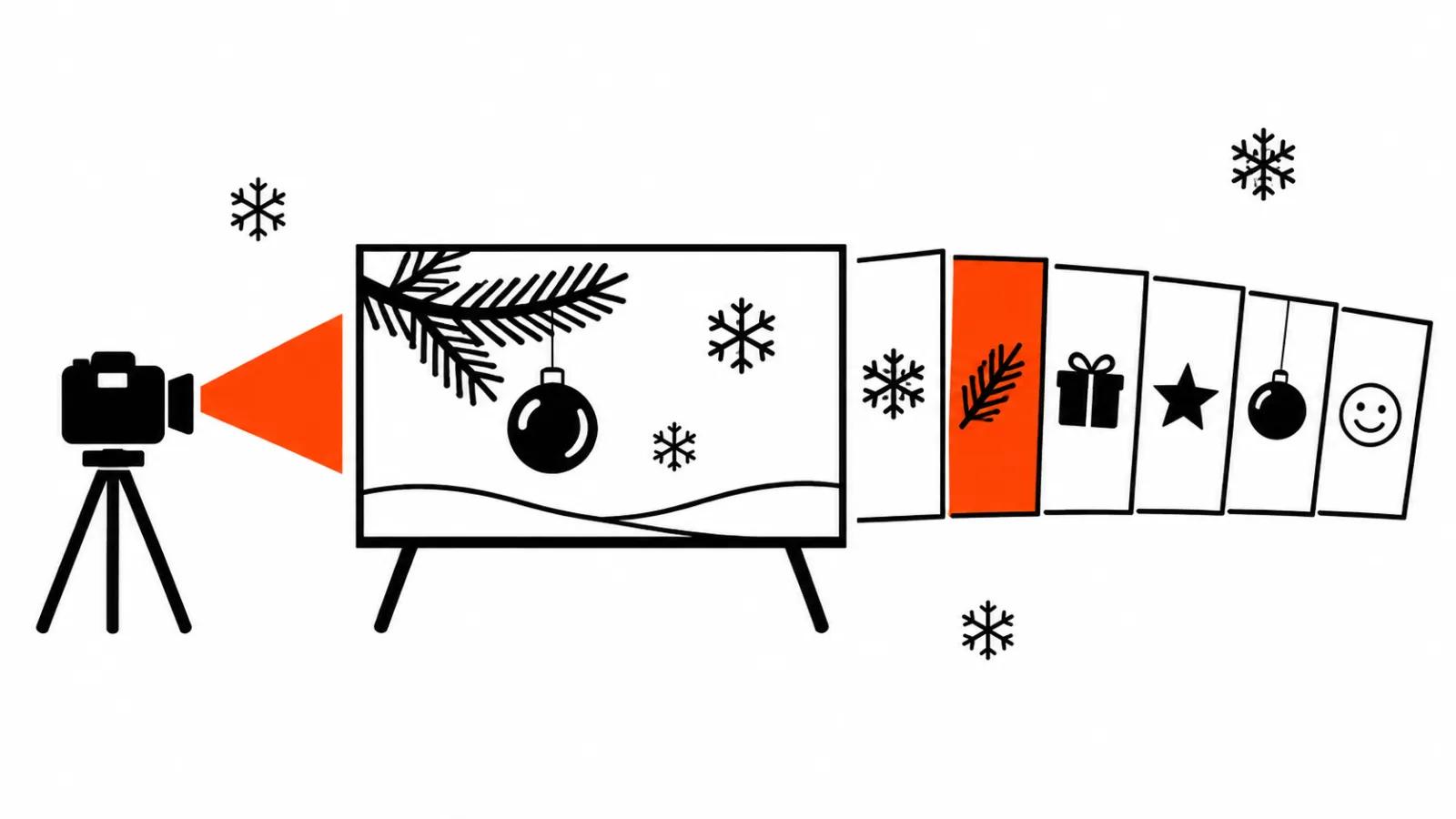
Why the calendar beats the model
A typical picture: a brief lands around December 10, and by the 20th someone needs a finished film plus two 15-second cutdowns. Studios are booked, voice actors are booked, and ad accounts take longer to approve anything with a holiday claim in it.
Our handcrafted videos of up to 90 seconds start from $190 and take about a week. Production fills that week. Approval runs on its own clock: legal, marketing, a founder, sometimes sales. Every round of notes adds days, and in mid-December those days do not exist, so the first take ships and the script gets rewritten during the edit.
That is the whole argument for November, while the calendar still has holes in it.
Holiday image films: what to order this month
A holiday image film is a 60 to 90 second story about the brand: people, light, snow, one clear gesture at the end. There is little sales copy in it, and it keeps working for months on a site, in a newsletter, on an office screen and in a partner deck.
In practice two kinds get ordered in November. The first one is about the company: the team, the workshop, the warehouse, the office. The second is about the customer: their evening, their purchase, their holiday. The second is usually easier to produce, and viewers recognise themselves in it.
The tooling got easier this season. Kling 4.0, as recorded in the Higgsfield changelog on October 21, 2026, generates up to 30 seconds per run, covers aspect ratios from 21:9 to 9:16, and delivers stereo sound with voiceover in nine languages. A 90-second film still gets assembled from three or four fragments. The difference is that each fragment arrives with sound and speech, and the vertical cut comes from the same material.
New Year ad creatives: vertical versions for every placement
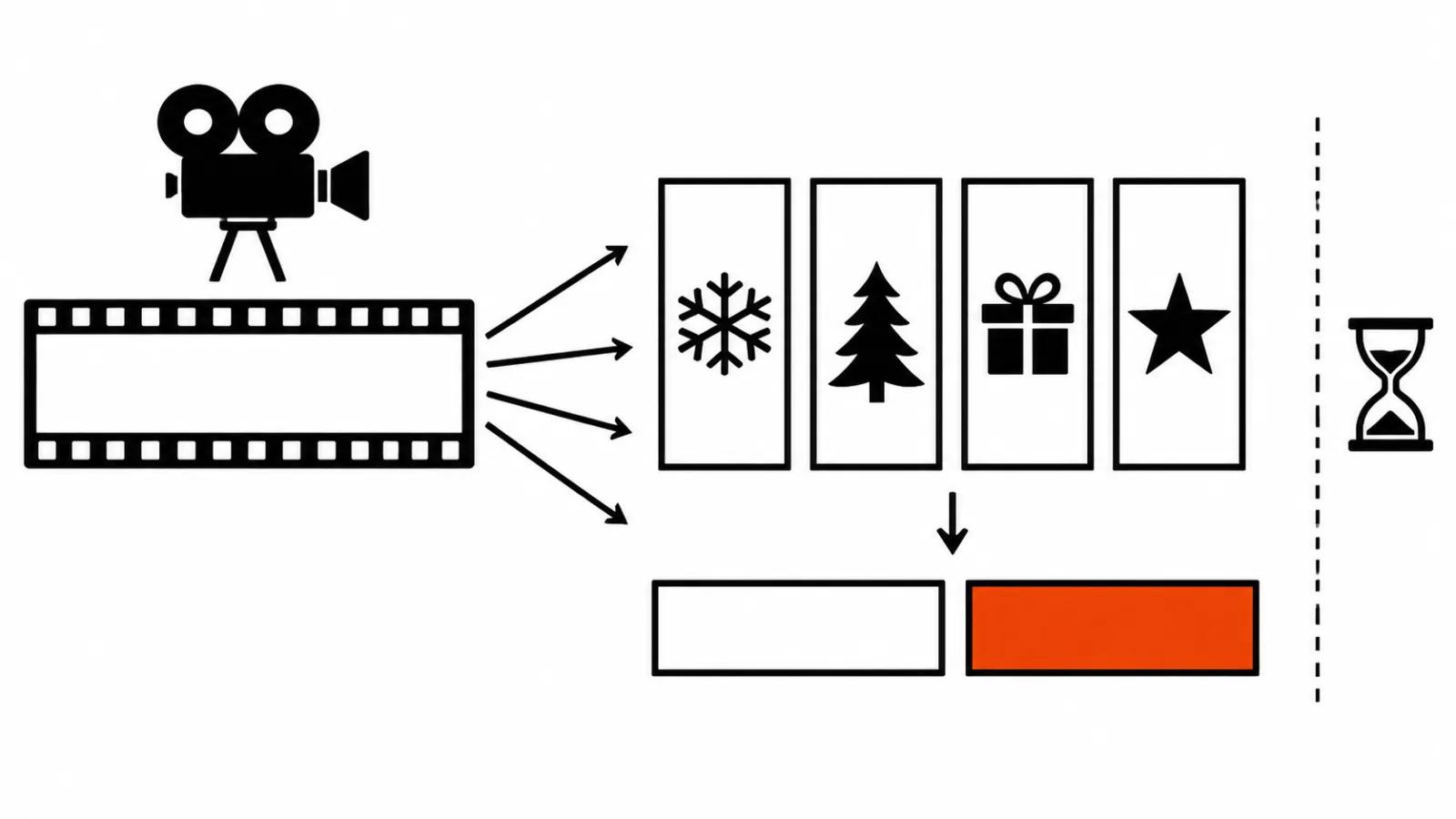
A horizontal 90-second film is too long for a feed. Placements need 9:16 cuts of 10 to 20 seconds, with a first frame that holds attention for two seconds.
The saving comes from one move: build the master once, cut versions out of it. Ninety seconds comfortably yields four or five vertical edits with different opening frames. When many versions are needed for different audiences, short-form video at scale takes over, and we price it up to $2.40 per 1000 views.
Vertical AI video ads are a format of their own, where the frame, the captions and the first two seconds matter most. Order those cutdowns in the same package as the master, otherwise they get made from whatever is left on the timeline.
Corporate holiday video and the client greeting
A corporate holiday video is its own job: a 30 to 40 second greeting for staff and clients. It needs no plot, just someone speaking to the point and two or three frames of the party around them.
It almost always comes out of one master. In November it gets made with margin: one version for staff, one for clients, one 15-second cut for the newsletter. The founder's greeting is recorded once, then titles and the closing frame change.
The animated card lives apart: 10 to 15 seconds, snow, a tree, the logo at the end. It belongs in the same order as the main film so the style matches. A music video is a different brief. We covered the AI Christmas music video separately.
Ordering a holiday video: the timeline that survives December
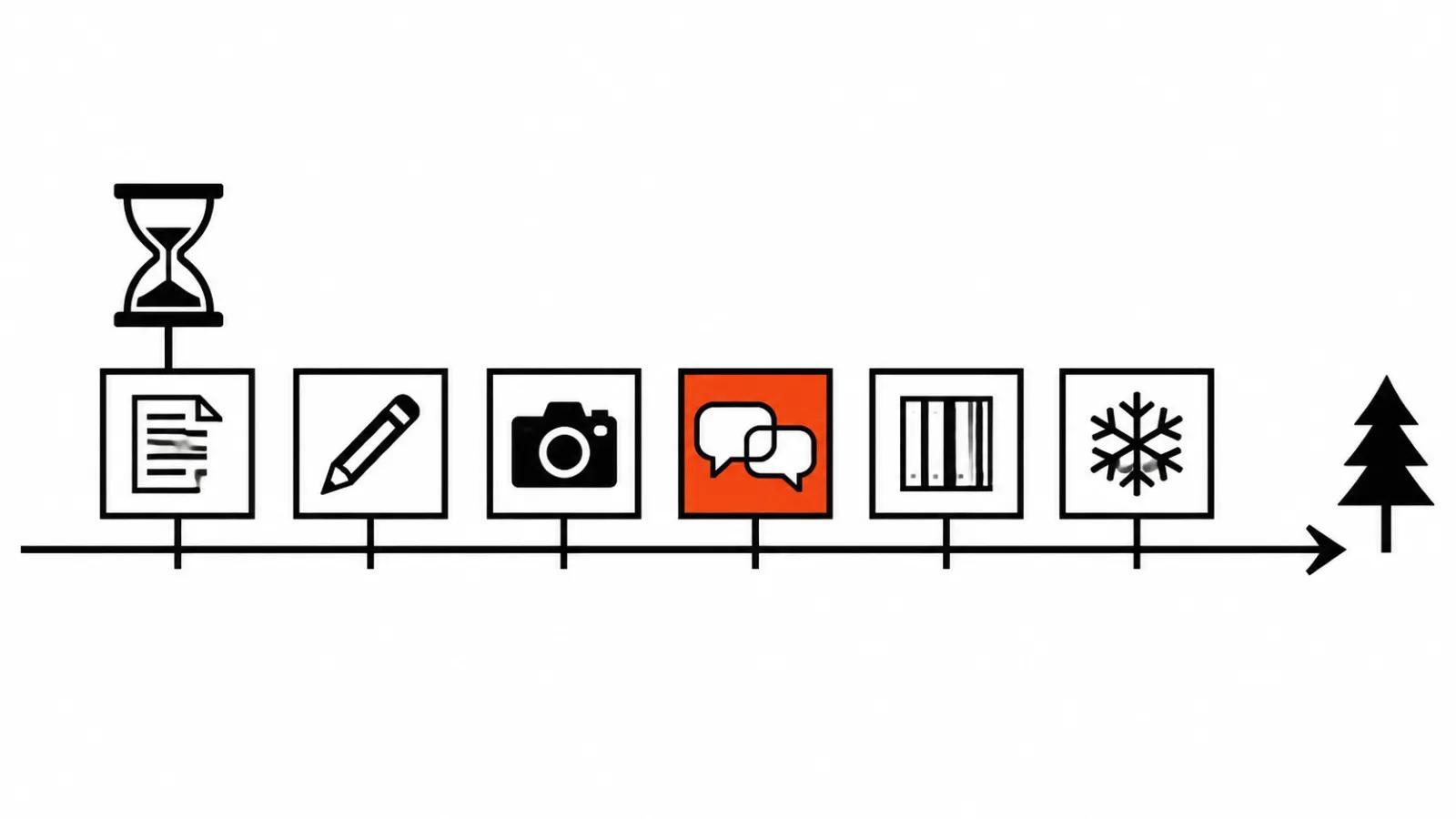
Order before November 20. After that the schedule turns into a lottery. Here is the calm version.
Ad review is the item people forget. A platform can send a creative back over a holiday claim, and fixing the wording costs days that nobody planned for.
| When | What happens |
|---|---|
| First half of November | brief, script, references, budget |
| Second half of November | master at 60 to 90 seconds, voiceover, first edit |
| End of November | approval, two rounds of notes, colour and sound |
| First week of December | 9:16 and 16:9 versions, cutdowns per placement |
| Mid-December | buffer for ad review inside the ad account |
| Last ten days of December | delivery, greetings, reach report |
One master, a pile of versions: Lockstep, Ad Multiplier and Kling
The expensive part of the season is repeat work. Five separate films mean five briefs, five scripts and five shoot days.
On November 2, 2026, the each::labs team described its Lockstep model. It swaps the people in a finished video using one photo per person, and keeps the motion, the lip sync and the camera. The scenario the company proposes is its own pitch: shoot the ad once, recast it for each market. For a holiday campaign that means a version with a different presenter or a different family on screen without a second shoot.
On October 6, 2026, Higgsfield added Ad Multiplier to Ads Studio. It rebuilds any video ad with your characters, products and locations, and lets you test new hooks and CTAs. The practical value is simple: one good film turns into a series of variants for hypotheses, and the winner gets picked on numbers.
Together those two remove the season's main fear, that every variant costs a shoot. One master plus a pile of versions beats five separate films, even when some versions never run. Ad creative versions get built the same way: one base, different opening frames.
My plan for November
First, close the brief and the script by November 20. Write the script for placements: 90 seconds for the site, 20 for a feed, 15 for a newsletter.
Second, have the master by the start of December. One film with spare material for cutdowns, instead of five separate ones.
Third, the versions. After the master come 9:16 and 16:9, titles per placement, and a separate voiceover for each language if the campaign runs across several countries. Snow and a tree in frame are cheaper to add in generation than to chase on location in November.
Fourth, the budget. A handcrafted film of up to 90 seconds starts from $190. Short-form volume is priced differently, up to $2.40 per 1000 views. An AI commercial sits in the middle of that plan as the master everything else grows from, which is why it gets made first.