Genie 4 opens to Google AI Ultra subscribers
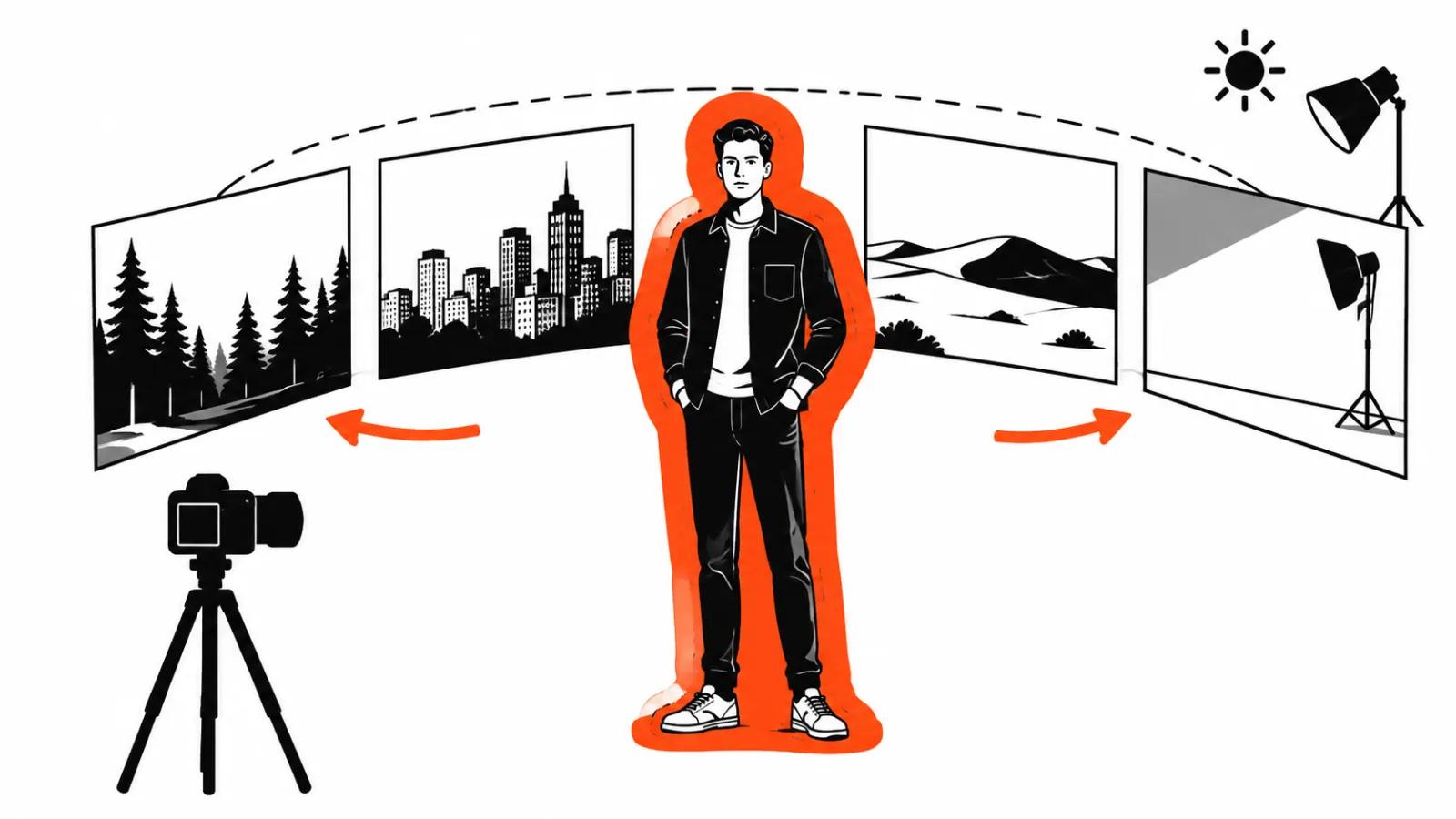
On November 18 the Google blog announced that the refreshed Project Genie is rolling out to eligible Google AI Ultra subscribers. Access to Genie 4 is open for the first time. A world changes by prompt in the middle of a walk: swap the weather, replace the character, turn the action. Audio is generated in real time for the first time, both background and spoken lines. Genie 3 gained sessions of up to 3 minutes instead of 60 seconds, a start from a 360 degree panorama and events driven by text. A Project Genie agent builds a scene on its own, and a gallery holds other people's worlds for remixing. Video and audio carry the SynthID watermark. Google AI Pro subscribers can join a waitlist. A separate piece on the model went live today.
Why this matters: three minutes without a cut plus live scene audio turns a world model demo into a place to draft an ad. A new weather or a new camera turn gets checked in a minute, with no render from scratch.
Phancy Phai-M1: game scenes with live actors
On November 18 a Media OutReach release announced Phai-M1 from Phancy (ticker 6682 on the Hong Kong exchange), a video model for game scenes with live actors. Faces and body motion come out more natural, distortion drops, and video arrives with synced audio in one pass. In the vendor's test 15 seconds at 720p rendered in about 3 minutes. Training is optimized for Huawei Ascend. Phancy promises to publish the Phai-M1 weights and the Phai-A1 language model in the near future, and a demo is already open on the company site.
Why this matters: a game scene is the request where AI video kept producing clay faces. One pass with audio plus promising weights change the quote for a character, if the promise on weights holds.
Paid tools: Synthesia in Claude, Luma per second, MAI Image 2.7
On November 18 the Synthesia blog announced a Claude connector. A video is assembled inside the chat from a prompt, a document, a deck or a spreadsheet. The Syren agent runs by default, planning the clip and writing scenes as code on Opus 5.5. A Studio mode exists for exact wording. A video can run on a schedule or on an event from Slack or email. It is available on Starter, Pro and Enterprise plans, with credits spent the same way as in Synthesia.
Why this matters: a talking head no longer needs its own window. A clip built from a document gets ordered next to the document, and one step drops out of the working day.
On November 19 PricingSaaS noticed a change on the Luma pricing page: Gemini Omni Flash moved to per second billing. Clips run 3 to 10 seconds, and text or an image into 720p video costs 36 credits per second. The old rate reached 370 credits per clip, capped at 360 for 10 seconds. Modify at 720p went from 39 to 38 credits per second. Ray3.14 lost its HDR+EXR mode. Extra MiniMax H3 Max references rose to 7 to 18 credits.
Why this matters: per second pricing is honest to short inserts. A three second fragment no longer bills like a full clip, and a test across ten versions finally matches common sense.
On November 17 the Microsoft AI blog, timed to Ignite, opened MAI Image 2.7 and 2.7 Flash in public preview inside Microsoft Foundry. A thousand images costs about $35 on the larger model and about $10 on Flash. For editing, 2.7 sits first on the Artificial Analysis leaderboard. A new Canvas editor in MAI Labs runs on Flash. A still is not a side topic here: it feeds the key frames behind a clip.
Why this matters: fixing an image costs less than re-rendering a scene. Once a frame is a few cents, a key still gets redone without touching the rest of the clip.
AI video news: a camera out of a clip and LoRA inside ComfyUI
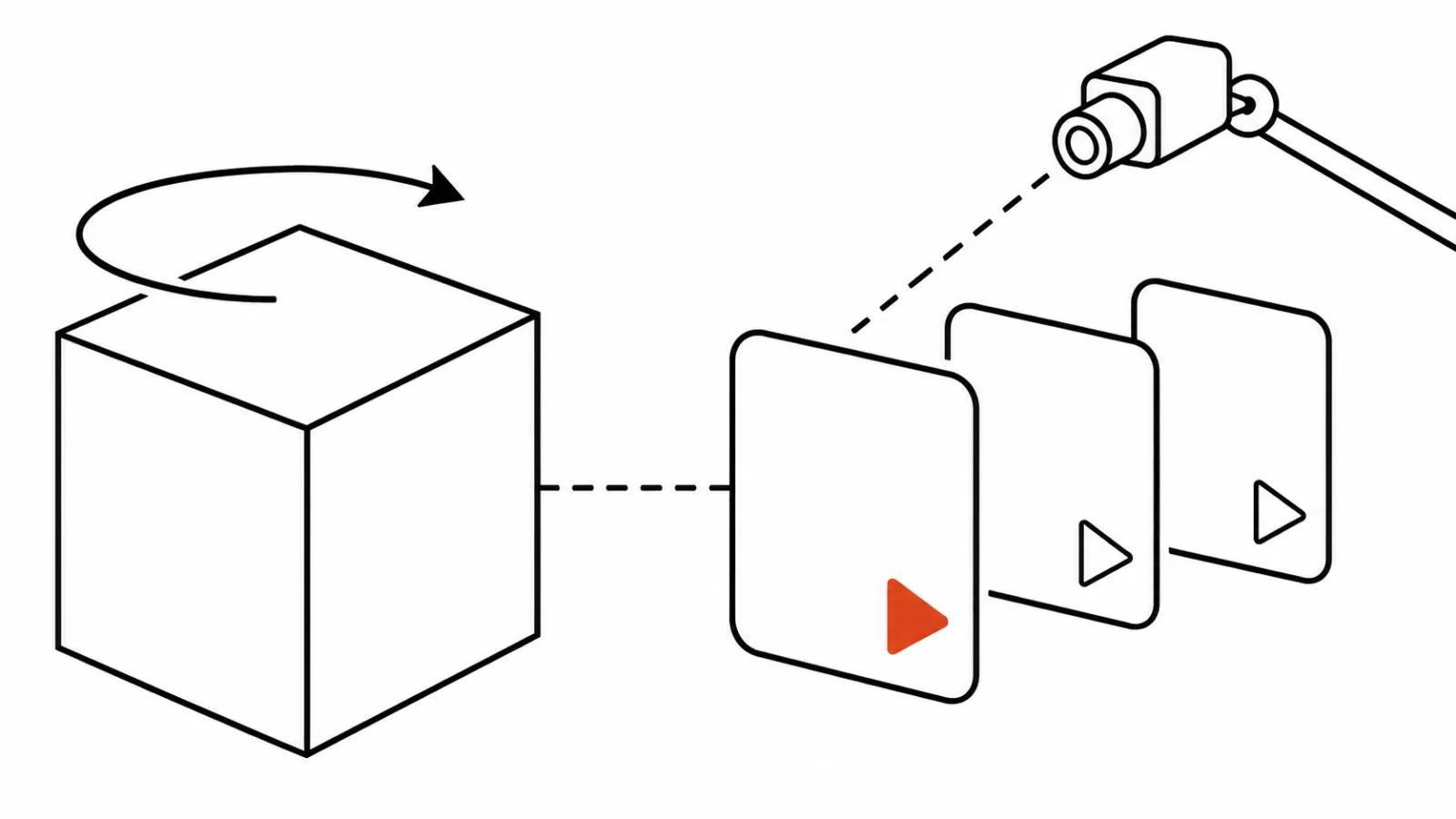
On November 17 ai-video-in-code appeared on GitHub under MIT, written by sirioberati. A scene of Gaussian splats is trained from a five second AI clip, then new camera moves render from it, moves that the clip never contained. Training takes 12 to 19 minutes on an M3 Pro.
Why this matters: an orbit or a push in stops being a lottery at generation time. The clip supplies the geometry of the scene and the camera is set later, at the assembly stage.
ComfyUI-OmniLoRA shipped the same day under Apache 2.0 from cyberterm. A LoRA trains inside the ComfyUI graph on a model that is already loaded, with Wan 2.1 and 2.2, HunyuanVideo, LTX-Video and Flux on the list. A character needs 10 to 25 images.
Why this matters: a character has to hold across a series, and that is the main cost of a long project. Training inside the graph drops the weight export and the second pass through the pipeline.
Deepfake detection and a camera at eye height
On November 18 VideoTech Wire went through a deepfake detector built on a world model. A world model predicts the next stretch of video in a hidden representation, a frozen V-JEPA 2.1 encoder supplies what the clip actually contains, and a large gap counts as evidence of manipulation. Trained only on FF++, the detector scored AUC 90.5 on Celeb-DFv2, a set it never saw during training.
Why this matters: a detector that holds on an unfamiliar set is closer to checking real clips. For now it is research with no service behind it, so sign off still relies on eyes and on labels.
The EyeHeight study came out the same day. Six open interactive video models lift the camera to human eye level, 1.1 to 1.5 meters, as soon as the shot turns or walks, even when the frame started 15 centimeters off the floor. The models reproduce the habit of a camera operator. A detailed piece on this ran today in our how it works section.
Why this matters: a low angle on a long turn holds badly in these models, and according to the authors a text hint does not save it. Shots with the camera near the floor are worth checking against the floor line and the horizon.
EU labeling of AI video: the deadline is December 2
By December 2, 2026, generators that reached the market before August 2, 2026 have to label AI video in a machine readable way. This comes from Article 50(2) and Article 111(4) of the AI Act. The requirement covers data inside the file: the mark has to be readable by software.
Why this matters: the duty sits with the generator services, yet a label can get lost in editing and re-encoding. Checking that watermarks and metadata survive into the final file costs less in November than explaining it in December.
What this roundup changes in client work
Ten items landed in a day and they hit different parts of the pipeline. Genie 4 and Phai-M1 shorten the road from a scene idea to a moving frame. Synthesia, Luma and MAI Image move the price of a step: a clip from a document, a second of Omni Flash, a thousand stills. The open ai-video-in-code and OmniLoRA add control over camera and character. The V-JEPA 2.1 detector and the December 2 deadline both say that checking a clip became part of the job.
Take a scene you already shot and run it through the Phai-M1 demo and through Omni Flash: the difference in faces and sound shows on the same footage. News about video models pays off only where it can be tested against your own project.
For client work the split stays the same. Where a final frame and exact expression matter, doing it properly first is cheaper: handcrafted videos start from $190 for a finished piece. AI video production that runs in batches rests on another sum, up to $2.40 per 1000 views. Vertical video ads ship as a set of versions, and the new wave of models saves the drafts there.
Related reading: the November 18 roundup on HeyGen, Omni 1.2 Flash and Suno Visuals.