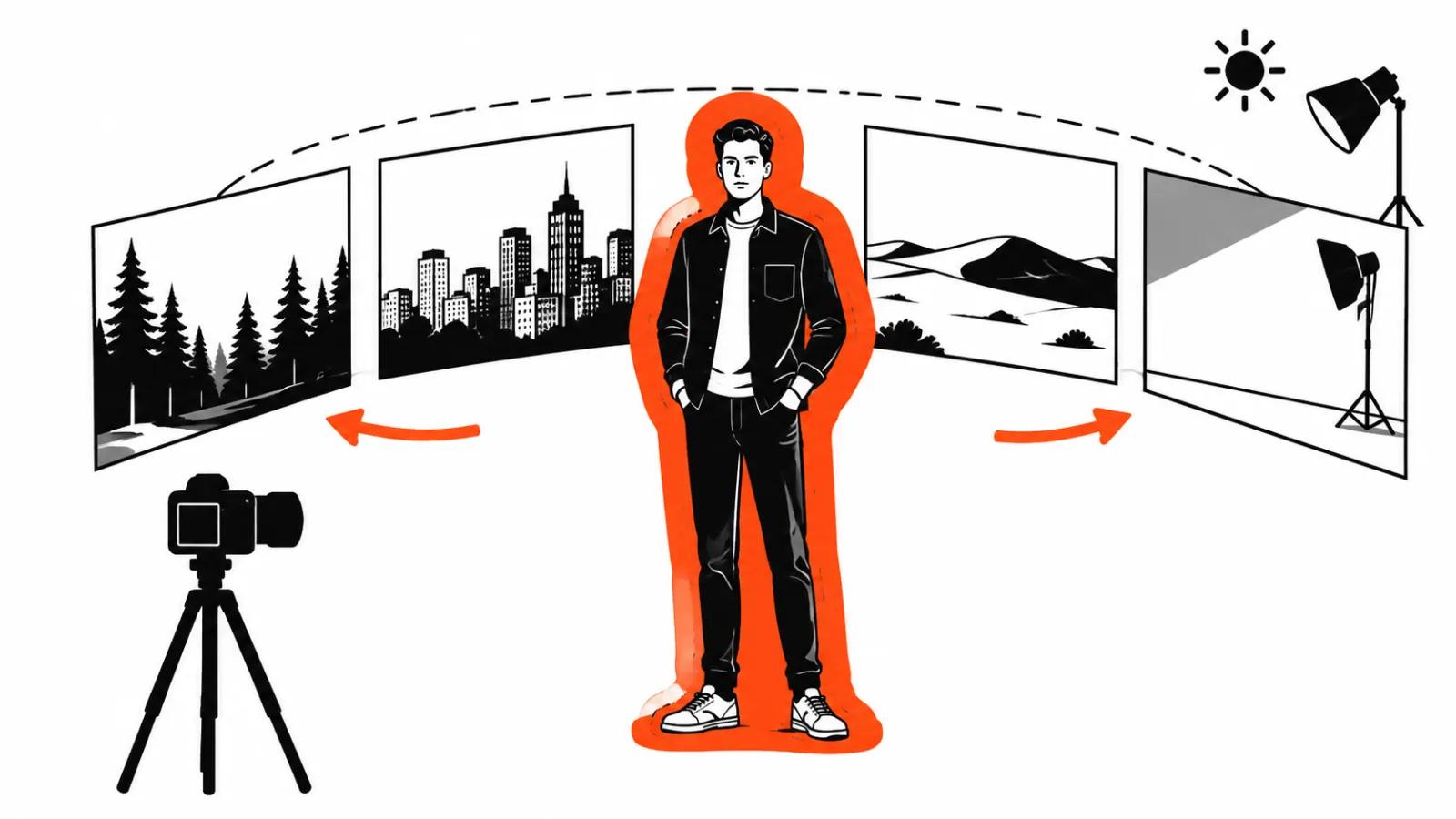
SwitchX 3.0: the world around the actor changes
Beeble released SwitchX 3.0 on November 10, a video-to-video model that replaces background and light on material already shot. Inside it is rebuilt on the open MiniMax H3, so the new version stands on someone else's open foundation.
One idea carries the release: Source-Locked Rendering. The actor's performance inside the alpha is locked pixel for pixel, and the model touches only the world and the light. For ads this removes the painful part of a location swap, since nobody has to reshoot the person and the facial work stays original.
What is new in version three: up to four reference images, a moving background, camera tracking with no markers, and scene events driven by a prompt. Output is 4K at 10 bit. It runs in the Beeble cloud app.
Why it matters: in version 2.0 the background moved far less, now traffic, crowds and snow move behind the actor. A moving background and a free camera turn a location change into an ordinary tool for a series of spots.
DeepBrain AI Studios 5.0: video out of a document, through chat
DeepBrain AI, out of Korea, showed AI Studios 5.0 on November 9 with a chat agent called Video Agent. The agent takes a description, a document, a link or a finished script and assembles a video: copy, scenes, voice and avatars.
The new Personal plan runs on a single credit balance at $29 a month, with 700 credits in the pack. One balance means credits are not tied to a single feature and go where the project needs them.
Why it matters: starting from a document removes the step where someone builds a storyboard by hand. On training clips and short pitches that is hours previously spent marking up scenes.
Adobe and Disney: their own models on their own characters
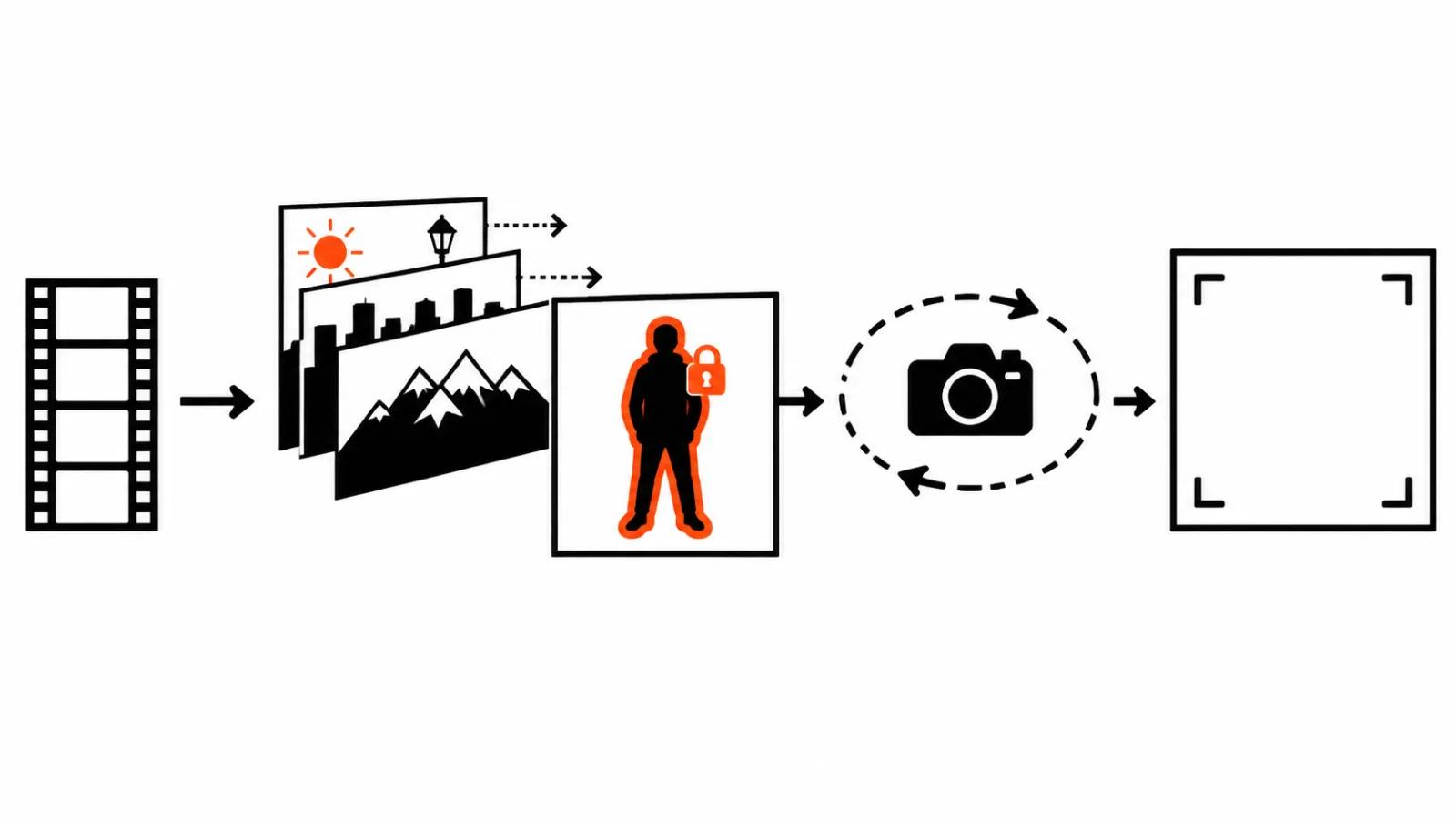
On November 9 at Adobe MAX in Miami Beach, Adobe announced a multi year alliance with Disney and became its Official AI Innovation Partner. Disney is building its own models in Adobe Firefly Foundry, trained on its characters, worlds and styles.
The first use is already running: Imagineering R&D works with a sketch-to-image model that turns a drawing into 2D concept art. Adobe MAX runs November 10 to 12.
Why it matters: a big rights holder ends up with models trained on its own material and stops leaning on other people's generation for style. For smaller studios the fork in the road is clear: your own model, or careful licence work on someone else's.
TikTok Symphony: BytePlus tokens for Seedance
From November 9, advertisers outside North America can buy BytePlus tokens for Dreamina Seedance models inside Symphony. The Symphony API also got an update for in house creative systems.
What Seedance has offered inside Symphony since August: clips up to 30 seconds and up to 50 references, covering images, video and audio.
Why it matters: paying in tokens inside the ad account makes testing cheaper to run. Thirty second pieces with fifty references can be run in batches to check hypotheses faster.
NVIDIA: a MiniMax H3 draft pushed to 2K and 4K
NVIDIA's Sana team published Open-H3-Regenerate-2K-IC on November 9, an open IC LoRA. It redraws a 768p MiniMax H3 draft into 1080p, 2K or 4K while holding faces, lip sync, on screen text and frame layout. Draft audio carries over untouched.
The MiniMax H3 Community License excludes the EU, the UK, Korea and the US, so on part of the market this route is closed on legal grounds. It follows the version from October 28, and our breakdown of Open-H3 Regenerate 2K already covered the first release.
Why it matters: upscaling a draft costs less than generating again at high resolution, and now it can sit as a normal pipeline step. Test it on frames with lettering, since that is where upscalers usually break characters.
Rumour: Alibaba promises a video model in November
According to reports from QbitAI and Shanghai Securities News covering Alibaba's September 22 conference, the next generation video model should arrive in November: longer, more controllable, with a director's reading of the story. As of November 9 there is no official release, which each::labs notes in its own write up.
There is no name, no spec sheet and no price, so until launch this stays a rumour. Building a December quote around it is premature.
Why it matters: if the date holds, November brings one more long model into general access. For now the only useful move is to keep a test scene ready.
Lawsuits against Suno: Elvis and Eminem
The Los Angeles Times reported two new lawsuits in the Northern District of California on November 9. The first came from the rights holders of Elvis Presley, with damages put above $50 million, and it is one of the first tests of the ELVIS Act. The second came from publisher Eight Mile Style over early Eminem hits, at about $41 million.
Suno denies the claims. The suits concern training and generation, and for a user the takeaway is simple: a track out of a generator carries its own legal risk.
Why it matters: generated music just became its own line in a rights check. On a commercial spot that means reading the service licence before the first generation.
What this changes in the work
The day came down to fixing footage already shot, and to rights. Models are learning to change the world around the actor: SwitchX holds the person in the alpha, NVIDIA lifts a draft to 4K. Brands are building their own models, the way Disney does in Firefly Foundry. Generated music turned into a legal risk, and the two Suno suits confirm it.
The practical part is short. On a commercial spot, read the licence before the first generation. Upscaling a draft now belongs to the pipeline alongside editing. Plan a background swap at the shoot, so the actor's performance stays the original.
When a campaign ships in batches, vertical ads and volume work through AI video production rest on one thing: the source is shot once and versions are built in the model. Where the final frame and the responsibility for a face matter, we have handcrafted AI videos from $190. The November 7 roundup covered Higgsfield Micro Drama Ads, Core Studio, Wizshot 1.0 and the ElevenLabs Ads Engine, and it reads well next to this one.