Why checking a video for AI got harder
The difficulty is that generation quality improves faster than verification does. A year ago the artifacts were crude: fingers melted, shadows detached, skin looked like plastic. On an eight-second clip watched on a phone, the eye no longer catches it reliably.
Hence my position. A single signal proves nothing, and a verdict of AI needs two independent sources: metadata and a visual check. If both are silent, the honest answer is I do not know.
Six signals you can see
Start with a pause and a slowed-down pass. The list is a heuristic. It is not evidence.
Audio deserves its own look. Synthesized speech is suspiciously even: no breaths, no thinking pauses, flat loudness.
- Hands and fine motor control. Fingers fuse, change length, sprout extra joints. Motion shows this better than a still frame.
- Physics. Shadows miss their light source, reflections in glass show a different room, water ignores the object touching it.
- Faces. Expression lags, teeth merge into one strip, blinking comes slower than a person talking needs.
- Background. People in the distance stand frozen or move in sync, signage loses letters when the camera turns.
- Text. Print on clothing, licence plates and price tags smear even when the close-up looks sharp.
- Repetition. The same passer-by appears twice, a tile pattern repeats to the pixel.
Metadata: Content Credentials and C2PA
The strongest step starts with the file. The C2PA specification describes Content Credentials, a manifest of assertions about origin: when and with what tool the material was made, what was done to it, whether generation was involved (C2PA Explainer (https://spec.c2pa.org/specifications/specifications/2.2/explainer/Explainer.html)). The manifest binds to the file through a cryptographic hash, so an edit breaks the signature and becomes visible to anyone checking.
A public tool reads the manifest and edit history (Verify (https://verify.contentauthenticity.org/)). If the manifest exists and the signature validates, you know which tool claimed authorship. If there is no manifest, you know nothing: a missing label means a missing label.
That caveat is the whole point. C2PA documentation states plainly that the provenance metadata can be removed, which is why durable credentials pair a hard binding through hashing with a soft binding through a watermark or fingerprint (C2PA FAQ (https://spec.c2pa.org/specifications/specifications/2.2/explainer/Explainer.html)). Messengers, screenshots and re-encoding strip metadata more often than malice does.
Watermarks: SynthID and what it actually checks
Google embeds SynthID into video that Veo generates, invisible to the eye and surviving some processing. Since October 2026 the detector is open to everyone in English and checks images, video and audio, including material from partners such as OpenAI, NVIDIA and Kakao (Google blog (https://blog.google/innovation-and-ai/models-and-research/google-deepmind/synth-id-ai-content/), SynthID page (https://deepmind.google/models/synthid/)).
The detector answers a narrow question: does this file carry a specific company's mark. A positive answer carries weight. A negative one means almost nothing. The clip may come from another model, passed through an editor, or lost the mark under compression.
That is why Google put verification inside Search, Gemini and Chrome. People will not hunt for a service every time; they need the answer next to the video.
Why detectors fail
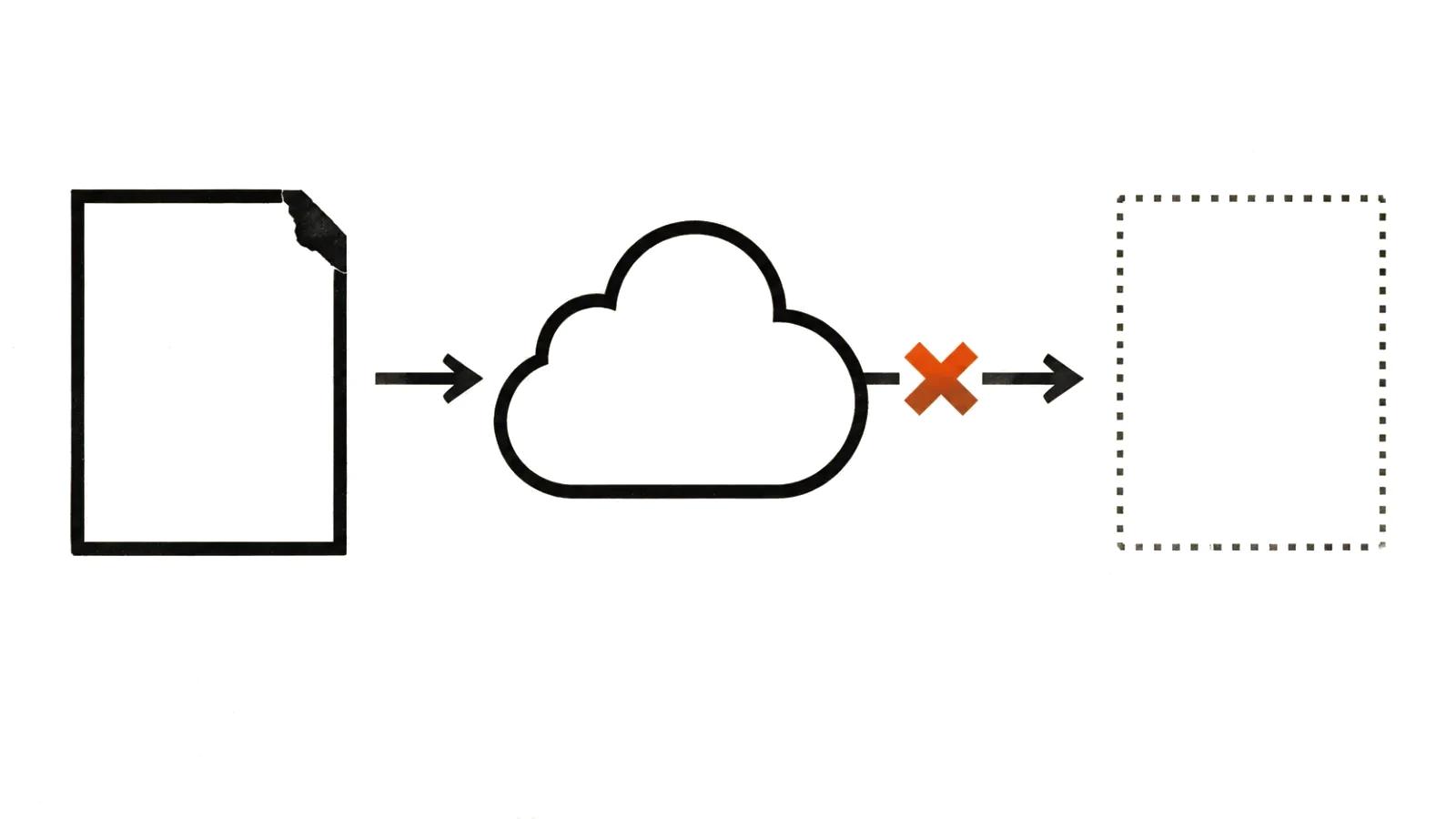
Classic detectors were trained on images. Applied to video frames, accuracy drops: colour conversion, codec compression, resizing and blur interfere. The authors of a unified image and video detector describe this as a consistent failure mode in strong models (arXiv 2605.21977 (https://arxiv.org/abs/2605.21977)).
The practical reading is simple. The percentage on a detector screen is a probability for one model on one dataset. It is not the probability that the clip is fake.
Compression is the second source of error. Platforms re-encode video to their own bitrate, and some generation traces vanish along with detail. The heavier the compression, the less evidence remains for any check, visual ones included.
A ten-minute order of checks
This is the order I use and recommend.
When the decision is expensive, the source file settles it. Someone with a camera and a card can show capture metadata in a minute. Someone holding a forwarded clip usually shows nothing.
- File. Download the original. A forwarded copy is useless for verification. Then the manifest in Verify.
- Mark. Run the clip through the SynthID detector if Google or partner models are plausible.
- Frames. Pause at three points and inspect hands, background and text at half speed.
- Audio. Listen for breaths and pauses, compare loudness between lines.
- Source. Find who posted first and ask for the source file.
What it means for a studio and a client
In production the check runs both ways: so your video is not mistaken for a fake, and so another clip is not passed off as yours. Two things do the work.
First, labelling. Rules for marking synthetic media differ by market, and the AI content labeling rules breakdown covers where they landed. Watermarks form the second layer, and the SynthID write-up traces how that mark arrived.
Second, volume. When you ship dozens of versions of one clip, some platforms catch duplicates automatically, which is a separate story about video versioning. They look for a repeat.
For a studio this puts verification inside production. AI video production without a label hands the client a risk, and vertical video ads with no provenance trail are hard to clear. To a client I put it this way. If the video goes into advertising or a public claim, ask for the source file and a written confirmation that the material is synthetic.