What video adds to an Ozon listing
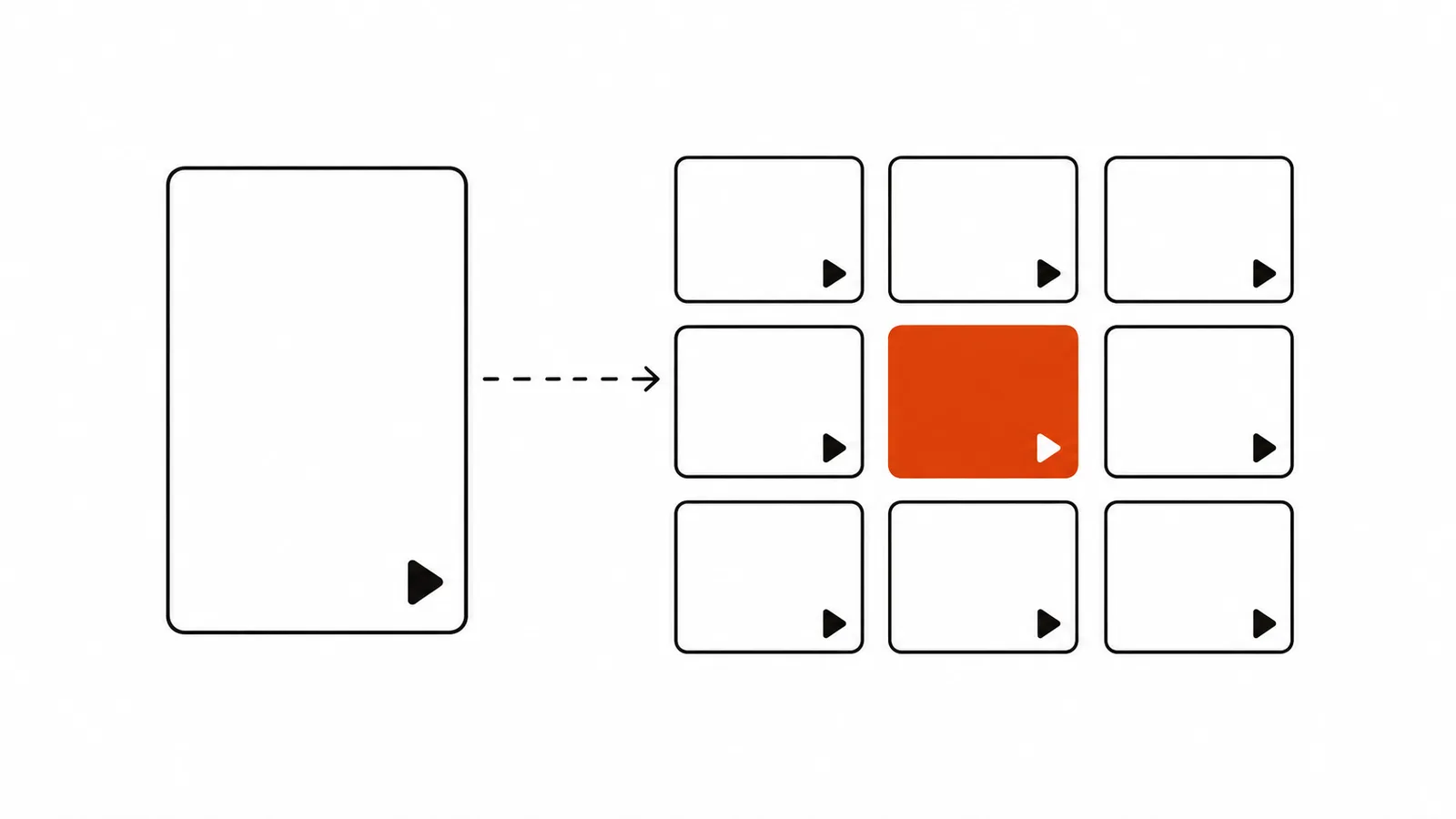
Ozon does not require a clip for a listing to be published. The platform takes a softer route: in the content score the "Media" block is worth 45 points out of 100, and one video delivers 18 of them. Three or four photos give 13.5 points. Those figures come from a breakdown published by Cha-Meleon on 28 July 2026, where the requirements were checked against seller help pages.
For a seller that translates into arithmetic. Points feed the overall listing score, and the market conversation follows: how many SKUs in a catalog end up with their own clip.
Trust is the second motive. Wyzowl reports in its State of Video Marketing 2026 that 89 percent of consumers call video quality important for trusting a brand. On a product page this reads simply: a clip helps as long as it shows the product honestly and to the point.
Gallery space and platform requirements
Gallery space is tight. The same breakdown puts up to five clips on Ozon plus a separate video cover, while Wildberries holds one video per listing. A seller with hundreds of SKUs has to decide where the limited resource goes and usually starts with products that already sell.
File limits differ between the platforms. PixSora, in an article dated 3 June 2026, lists the rich content parameters for Ozon: MP4 or MOV, up to 5 minutes long, up to 100 MB, resolution from 1080x1920 px. Wildberries for comparison accepts up to 3 minutes, up to 1000 MB, resolution from 720 to 1920 px. The weight gap reaches ten times, and a file assembled for one platform does not always pass on the other. The same article gives a length recommendation of 20 to 40 seconds and a three-beat structure: hook, three benefits, product detail.
Moderation tends to snag on the file container, weight, length and resolution. A clip built outside those limits never reaches the gallery, and rework is billed separately.
Video cover and gallery clip
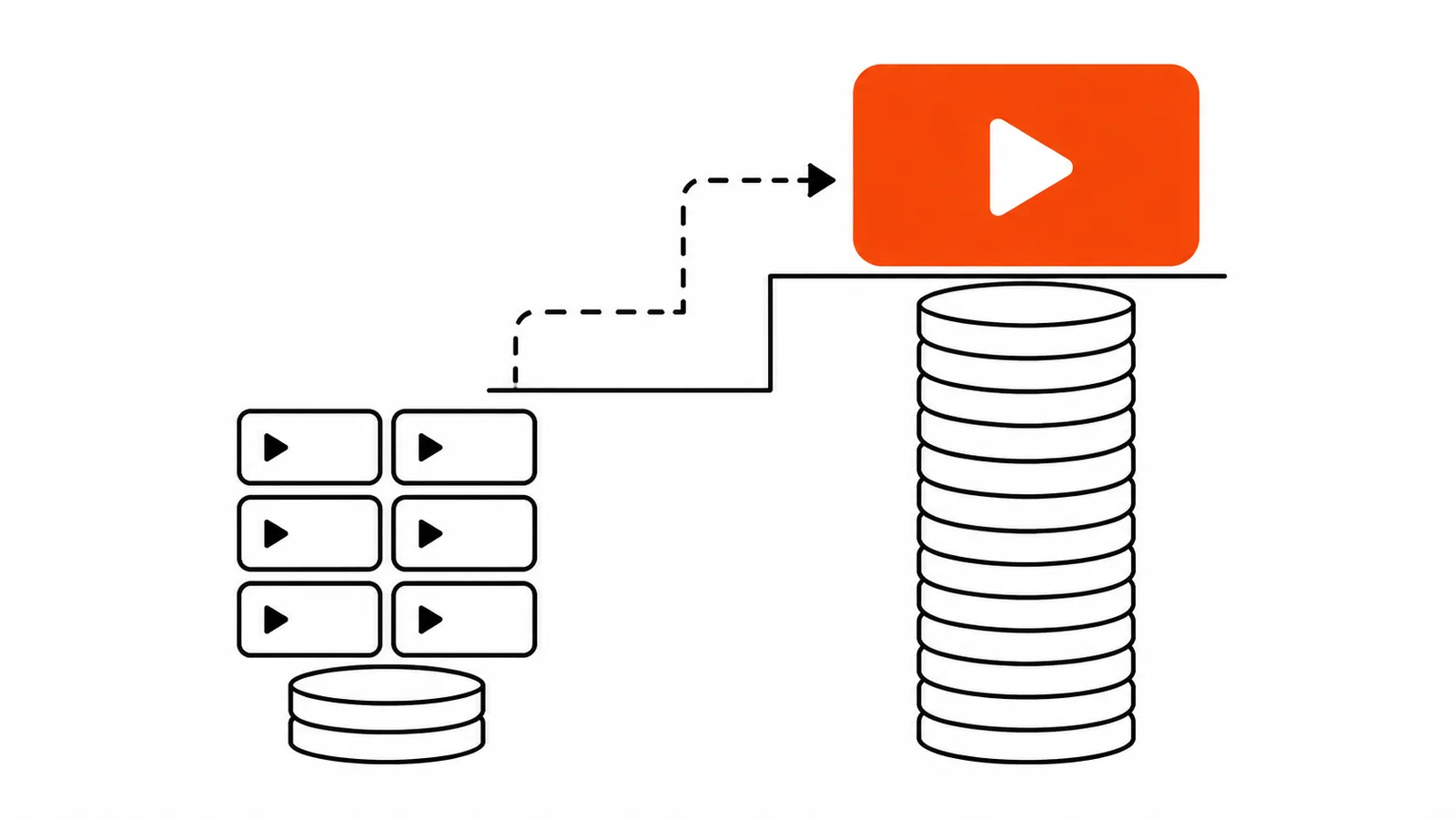
The platform treats the video cover and the gallery clip as different content units. The cover owns the first screen of a listing, and shoppers see it in search results. The gallery clip is watched inside the listing, once someone has reached the product and is comparing options. Suppliers price these as two separate jobs, because one file does not cover both.
For a catalog that gives a simple rule: the cover goes to positions contested in search, gallery clips go to products with existing demand. Buyers who plan AI UGC videos for marketplace listings usually schedule them in priority batches instead of one long shoot.
Why nearly every SKU needs a clip
A brand film serves advertising but does nothing for the listing of a specific model. A marketplace catalog is a set of separate listings, each selling on its own, and a shopper decides on one item at a time. Hence the demand for a clip per SKU: dozens of short pieces instead of one long one.
The second factor arrived from the ad market. Spytrend, in a report on UGC advertising in Meta published on 11 November 2026 and updated on 13 November 2026, writes that in October 2026 brands launched 432,704 ads with UGC video from creators on the Trybe platform. Behind them stood 4,591 advertisers and 3,736 sites, with about 76 percent of impressions in the US. A flow of similar short clips became the normal way to buy attention, and a product page now competes with that feed.
The third factor is financial. IAB/PwC, in a report from April 2026 quoted by Elite Content Marketer (page updated 2 November 2026), puts the growth of US digital video ad revenue in 2025 at 25.4 percent, reaching $78.0 billion. Money keeps moving into video, and part of it goes to clips that later live both on product pages and in ad accounts.
Who supplies the clips
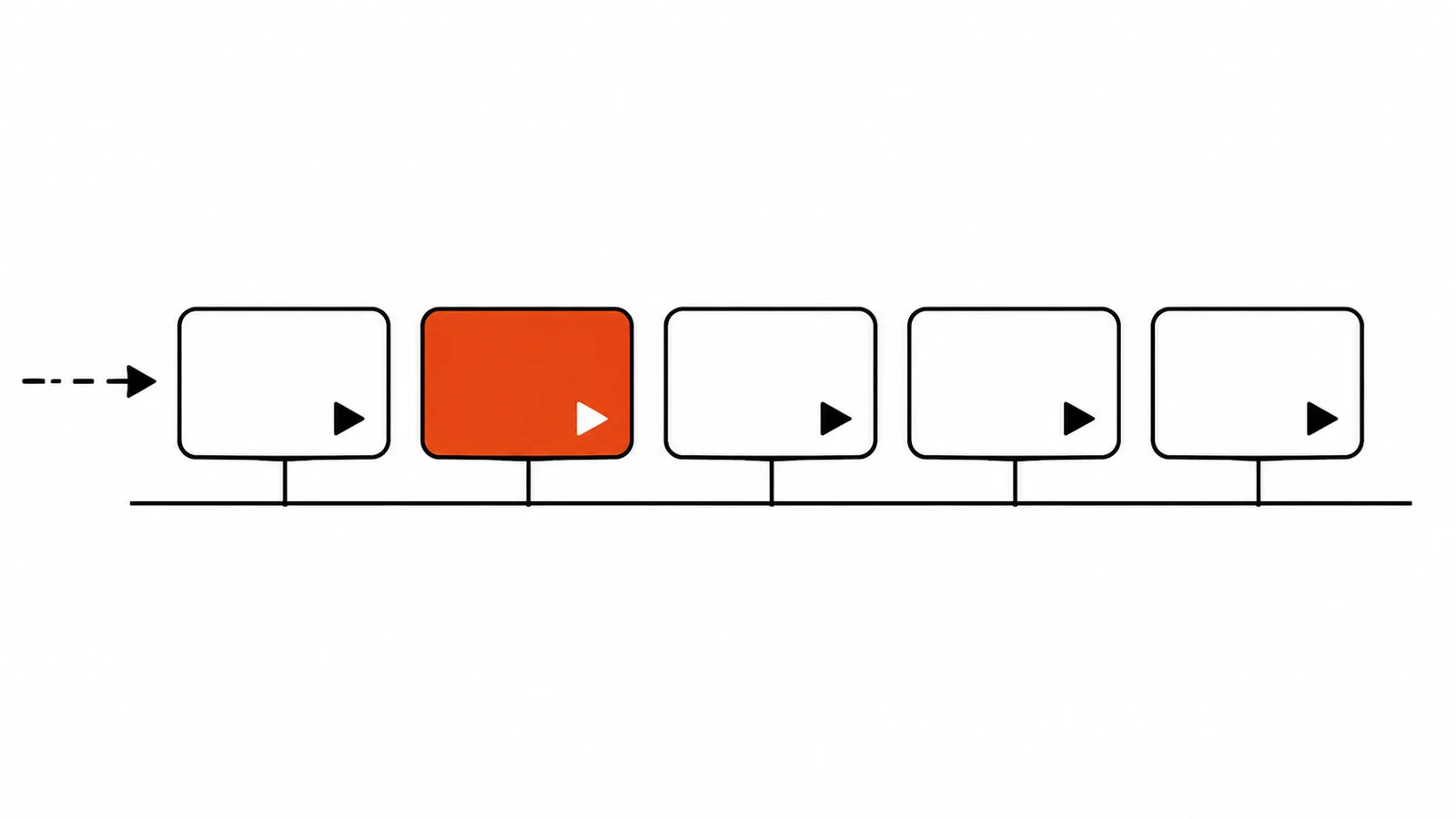
There are five paths. A seller shoots on a phone: cheapest, with quality and consistency depending on the person. A freelancer takes individual SKUs and handles a single order well, while a flow of hundreds of clips moves through that path slowly. A studio shoot delivers light, backdrop and a controlled result, and its quote tracks the shift plus the number of products on set. A volume supplier works in batches and holds throughput. The fifth path builds the clip from product photos that already sit on the listing.
Each path fits its own scale: one clip, ten test pieces, a flow for a whole catalog. Mixing several paths in one purchase usually costs more than picking one for the task and staying with it.
On top of any path sits spinning one source clip into a batch of variants: one original turns into a series, and a catalog gets covered without shooting every item. A related branch, video for an online store's own site, follows different rules, because there the storefront sets the terms.
What shapes the price
The market prices this work in several ways, and a single quote often mixes them.
Per clip. The buyer pays per production unit. Studios, freelancers and generation services work this way. A quote usually covers the concept, the assembly, editing and music, while a shoot is a separate line when one is needed.
Per position. Price is tied to the number of SKUs in a catalog. Convenient at large volume with uniform clip requirements.
Per minute of editing. The model of post houses: the bill tracks the length of finished material. Fits when footage exists and assembly is all that is left.
Per publication. Volume formats are priced by views, and a minimum order appears here, because a flow costs less per unit than a one-off job.
Rush work. A larger batch takes longer, and a compressed calendar pushes the quote up.
Comparing quotes honestly only works with a breakdown. Two suppliers will name the same job differently: in one price list editing is included, in another it is separate, a third bills by the minute. It pays to ask for a quote in three lines: production, batch size, and the date of the first delivery.
Rights to the clip
A clip taken from a manufacturer's site, from another listing or from social media stays someone else's property, even when it fits the product exactly. The Cha-Meleon breakdown says so directly. An owned clip, or one ordered with rights transferred, carries no such risk.
For a seller the conclusion is blunt: saving money with someone else's file moves the risk onto the whole listing. A claim costs more than a batch of original clips, and a removed video takes its gallery slot with it. If the photos used for generation were not shot in house, the same rights question returns in identical form.
Common seller mistakes
The first mistake is one video for the entire catalog. A clip about one category gets reused across unrelated SKUs, and on a product from another category it only confuses the buyer.
The second is editing with no product on screen. The shopper comes to see how the item looks and works, and gets a cut of stock scenes with barely any product in them.
The third is breaking platform rules. The file misses the weight, length or resolution limit, and after publication it is taken down along with its gallery slot. On Ozon the weight ceiling sits at 100 MB, and that is the first limit a heavy clip hits.
The fourth is borrowing a file from a supplier's listing. It matches the product, while the rights belong to someone else.
The fifth is shipping no versions for ad platforms. A listing clip and a paid ad follow different rules, and one file rarely serves both. Variants are easier to produce from a single original once AI video for product pages is built from product photos.
The sixth is trusting someone else's percentages. GuruSeller, in an article published on 28 January 2026 and updated on 11 October 2026, claims that only 15 percent of sellers used video on listings in 2026 and that listings with video convert 60 to 80 percent better. PixSora estimates the conversion lift at 30 percent. Both numbers read as the claim of a service provider with no published methodology: no independent measurement stands behind them.
Platform rules on rich content for marketplaces are worth checking before every batch. The market on the neighbouring platform is covered separately in a piece on video for Wildberries listings.
Our offer
We produce Ozon listing video as a flow. Handcrafted videos run from $394 per video, up to 90 seconds, with editing and music included and a first batch in about a week. Vertical videos at scale and 9:16 vertical video ads are billed from $2.47 CPM, with orders from 100 clips per month and a first batch in 5-7 days. Formats and timelines sit on our pricing page, and platform-specific work is described on our AI UGC video service page.
Reach us on Telegram @neurocartel_sup, WhatsApp +7 993 909-98-29, or email info@neurocartel.com.