What the pi-H3 authors showed
On November 10, 2026 the project blog carried a write up of pi-H3. It is the fastest version of open MiniMax H3 available today, built by authors from Stanford, with part of the work done during an internship and work at Luma AI. The base model stays the same. The build changes: fewer steps, a different output, a different level of numeric precision.
The headline comparison fits in one sentence. A five second clip in 768p with stereo audio renders in 3.8 seconds on two steps, and that is shorter than the time a viewer spends watching it. The record itself is not what interests me. What interests me is the work that changes once generation stops being a wait.
Two steps, and pixels with no separate decoder
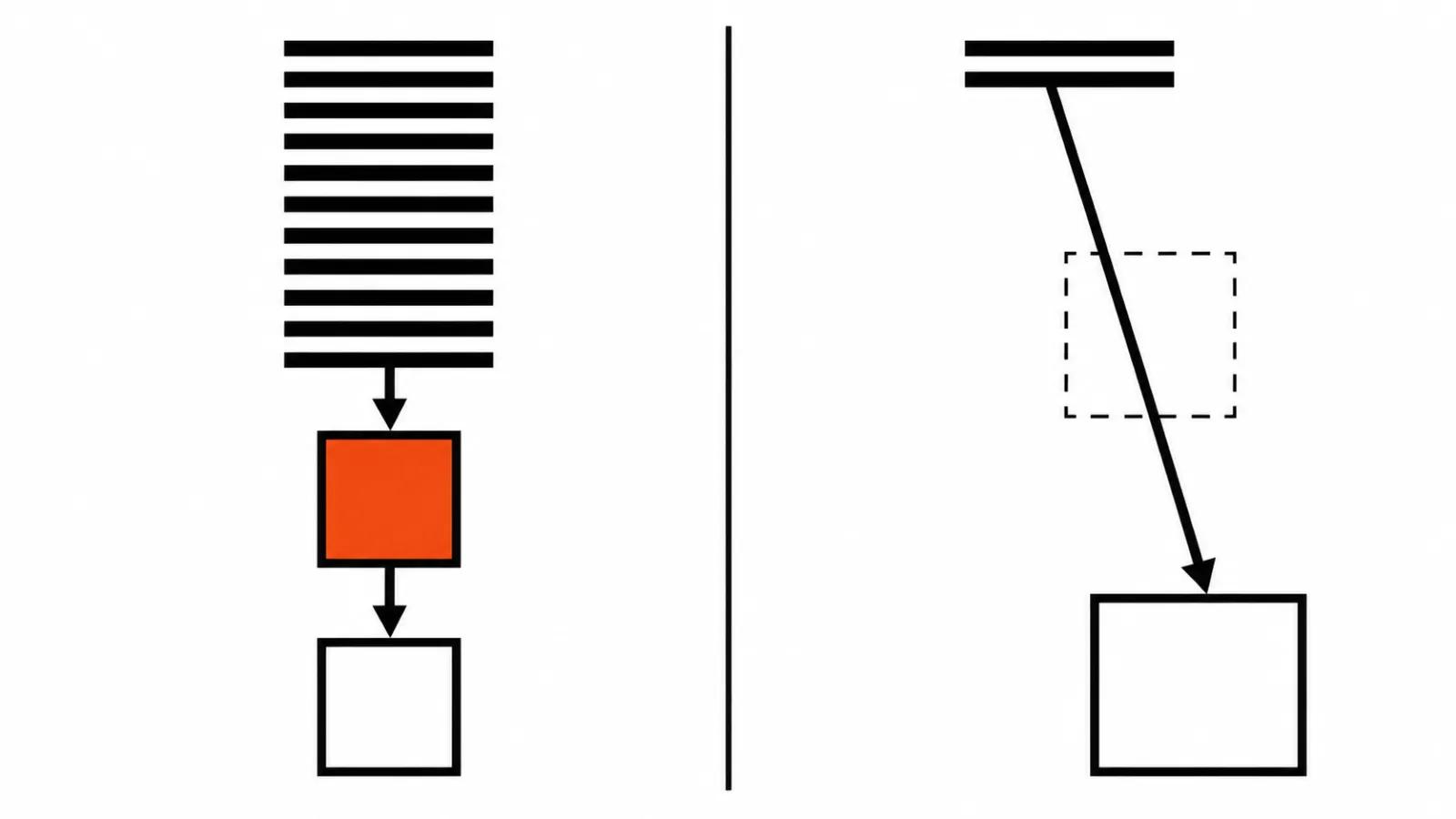
A video model usually works like this: the network spends many steps cleaning noise inside a compressed description of the frame, then a separate VAE decoder turns that description into an image. Put simply, the model counts a compressed latent, and the decoder assembles pixels on the way out.
pi-H3 runs two or four steps, and on the last step the model itself returns pixels. The decoding stage leaves the pipeline, and the authors named the method DWD, Decoding Without a Decoder. The speedup comes from three parts: fewer steps, no decoder, and FP8, arithmetic in lower precision.
Speed: three runs on one B200
Every number was measured on a single NVIDIA B200 server card, full cycle, audio included.
A five second shot renders faster than it plays. A ten second one does too, at 9.2 seconds. At fifteen seconds the cycle is already longer than the clip. Against Sol-H3 on the same 5 to 15 second range, pi-H3 is 2.4 to 2.7 times faster on two steps and 1.2 to 1.4 times faster on four.
- 5 seconds in 768p with stereo audio: 3.8 seconds on two steps
- 10 seconds: 9.2 seconds
- 15 seconds: 18.6 seconds
Quality: the authors compare against their neighbours
At four steps pi-H3, in the authors' own words, beats other four and eight step builds of H3: LightX2V Turbo, FastH3, H3-Turbo v4. Motion has more life, while the others look mechanical or trimmed in places, and the audio carries bass and clear speech. At two steps the comparison is TaoMate-H3 at three steps and PDMD at two, and pi-H3 comes out ahead again.
One caveat matters. These are numbers from the same team that built the model. Nobody outside has run it on their own prompts yet.

Why fast video creation changes the client meeting
While a shot takes minutes, a draft is a queue: idea, upload, wait. Once five seconds of video take four seconds, the queue turns into a search. In a meeting you can put ten versions of one shot on screen, see which one holds attention, and generate an eleventh on the spot.
AI video ads feel this most, since a vertical set lives and dies on versions, and versions get discussed on a screen instead of in an email thread. Our handcrafted videos, from $190, work differently, because a person owns the frame there. What changes is the cheap part: rough passes of AI video production get faster and cheaper, and the choice moves to the final render. When a shot needs to be bigger later, that is a separate branch, regenerating 2K into 4K, with its own time trade offs.
What keeps this from being a tool I can use
First, DWD on H3 is experimental. The base model compresses very hard, one token covers four frames of 32 by 32 pixels, and the authors did not have the compute for a full optimisation. In plain terms the method works, and there is room left on the table.
Second, the numbers come from a B200. On a normal GPU the timing will differ. Any promise of faster than playback deserves a test on your own hardware.
Third, there are no weights yet. The demo on Hugging Face already runs, weights and inference code are promised for November 16 to 22, training code later in November, and ComfyUI support arrives through the ComfyUI-piFlow extension.
Then there is licensing. MiniMax H3 ships under the MiniMax H3 Community License, which excludes the EU, the UK, Korea and the US without permission from MiniMax. The license for the pi-H3 weights themselves has not been published yet, so for a studio in those regions the question stays open until the files land.
My take
pi-H3 is an accelerated build of open H3, and its value sits somewhere else: it shows the base can be pushed close to real time once the decoder goes and the step count drops. The part that matters to me is the consequence. Speed stops being the bottleneck, and the bottleneck becomes the number of ideas a client can look at.
My plan for November is plain. Wait for the weight files, install ComfyUI-piFlow, run a test on my own hardware and my own kind of shot: a face, a product, a vertical frame. Then judge by cost per second and by the quality of speech. Until then pi-H3 stays a strong promise with honest numbers from its authors.