Why one more open model matters
My position is simple: every open release lowers the cost of an experiment. A cloud subscription sets its own limits and its own pricing; a local run lets you push the same prompt through a dozen models and compare them on your own footage.
Vimoo 1.0 joins the row of open AI video models that run on your own hardware. The weights landed on Hugging Face around November 12, TheNextGenTechInsider published a review on November 15, and a Reddit thread followed the same day. The download counter on Hugging Face is still modest, and there are no independent benchmarks. Every claim below belongs to the model authors until third-party runs say otherwise.
What is inside the Vimoo 1.0 family
The family is built from separate models per task. Text-to-video and image-to-video are two different models of about 11.7B parameters each, plus a lighter version called Lite at around 9.5B. You run them independently, because adapters do not swap between tasks.
Three modules shape the output. Vimoo-PE reads your prompt and repacks it into a format the model processes well, Vimoo-Base renders 720p at 24 fps, and Vimoo-Enhancer refines details and lifts the result to 1080p. The authors describe the Enhancer as an optional step; the base render is already deliverable.
Architecturally it is a two-stream MMDiT. In plain words: text and video travel through the network in two streams that exchange information at every layer, so the model ties words to what happens in the frame with more precision. The latent is compressed hard: 32 times in space and 4 times in time. A latent is the compressed internal representation in which the model carries every computation; the stronger the compression, the less memory each step needs.
ComfyUI generation, distillation, and Mac
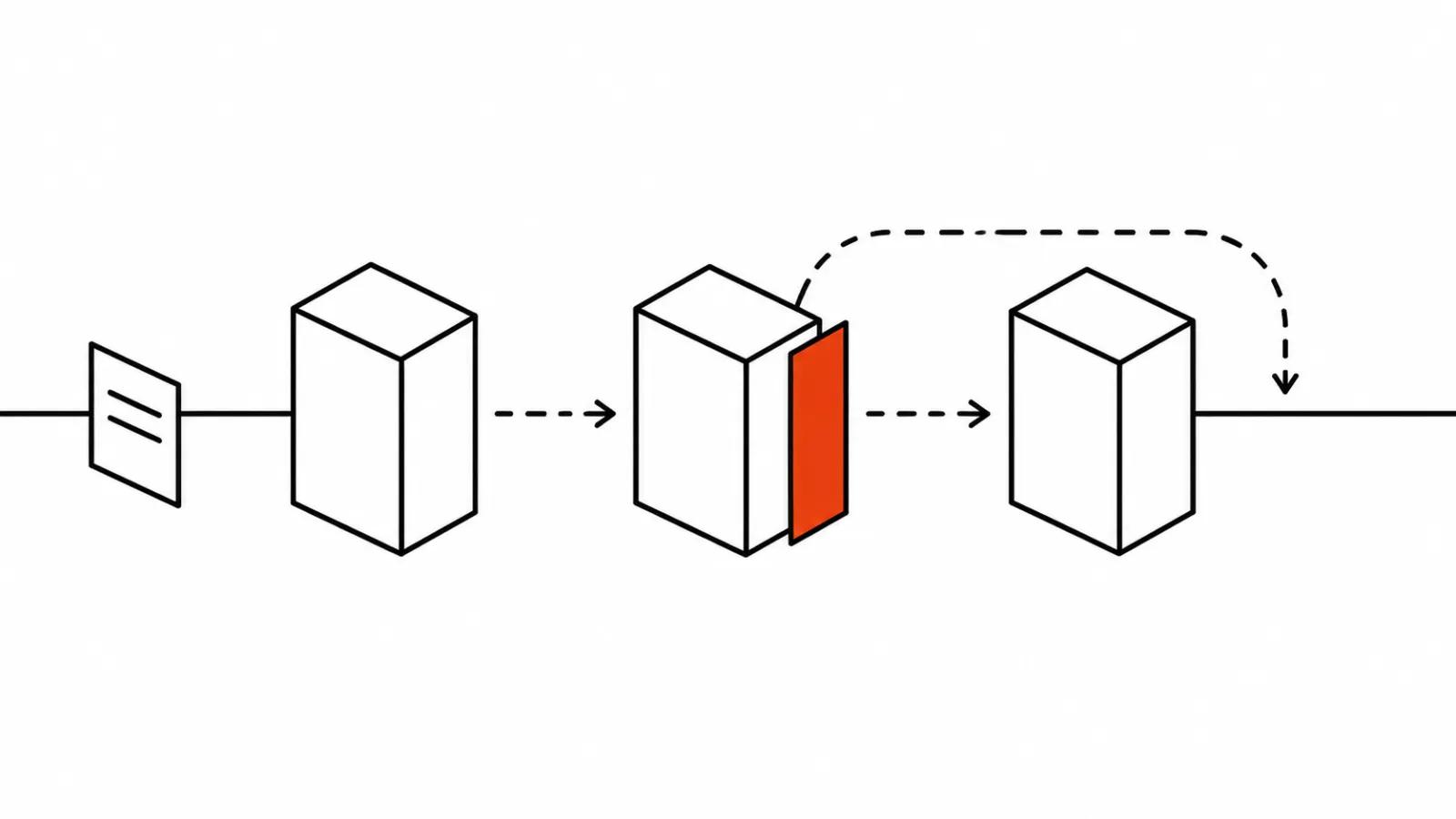
There are three ways to run it. A Diffusers pipeline for Python code. A ComfyUI workflow that ships distilled LoRA adapters, a Qwen text encoder, SigLIP, and a VAE. And MLX weights for Mac on Apple Silicon.
A quick glossary. The encoder turns your prompt into numbers the model can work with. The VAE compresses frames before generation and unfolds them back into pixels. LoRA files are small add-ons attached to a large model; distilled versions run in fewer steps. One detail matters: distillation exists only in ComfyUI and MLX, and full weights run through Diffusers.
The Apache 2.0 license: what I checked
I verified the license on the Hugging Face model card on November 16: Vimoo code and weights ship under the Apache License 2.0. Commercial use, modification, and redistribution are permitted under the terms of the license. Redistribution requires a copy of the license and attribution notices, and third-party components keep their own licenses.
For a studio pipeline that is a practical stance: no revenue caps and no branding requirements on the output. The model can sit in a commercial build right away; quality is the open question.
What is claimed and what to believe
The authors list four promises. Precise prompt following. Training on aesthetic data with markup for light, composition, contrast, and color. E-commerce video with a stable product across frames. "Best motion among open and closed models." The last one is the authors' wording, independent tests do not exist yet, and my advice is to treat any "best" as a hypothesis until it runs on your own footage.
The model card also lists a separate API mode, Vimoo 1.0 Ecom: 20-second vertical 9:16 clips in 720p built from product photos with titles, descriptions, and selling points. The direction is clear: a series of product frames where packaging and shape hold from the first frame to the last.
What it changes for product videos
The recurring pain in e-commerce video is a product that stays identical between frames: packaging shifts color, labels drift, proportions wander. An open image-to-video model with a stable-product claim is useful because it can run on your own material without sending product photos to someone else's cloud. The check takes an evening: identical prompts and identical photos go through the new model and through whatever already sits in your pipeline.
If you need a finished build, our AI video production covers that, and vertical video ads for product niches remain the fastest format for series of versions. We have no hands-on experience with Vimoo 1.0 yet, so the capabilities above are the authors' claims.
My conclusion
If a local pipeline already exists, this release belongs in the test bench. Two reasons: Apache 2.0 clears the rights question for commercial output, and separate models per task make comparisons cleaner. Before a launch, check three things: whether memory is enough for the version you picked, how many steps the distilled build takes in your workflow, and whether the model holds your product across a five-frame series.
We covered local video generation in Diffusers in a separate piece with the installation pitfalls; it closes half of the pipeline questions.