Placements inside one platform
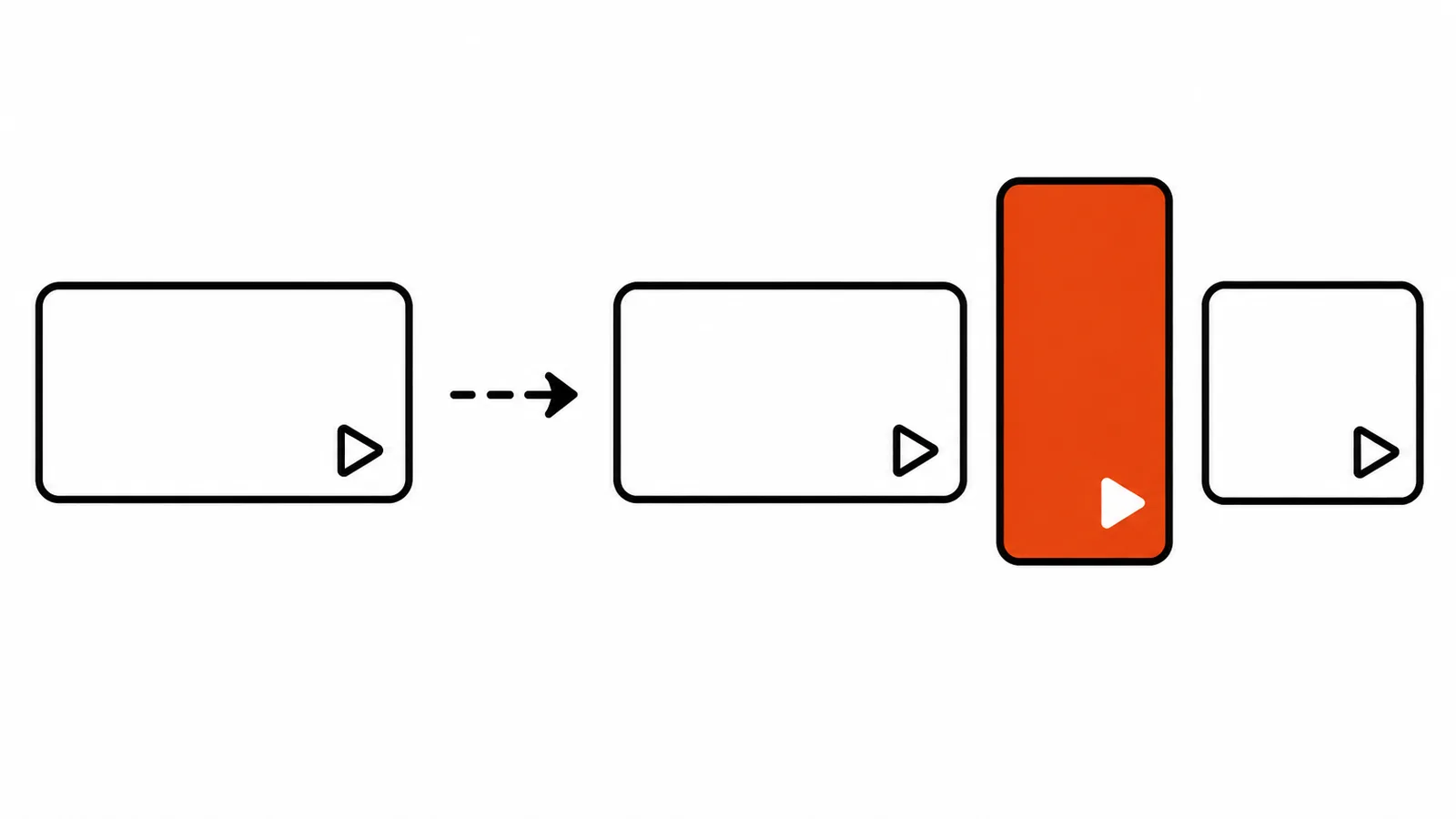
VK sells video in several places at once. A review from the eLama blog lists them: the VK and Odnoklassniki news feed, the side column on desktop, clips, stories, and in-stream slots inside other people's videos (https://elama.ru/blog/formaty-obyavleniy-vkontakte-primery-i-trebovaniya-k-nim/, October 30, 2026). The same file looks different in every one of those spots, because each placement has its own frame, its own length and its own first screen.
The practical consequence is that campaigns rarely run on one cut. A horizontal feed file gets cropped in stories, and a vertical shoot fills half the side column block. One story has to be assembled separately for each screen, which is why format planning comes before production.
Spec limits set the shape of the budget
The VK Ads help page on formats gives exact numbers (https://ads.vk.ru/help/features/formats, checked November 29, 2026): video runs up to 180 seconds, up to 300 seconds for communities, files up to 90 MB, mp4 and mov containers, minimum resolution 640 by 360, recommended 1280 by 720 and 1920 by 1080, minimum width 600 pixels. Video and audio codecs are described on the same page.
Those numbers read best as budget boundaries. A 180-second ceiling means a longer film has to be recut, and squeezing the bitrate will not save it because 90 MB arrives first. The recommended 1280 by 720 and 1920 by 1080 explain where two versions of one story come from in a campaign budget: the platform accepts 640 by 360, yet that file is visible on a large screen, so a higher-resolution export gets ordered next to it. The same arithmetic applies to AI commercials and to any other spot cut for the feed.
A guide from the agency ze.media repeats the same limits and adds a recommendation to keep 10 percent of safe space at the top and 20 percent at the bottom for interface elements (https://ze.media/blog/vk-ads-creatives-guide, page without a publication date, checked November 29, 2026). It is an agency summary of the platform's own documentation, so the numbers match while the status of the source differs. How those ceilings compare with other placements is laid out in video ad lengths by placement.
Stories need their own file
A review by Selivanov on advertising in VK stories (https://targetolog-selivanov.ru/blog/reklama-v-istoriyakh-vkontakte, published April 22, 2026, updated November 9, 2026) starts from another set of inputs: video up to 30 seconds, a 9:16 or 4:5 frame, and the promoted object depending on what is being sold. The author is certified in VK Ads, and the summary is still worth checking against the platform page before a launch.
Thirty seconds against 180 changes the edit sheet. A feed cut that introduces the product at second five does not transfer into stories, because the limit ends before the story reaches the product. That is where a separate line appears in the budget: vertical video ads in 9:16 as a standalone file with its own opening frame.
Different scenarios on the same platform
A PromoPult review (https://blog.promopult.ru/sales/videoformaty-v-kontekstnoj-i-targetirovannoj-reklame.html, July 6, 2026) covers reach campaigns and the promotion of posts, articles, videos and clips in separate sections, with the same 180 and 300 second limits. For an advertiser this means a brief that says "make a video for VK" splits into several jobs with different demands on the first screen and on length.
Impressions billing changes the arithmetic
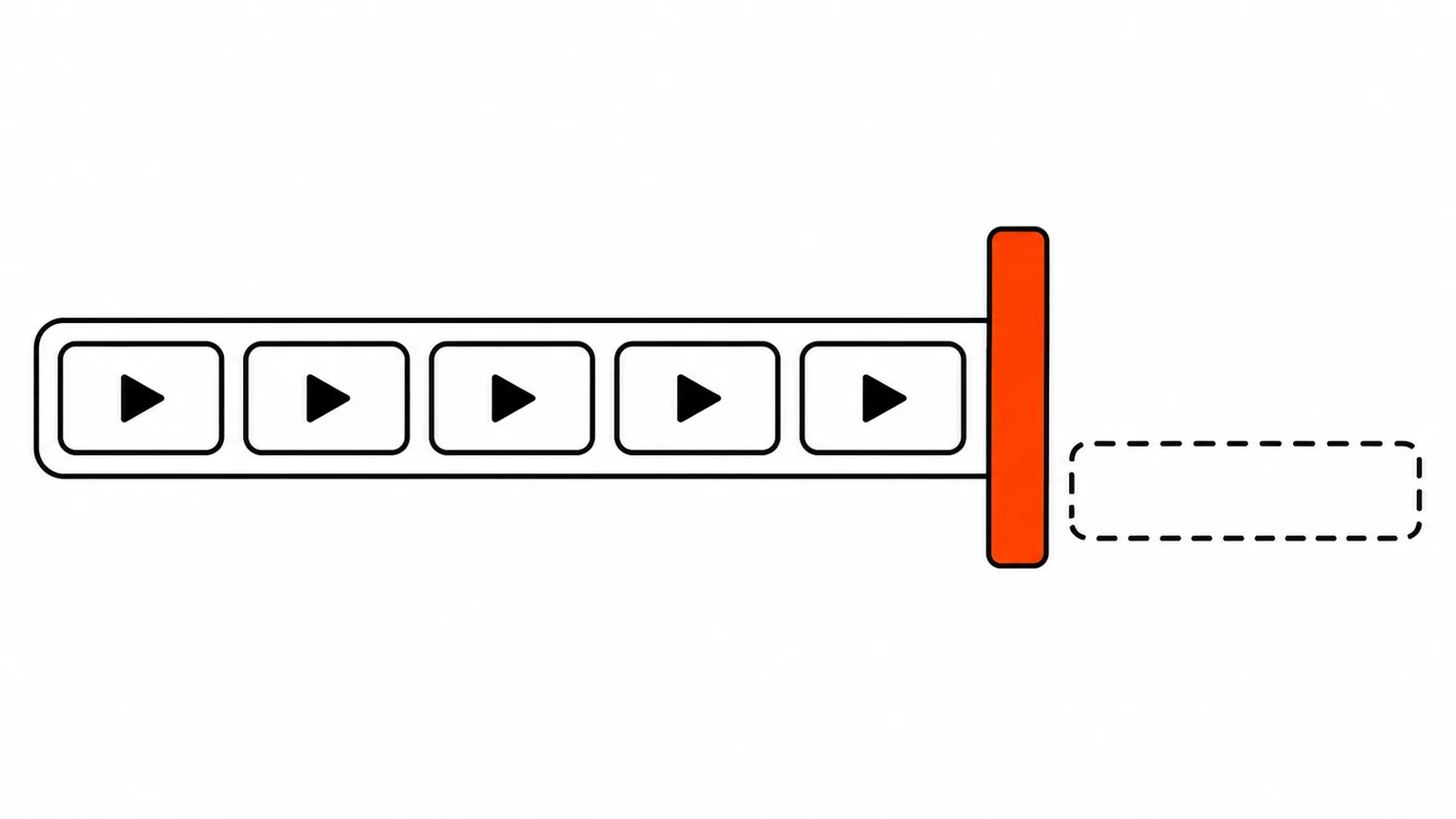
Money in the ad account goes to impressions, so the budget depends on how many people stayed to watch. The opening seconds decide whether a viewer stays or scrolls past, and the impression is paid either way. A minute where the product appears at the end hands that impression to viewers who never reached it. The most common violation follows from this: a logo teaser at the start burns the impressions already paid for.
A second effect touches testing. Every version is a separate production line, so a campaign with three variants means three renders, three edits and three rounds of sign-off, even when only the opening seconds differ. Test versions get built in batches, and short-form video at scale exists for that comparison, with sets designed to be measured against each other.
Where generation enters the versioning work
Generation enters this work task by task. When a campaign needs 9:16 vertical versions, frames from a horizontal story get reframed for the vertical screen, and backgrounds and sets are drawn in when the footage was not shot for that frame. Voice lines get re-recorded with speech synthesis so the opening sounds identical across every version. Reworking footage for a vertical frame has its own breakdown in the 9:16 vertical guide.
What makes up the market price
A campaign budget usually has four lines: the production of the video, a separate version for each placement, the number of variants being tested, and the media budget for impressions, which lives apart from production.
Agency price lists split these lines in a revealing way, and the same footage can sit in two rows: a commercial film priced for scripting, crew, light and sound, and a social cut priced as a re-edit. The platform accepts both without asking which process produced the file. That is why production and media stay apart in a campaign budget.
Production schedules matter here too. When a shoot takes weeks and a creative test runs for days, the second version of a video cannot appear by the time the numbers are in. Campaigns that plan a test round before the shoot start with versioning in the brief instead of adding it later, and AI video production cost breaks down how those lines usually divide.
What the first seconds have to carry
Three things work: the product in action, a clear benefit, a recognisable situation. That set builds the ad creative: the logo and the tagline move towards the end where they no longer compete with the message. Pacing in the first seconds matters more than the beauty of the closing frame, because the impression is already paid for.
Common mistakes
The most expensive one is bringing a 60-second television cut into the ad account without a re-edit. Next comes a feed version dropped into stories with a 30-second limit. Third is skipping the second variant, which leaves a campaign with nothing to compare. Fourth is a plan with no time for review and revisions, so the launch slips by the length of the production cycle.
One more thing about requirements. The platform documentation changes, so length, file size and frame limits get checked on the formats page before the edit and again before the launch. Reviews cite that page, yet they lag behind it by months.
Our offer
When a VK campaign needs versions that hold up across placements, we handle the chain from the edit to the delivery files. A handcrafted video starts from $394 per video: up to 90 seconds, editing and music included, first batch in about a week. Vertical formats for campaigns and creative tests start from $2.47 CPM, with batches moving fast enough for a test round.
Vertical 9:16 ads built for this platform are described at https://neurocartel.com/en/services/ai-video-ads, and the full price list sits at https://neurocartel.com/en/pricing. Custom scopes are quoted after the brief.
Reach us on Telegram @neurocartel_sup, WhatsApp +7 993 909-98-29 or info@neurocartel.com.