
A format people trust
Unboxing, before and after, a reply to a comment, a first-person review. For AI UGC video.
A tube on a white background cannot answer the one question that decides a cosmetics sale: how will this sit on skin. A clip shows texture, shade and application in fifteen seconds, while every claim on screen comes from your product description and paperwork.
A tube on a white background cannot answer the one question that decides a cosmetics sale: how will this sit on skin. A clip shows texture, shade and application in fifteen seconds, while every claim on screen comes from your product description and paperwork.
Unboxing, before and after, a reply to a comment, a first-person review. For AI UGC video.
A stylized hero or an AI creator, synthesized voice, edit and captions.
We post through mass posting across accounts and geos, and version every copy.
Up to $2.47 per 1000 views with production and publishing included. A single crafted video from $394.
Two steps are yours: tell us about the product and approve the pilot. The rest is on us.
Tell us about the product, the market and the platforms. We price it on a call.
We handle scripts, generation, voiceover and editing.
A pilot batch comes first. We scale the volume once you approve it.
We upload to your channels and to accounts in your geos.
Metrics after every batch. Whatever performs, we scale.
A factory example of this format, not a case for a cosmetics brand: AI generation, 1080x1920, 8 s, a man in a hoodie unboxes headphones from a blue box with no logos, warm evening light at home, re-encoded with ffmpeg. The frame shows the shooting and editing manner, and the product in it is not cosmetics.
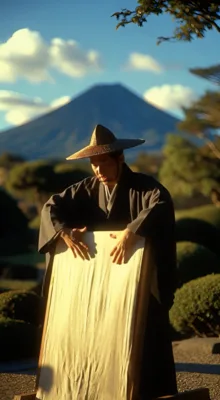
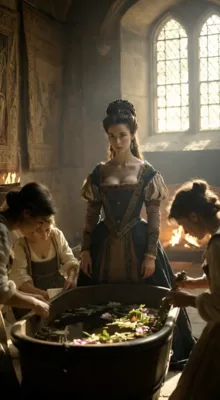
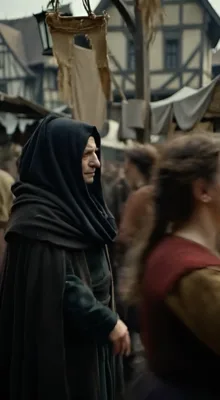
Frames from internal batches. Client names stay hidden, we work under NDA.


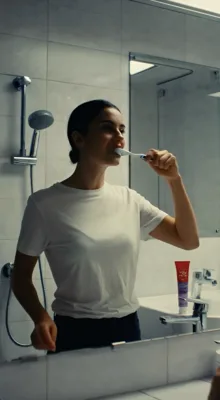

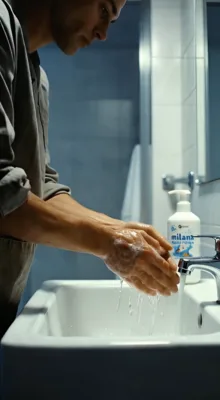
UGC video for cosmetics means short clips of a product on skin: a swatch, the texture, how it applies, the neighbouring shades in one frame, the size and the pump. We build them from your footage or generate them with an AI actor, then split versions per SKU and per shade. A batch for a catalogue ships in days, and claims about the product come from your description and documents, not from us.
Cosmetics is a category where the decision is made on skin, not on packaging. A buyer wants three answers: what the product looks like once it leaves the tube, how it behaves when applied, and what remains a few hours later. A still photo and a paragraph of copy cannot settle any of the three, because skin tone, light and the habit of applying all differ from person to person.
A cream, a mascara and a shampoo each answer a different worry, so one universal script covers none of them well. We build the script around the test a person performs at the counter: a dab on the back of the hand, a cotton pad, a stroke on the wrist, a second coat on one eye only.
| Category | What we shoot |
|---|---|
| Skincare | texture on the back of a hand, application, absorption, how much is in the jar |
| Colour cosmetics | swatch on skin, blending, four or five neighbouring shades in one frame |
| Hair | product through the length, distribution, the result after drying |
| Body | the pump, application on dry skin, how far one measure spreads |
| Fragrance | the bottle, the spray, the size in a hand, a wrist application |
Every cosmetics brand hears the same complaint: it looked different on video. The cause is nearly always light and grading rather than the product itself. So we shoot in daylight on a neutral surface, swatch on two or three skin tones, and leave saturation alone in post. When a range is wide, the shades appear side by side in one take, because a comparison sells the difference better than a single pretty frame.
Cosmetics is policed more strictly than apparel, because a promise of effect turns into a complaint faster than anywhere else. A claim either comes with the brand's paperwork or leaves the script. Reviews are a separate matter: a staged clip with an AI actor is marked as staged and never dropped into a wall of buyer reviews, because that is the one thing an audience punishes permanently.
Three ways in: your own footage of the product, stills shot in good light, or a generated scene with an AI actor. Texture and colour forgive the least, so for creams, foundations and glosses the product itself or a set of daylight photos works far better than a description. Where we have no product and no photos, part of the scene is built from the brief, and that limit is stated before the batch starts rather than after.
One scene is cut into four ratios so that the shade and the captions match everywhere it appears. The vertical carries attention in a feed, 4:5 and 1:1 go into a product listing and an ad account, and the horizontal sits on the product page. Length, file weight and sound rules are checked against each platform's own help pages before a handover, not from memory.
| Placement | Ratio | Job |
|---|---|---|
| Reels, Shorts, TikTok | 9:16 | reach and recognition for a range |
| Marketplace product listing | 4:5 or 1:1 | swatch and texture before the purchase |
| Ad account | 9:16 and 4:5 | testing shades against audience segments |
| Product page and brand site | 16:9 or 1:1 | formula, directions, how to use |
| Email and display banners | 1:1 | a reminder about a launch |
A cosmetics line is a grid of SKU, shade, audience and placement, and the batch is filed along that grid so nobody has to remember which clip belongs to which tone. Three to five versions per shade is the usual working set: a swatch, an application, and a comparison against the neighbouring tone. Everything lands in a sheet that shows what is shot, what is cut, what is handed over and what is already live.
| Tracked item | What the handover looks like |
|---|---|
| SKU and shade | a folder of clips per tone number |
| Versions | three to five per shade, different scripts and faces |
| Ratio | 9:16, 4:5 and 1:1 from one scene |
| Status | shot, cut, handed over, published |
Vertical clips at scale run from 2.47 USD CPM, with production and publishing inside the rate, batches starting at 100 clips a month, clip length of 15 to 60 seconds and a first batch in 5 to 7 days. A single video with hand-finishing is a different service: from $394 per video up to 90 seconds, first delivery in about a week. We publish no other figure, because the quote depends on how many SKUs, shades and placements are in scope; it is assembled after the brief and fixed in the contract.
We promise no percentage growth in sales, no lift in listing conversion and no guaranteed pass through moderation. We do not claim that a shade will match on every screen, because colour depends on the panel and its settings, so the listing keeps a reference rather than a guarantee. A generated person is never passed off as a real buyer, and we do not borrow another brand's case study to fill a portfolio.
Yes, with daylight stills or a 3D model of the packaging: we build the scene, place the product and add an AI actor. For creams, foundations and glosses, though, texture decides everything, so without the real product or precise photos the clip can diverge from what a buyer receives.
Three to five is the usual set: a swatch, an application and a comparison against a neighbouring tone. A twelve shade range therefore means a grid of clips per tone rather than one generic clip with a caption. The volume is fixed in the quote before the batch starts.
We show the process and what is visible at once: texture, absorption, the feel on skin, how fast the jar empties. We will not promise a change in skin by a date, because that claim needs clinical evidence most brands do not hold, and without it the clip is a liability.
Yes, as long as the clip is not presented as a real buyer's review and the advertising is labelled: the advertiser registers the ad and the data, and we prepare the creative for that labelling. A staged clip is marked as staged and kept out of review walls.
Yes, taken from your product description and documents rather than written by us. Statements about dermatologist testing, hypoallergenic status or a no animal testing policy appear only when the brand supplies the substantiation behind them.
A list of SKUs and shades, daylight photos of the product, a description with formula and volume, and the paperwork for any claim that will appear on screen. From there we agree scripts, build the first batch and hand it over with a sheet mapping SKUs to files.
Vertical clips at scale run from 2.47 USD CPM with a batch starting at 100 clips a month. A single hand-finished video starts from $394. The total depends on the number of SKUs, shades and placements, and we build the quote after the brief.
We price your task on a call
Tell us about the product, the market and the platforms. That is enough for a quote.
We'll say how many videos you'll get, at what price and by when.
what happens next