What opened in Shanghai
iQIYI, one of China's large video platforms, opened an AI film studio inside its Creative Center in Shanghai and calls it the first of its kind in the country. That claim comes from the company and nobody has checked it independently, which matters little for the actual method.
The stage did not launch as a demo. The first project, an internet film called Cop in Trouble, started shooting on October 28, days before the announcement. The press release went out on PR Newswire on November 1 at 20:39 Eastern, which is 03:39 Moscow time on November 2.
Inside 110 square metres
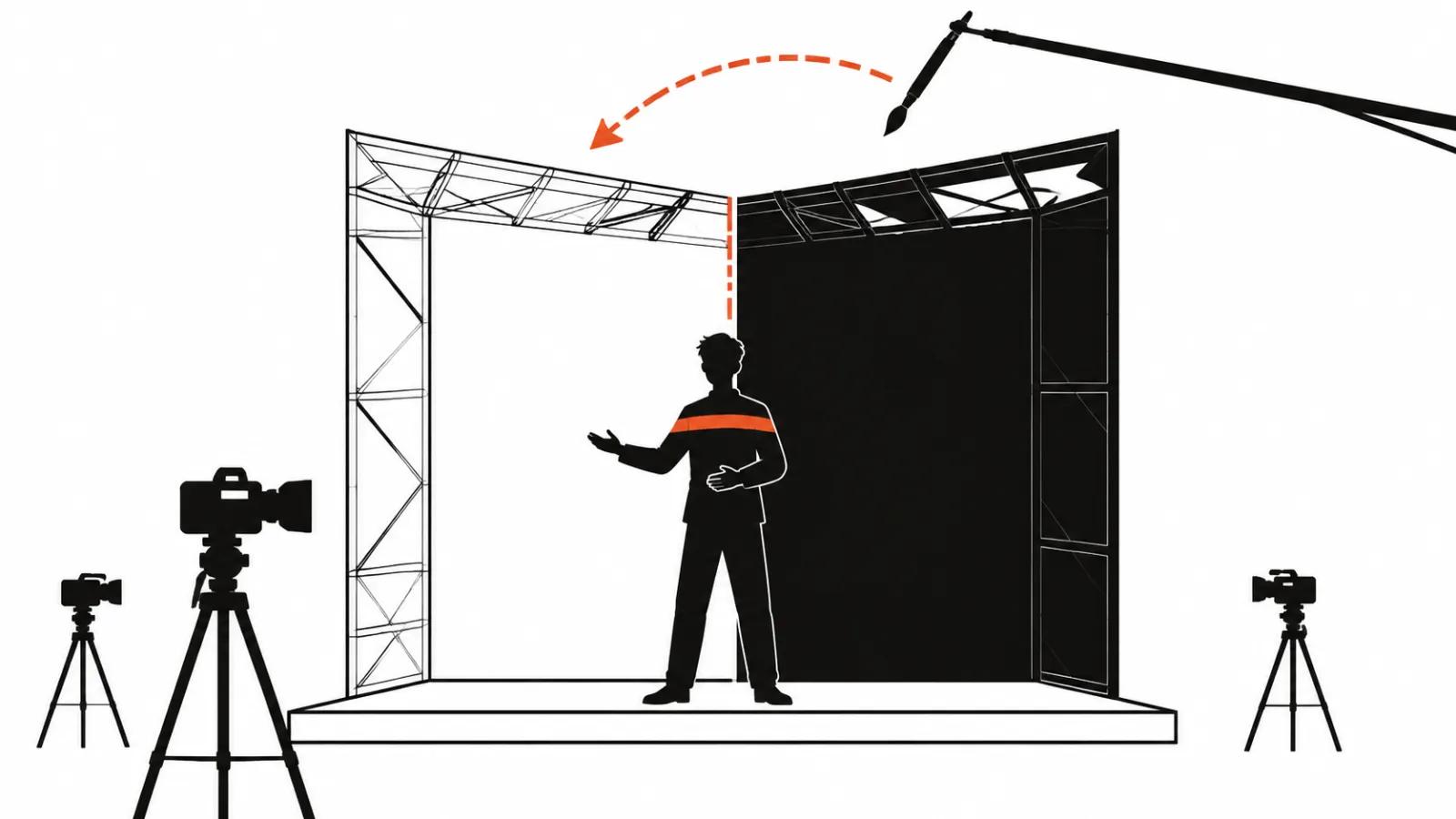
The stage covers roughly 110 square metres, about the footprint of a small apartment. It runs a multicamera setup: several cameras roll while audio is captured in sync at high resolution, and a digital continuity log keeps track of which take belongs to which scene.
Footage is reviewed on the spot, before anything reaches an edit room. That detail sounds minor on paper and it decides how many takes a shift survives, since the director sees the frame while the actor is still in costume.
Where the footage goes: NadouPro and almost 30 models
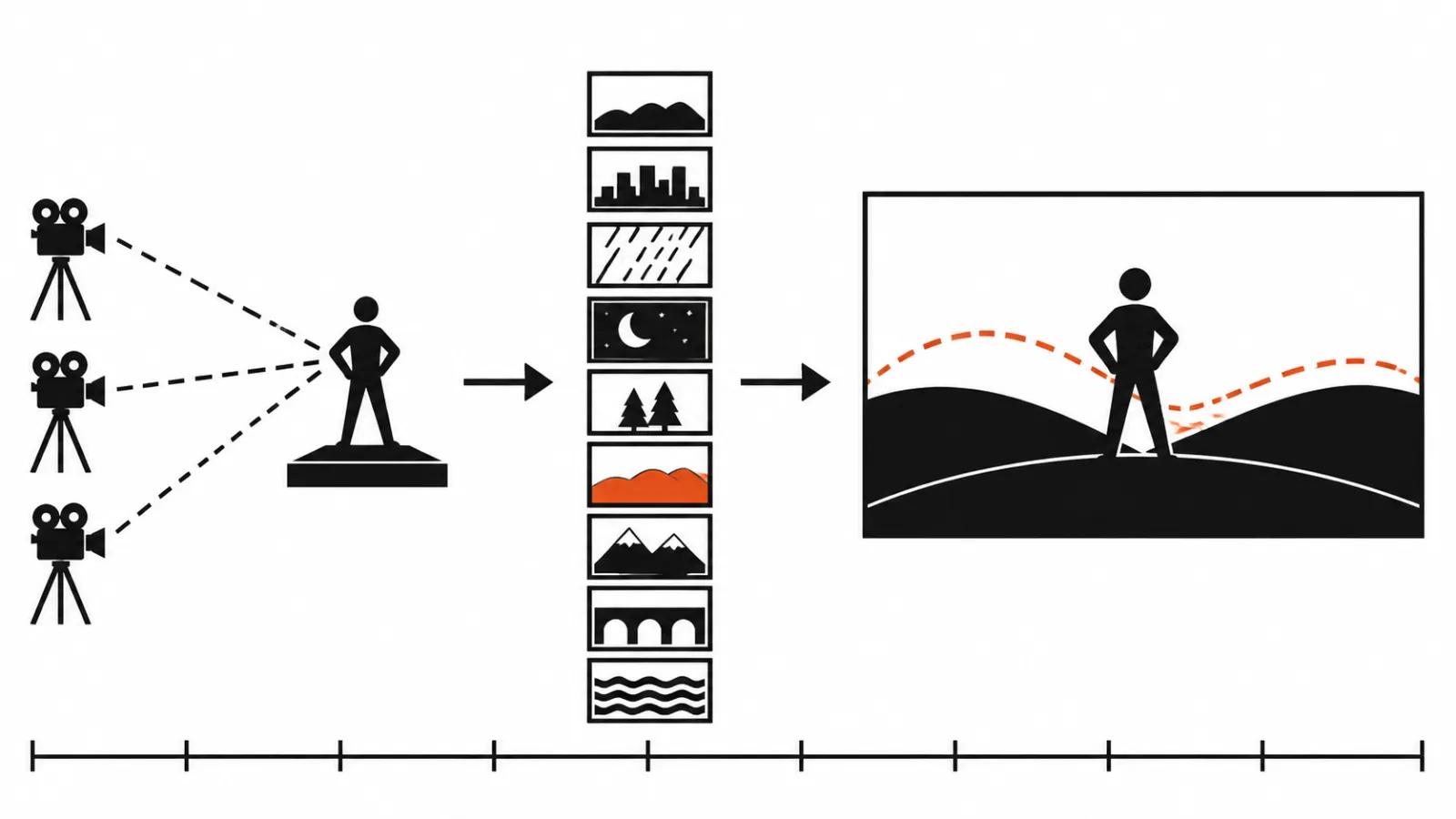
The material flows automatically into NadouPro, iQIYI's platform for AI-driven film and series production. It carries almost 30 AI models, among them Seedance 2.5 and Kling 4.0, plus hundreds of agents and skills that cover individual production steps.
The pipeline behaves like a conveyor. Live photography supplies the material and the performance, then the platform builds the surrounding world. Swapping a model does not force a reshoot, and one take can be pushed through several versions of the background.
AI video production starts when someone calls cut
That is where the shift sits. Sets, light, costumes, makeup and props are reworked after the shoot while the actor's performance stays untouched. Liang Zhu, vice president of iQIYI and head of Intelligent Production, puts it this way: performance is the core of a film, and the studio lets a director keep it while changing the environment more freely.
The plot of the first film fits the method without strain. A junior constable, Jian Zhang, sees his fame and fortune crack when a lie around an arrest comes apart. The story centres on one person, and the face in frame stays human whatever changes around it.
That is the working form of it. The model takes on the parts that are slow and costly for a crew, and it leaves the person alone.
Why AI film with a live actor looks sober-minded
Only recently Sanxingdui, a fully generated feature, flopped at the box office. I wrote about that separately, and the conclusion was grim: the picture was assembled, the audience did not show up. iQIYI walks the opposite road and keeps a human being in the frame.
The reasoning is straightforward. People pay for faces, for the pause before a line, for a look nobody can compute. Models already handle texture, light and background detail, while performance is still being imitated. Remove the actor and the viewer is left with what Sanxingdui offered, and nobody pays twice for that.
So the bet on preserving performance is the strongest part of the announcement. It reads as a refusal of hype in favour of craft, and for the market that is a good signal.
Video to video as an industrial process
iQIYI already ran a virtual studio in Hengdian. By the company's own account it raised production efficiency by more than 30 percent. The number applies to a different project, no outside audit exists, so I read it as a direction of travel.
Almost nothing about Cop in Trouble has been disclosed: no budget, no release date, no price for using the stage. That is normal at launch, and the first film is exactly what will show whether the setup works. My doubt lives there. Nobody has seen a finished frame, so the conclusions can wait.
The technique itself is familiar to anyone who has used video to video tools: take a real take, replace the environment, keep motion and facial expression. The difference is scale, and the fact that at iQIYI the trick sits on a stage while elsewhere it lives on a laptop.
What this means if you are commissioning a spot
First, a hybrid is easier to control. Shooting a person takes hours, while a city, weather or skyline can be rebuilt without a location permit or a second shift.
Second, the script matters again. When a person with a task stands in frame, any model assists. When nobody stands there, only the story saves the film, and stories are the weak part of generators today.
Third, do not wait for the studio to arrive in your city. The same trick assembles from off-the-shelf parts: shoot a person against a neutral background, rebuild the environment in a model, mix the sound. That is how AI video production handles a case where a real employee or expert has to be on camera.
The practical takeaway is short. For a product and a short spot, shoot a real person and draw the world around them: an AI commercial made that way looks more expensive than it is, and changing the background does not need a second shift. For wide scenes with nobody in them, generation stays the fastest option, and there it pays to budget for regenerations up front.