Why every model thinks in short bursts
Video generation predicts the next frame from the previous ones. The longer the run, the more error accumulates: colour drifts, the face changes, physics breaks. That is why vendors cap duration and sell extension as a separate feature.
The second reason is economic. One twenty-second attempt costs what four five-second attempts cost. Short clips let you redo a bad take cheaply and pay less for a failure.
The third reason is review. Twenty seconds can be watched frame by frame. Nobody checks five minutes of generation that closely, so defects reach the upload.
What the official numbers say
Read the docs, reviews drift. Through its API, one leading model accepts a duration parameter of up to 20 seconds. Extension goes further: each added segment runs up to 20 seconds, up to six extensions, for a maximum of 120 seconds per video.
Kling in text mode lets you build up to six storyboards inside one task, each with its own prompt and duration, summing to the total length. Documentation examples reach 15 seconds in total.
Gemini Omni Flash accepts input video for extension of no more than 10 seconds and up to three video references of 3 seconds each.
The conclusion is blunt: seconds exist. They cover an ad, a scene, a vertical episode. They will never cover a five-minute explainer, because the problem is continuity, and length is not the bottleneck.
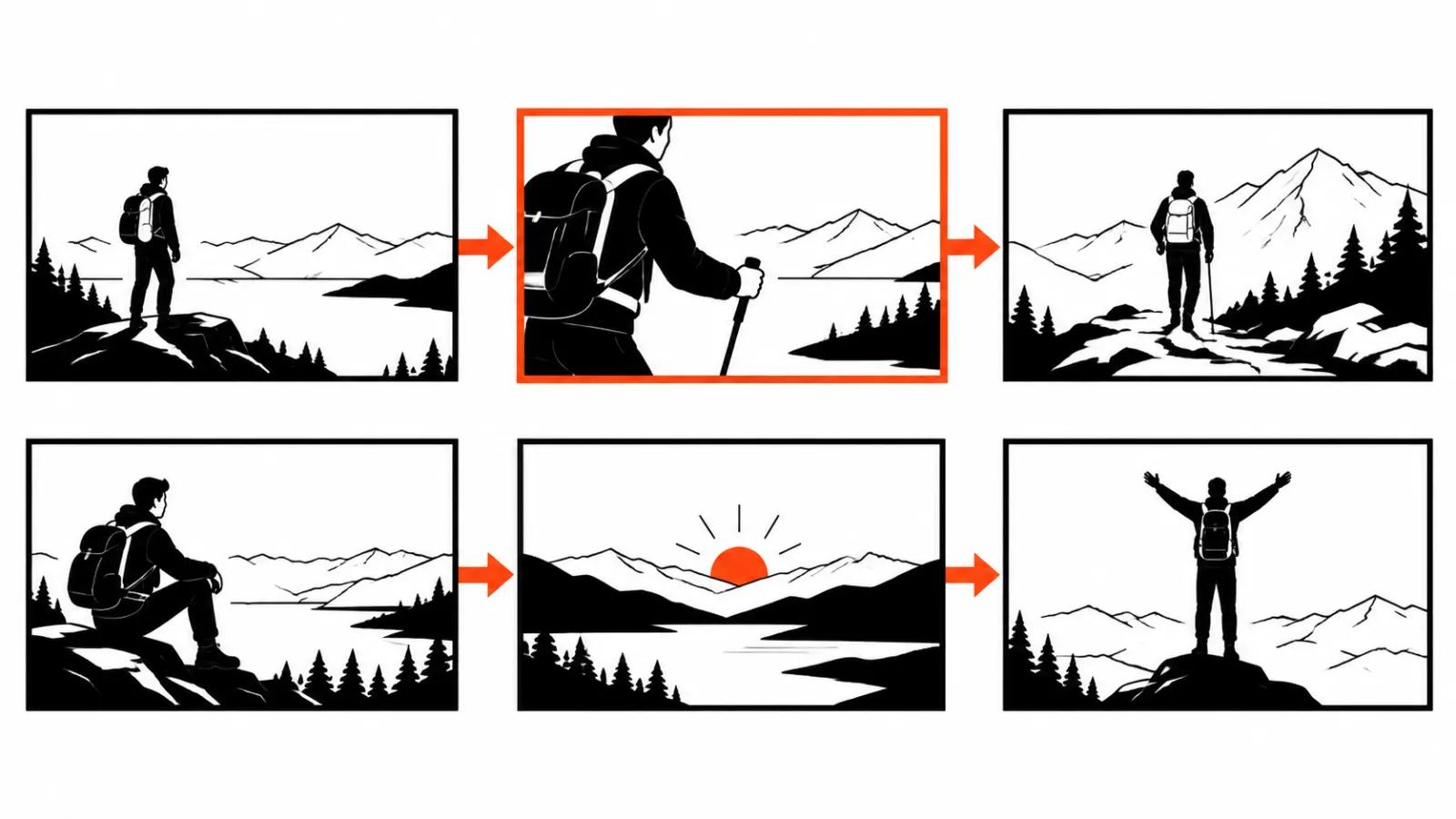
Turning clips into a long video
One workflow survives contact with real projects, and it is as old as editing.
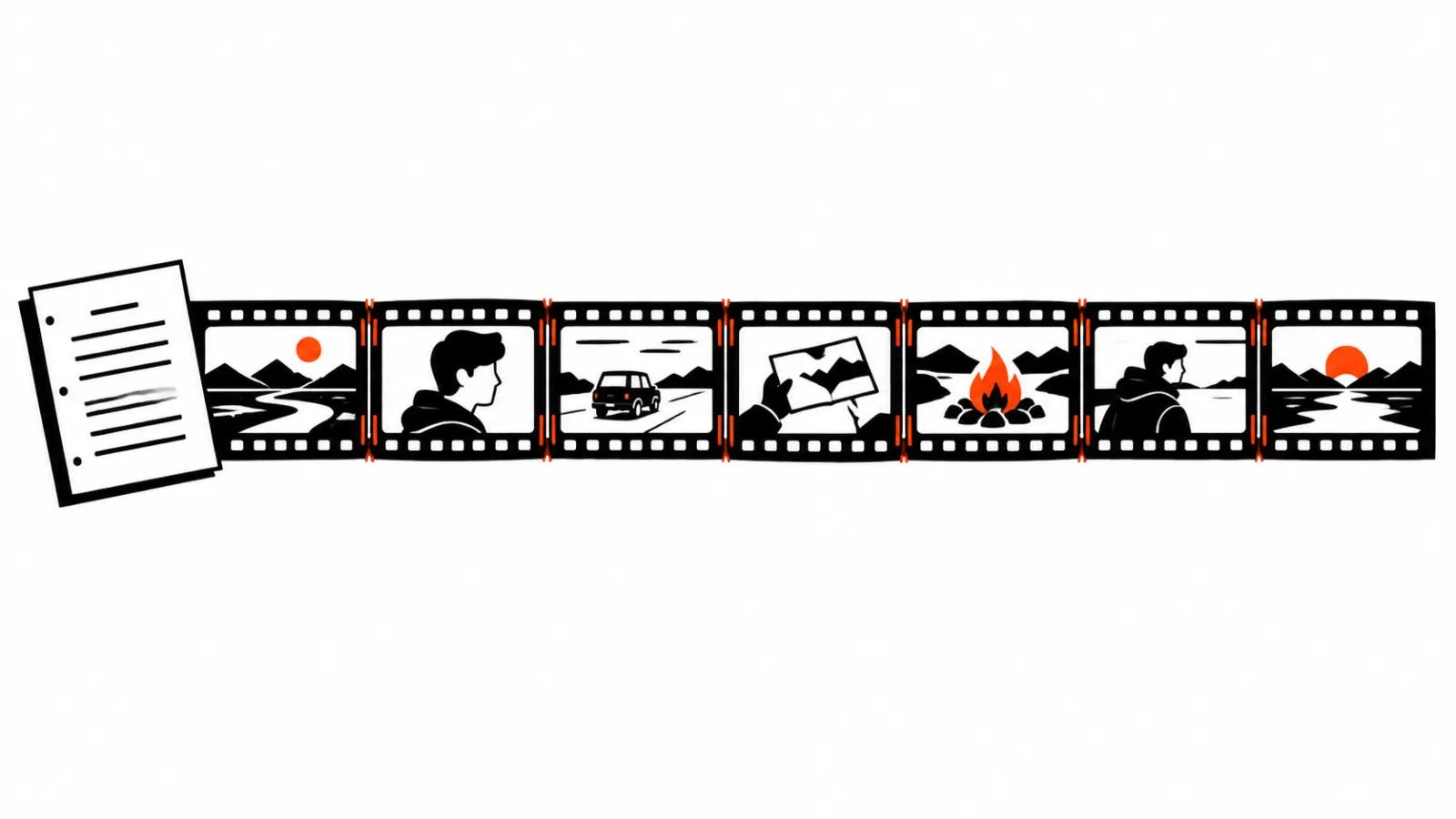
Split the script into scenes of ten to fifteen seconds. Each scene holds one idea and one action. Two ideas in a scene lose the viewer, and the model loses the hero along with them.
Write a separate prompt per scene: who is in frame, what they do, where the camera stands, what the light does. A scene without a camera description goes to the model's taste, and the cut will not match the angle before it.
Generate scenes one at a time. Five attempts per scene is normal work, and a weak prompt has little to do with it.
Then edit: trim, grade, sound. Rhythm lives here, and rhythm is what separates a film from a pile of attractive shots.
Scripting five minutes
A long video starts on paper, and the prompt comes second. Five minutes is roughly twenty scenes, each needing one line of meaning.
A structure that holds attention: a hook in the first ten seconds, a promise, three or four blocks with examples, a short close. Each block ends with a mini-conclusion, otherwise the viewer never learns why they stayed.
Shoot close-ups first when a character is involved. A tight face sets the canon, and later frames get pulled toward it.
Plan the inserts separately: product, screen, hands. They are cheaper to generate and they cover the seams between difficult scenes.
Continuity between shots
This is the main technical obstacle, and prompts do not solve it.
A character reference. The same portrait goes into every scene with the hero. Without it each shot invents a new person.
A fixed light description. Describe the source and direction once, then repeat the wording. Models respond to "soft light from the right" more reliably than to "beautiful light".
One lens. If the first scene is "wide angle, low angle" and the second is "telephoto from above", you have two different films.
A last frame. When the model accepts an end frame, the seam between two scenes becomes manageable: the next shot starts where the previous one stopped.
Sound, voice and captions
Sound is built separately from picture, and that saves days.
Voicing is recorded or synthesised against the finished cut. Building it against individual clips never matches the stitched rhythm.
Music is picked after assembly, by the beat. A track chosen before the edit dictates scene lengths, and that is almost always the wrong constraint.
Captions and titles go in the editor, because text rendered by a model comes out with broken letters.
Where the edit gives it away
Three places tell a viewer the piece came from fragments.
Light. Sun on the left in one scene, on the right in the next, and the shadows disagree.
Camera motion. Every scene starts from zero, and the overall camera rhythm stutters.
Details. A ring appears and disappears, a logo changes shape between shots.
The cure is dull: one shot list, one light, one reference, and a detail check on every frame. There is no clever shortcut here.
Budget and verdict
Five minutes of finished video is twenty scenes, five attempts each, around a hundred clips and one editing day. Call it a calm week of work.
For a channel that publishes regularly, build a template instead: intro, titles, sound, a fixed shot list. Every episode then moves faster, and YouTube channel management turns into a production routine.
Seen this way, AI video production stops being a stunt. It is a line with a script and an edit, where the model owns the picture and a person owns the meaning and the rhythm.
One more thing. The short pieces left over from the edit almost always become video splitting into shorts. The long film and its vertical cuts should be planned in one pass, and that is the best way to make the generation pay for itself.