What Luma shipped on November 4
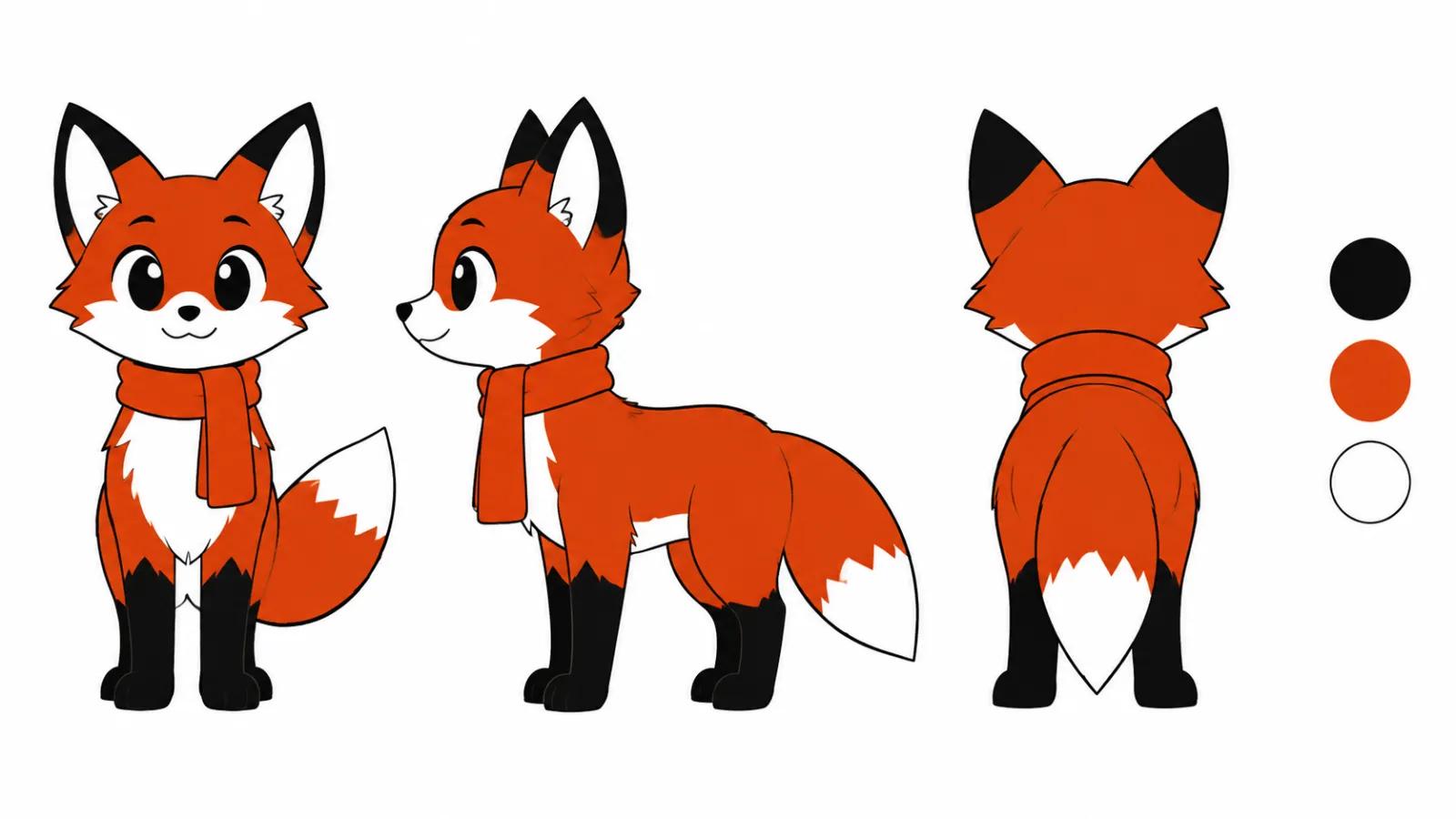
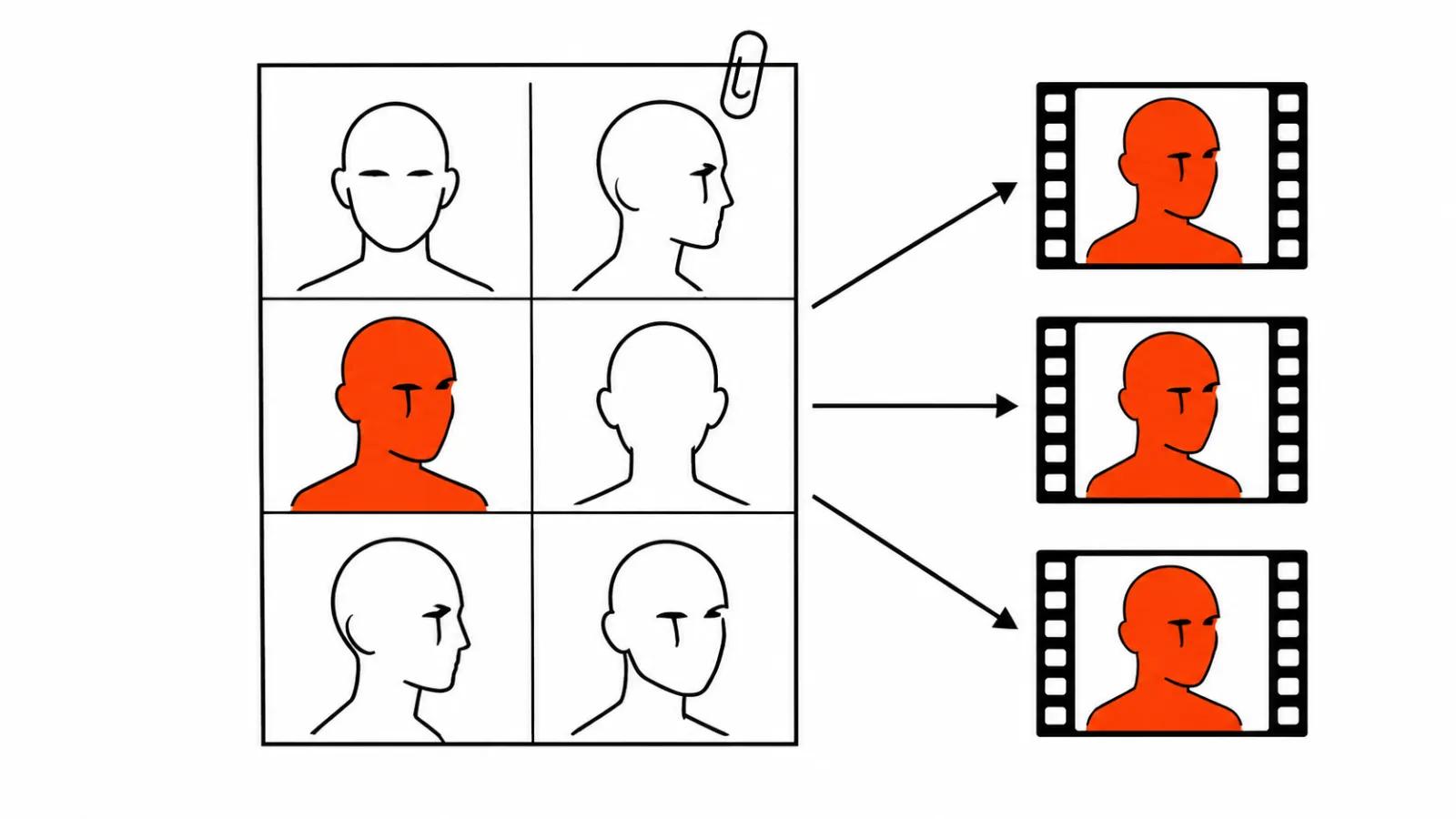
The announcement went out from the official Luma Labs account on X, and the phrasing is short: once the character is right, the next view should not turn them into someone else. The tool collects a set of references into one character sheet and leaves that sheet as the working base for later frames.
The mechanic is plain. Images go in, a sheet with several angles comes out. From then on the sheet travels with the character, instead of the same files getting attached to every prompt in the hope they land the same way.
The public card is thin. No price, no cap on how many references go in, no word on which generation models the sheet feeds. Judging it means judging the promise and the mechanic itself.
Why consistent character AI video drifts on the second angle
Drift starts wherever the model has no idea what has to stay fixed. One frontal frame settles the nose, the eye line and the set of the shoulders. The back of the head, the jaw seen from the side and the weave of a jacket have to be invented from probability, plausibly and slightly differently every time.
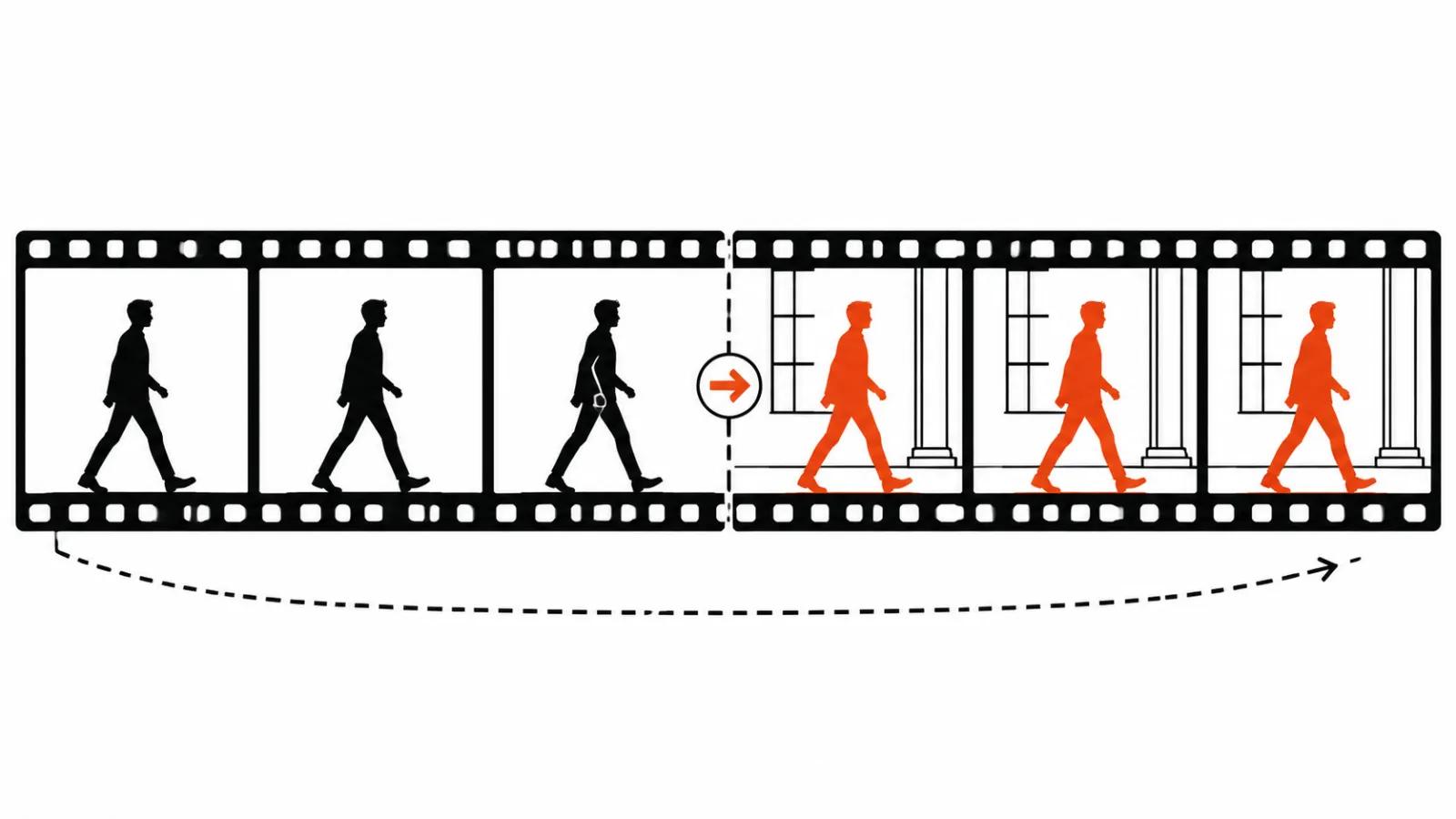
A single clip hides it. Ten scenes do not. By the second shot the face is a touch softer, by the fifth the character reads as a sibling, by the eighth the viewer has lost the thread. Editing rests on the person in frame staying the same person, and a small shift in the features breaks that thread harder than grain, lighting or a rough cut.
For a campaign series built around one hero the cost runs past a bad frame. A client remembers the face from the approved still, an audience recognises a character by three marks, and rebuilding a scene over a misplaced mole eats a working day.
A character passport before the first clip
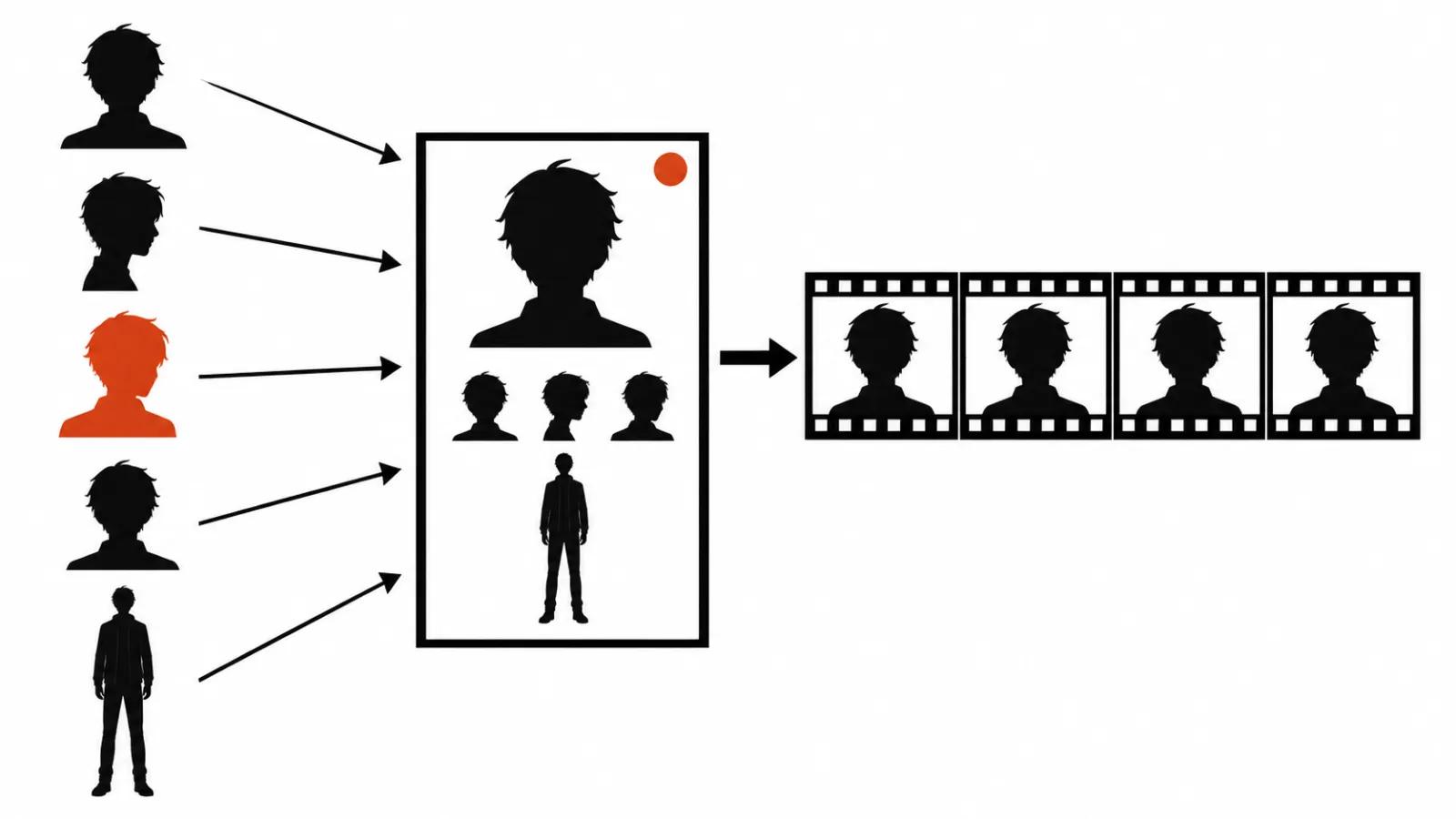
Character Sheet moves into the tool a step studios have done by hand for years: the character passport, assembled before any clip is generated. Front, profile, three-quarter, full body, a couple of expressions, plus a note on the wardrobe and the marks. Without that folder every prompt opens with a description in words, and the words land a little differently each time.
The value of the sheet is that it records a decision. Before the character is approved, variations are useful. After approval, every new angle is a check against the passport. Illustration teams work the same way, a model sheet first and a storyboard after.
There is a commercial effect too. The sheet can go to a client before any money is spent on clips. An argument about eyebrows or the length of a jacket gets settled on a still image, ahead of the first billed generation.
Series work and UGC avatars
The economics here are counted in reruns. Every extra attempt is a paid generation plus a minute of editing, and across thirty short versions those attempts turn into their own line in the budget. One approved sheet removes a share of the repeats at the very start.
UGC avatars follow the same logic: one person on camera, many scenes, different backgrounds and different scripts. While the face holds, a subscriber reads the feed as one channel. Once the character slips, the feed becomes a set of strangers and reach sags for a reason no dashboard shows.
Vertical ads feel it hardest. One hero runs through a dozen creatives, and drift between them reads as different people in different campaigns. The other case is replacing a hero in footage that already exists, and character swap has its own write-up in the blog.
What the announcement leaves out
No price, no reference limit, no word on an API or open weights. Budgeting per generation is premature while it is unclear how many images a sheet holds and how it behaves on a full-body figure.
There are no measurements either. The announcement offers a promise, and comparing Character Sheet with other ways of holding a character has nothing to stand on yet. The first thing to test in person is fine detail on a three-quarter turn, whether a print on clothing holds, and whether skin tone survives a change of lighting.
One question the card never touches is a costume change written into the story. A passport fixes marks, while a new outfit is a separate identity, and how the tool separates the two is not visible from the outside.
What to test in consistent character AI video on your own project
First, one character and one sheet. Trying to pack two people into a single passport mixes their marks together.
Second, a five-angle test before a batch goes out: front, profile, three-quarter, full body, and a view from behind. If the fourth image falls apart, plan the rest of the work another way.
Third, keep the sheet away from scene prompts. A change of lighting or background should never rewrite the passport, or in a week nobody remembers which version was approved.
Where a real person has to be on camera the arithmetic differs: handcrafted videos start at $190 for a finished piece, and a face cannot drift there. Serial production around a fixed hero is better organised around the format itself, with running a YouTube channel from $200 a month, while AI video production covers draft scenes and cutaways.
My take
For series and UGC avatars a sheet like this matters more than another 0.1 on an Elo leaderboard. A leaderboard describes how good a model is on average, while a sheet solves one concrete problem: the character stays themselves on the tenth shot.
I would not put Character Sheet into production the same week. The announcement is short, price and limits are missing, so the first move is a test on your own character under your own lighting, with hand-built references kept as the fallback. If the sheet holds a three-quarter turn and a print, it takes routine away from the artist and leaves the decisions.
Test it over distance as well. Drift is rarely visible in one scene and nearly always visible in an assembly of twenty. A full pass through an episode before editing tells more than ten separate frames.