Why an editing quote looks arbitrary
Editing is sold by finished minutes and paid by hours worked. There is no fixed exchange rate between the two. A minute of a single camera interview and a minute of a commercial with graphics, grading and sound design differ in labour by an order of magnitude.
A studio names a sum, the client nods, revisions start, and the quote doubles. The usual cause is that the scope was never written down: how many versions, how many rounds, what counts as a revision and what counts as a new task.
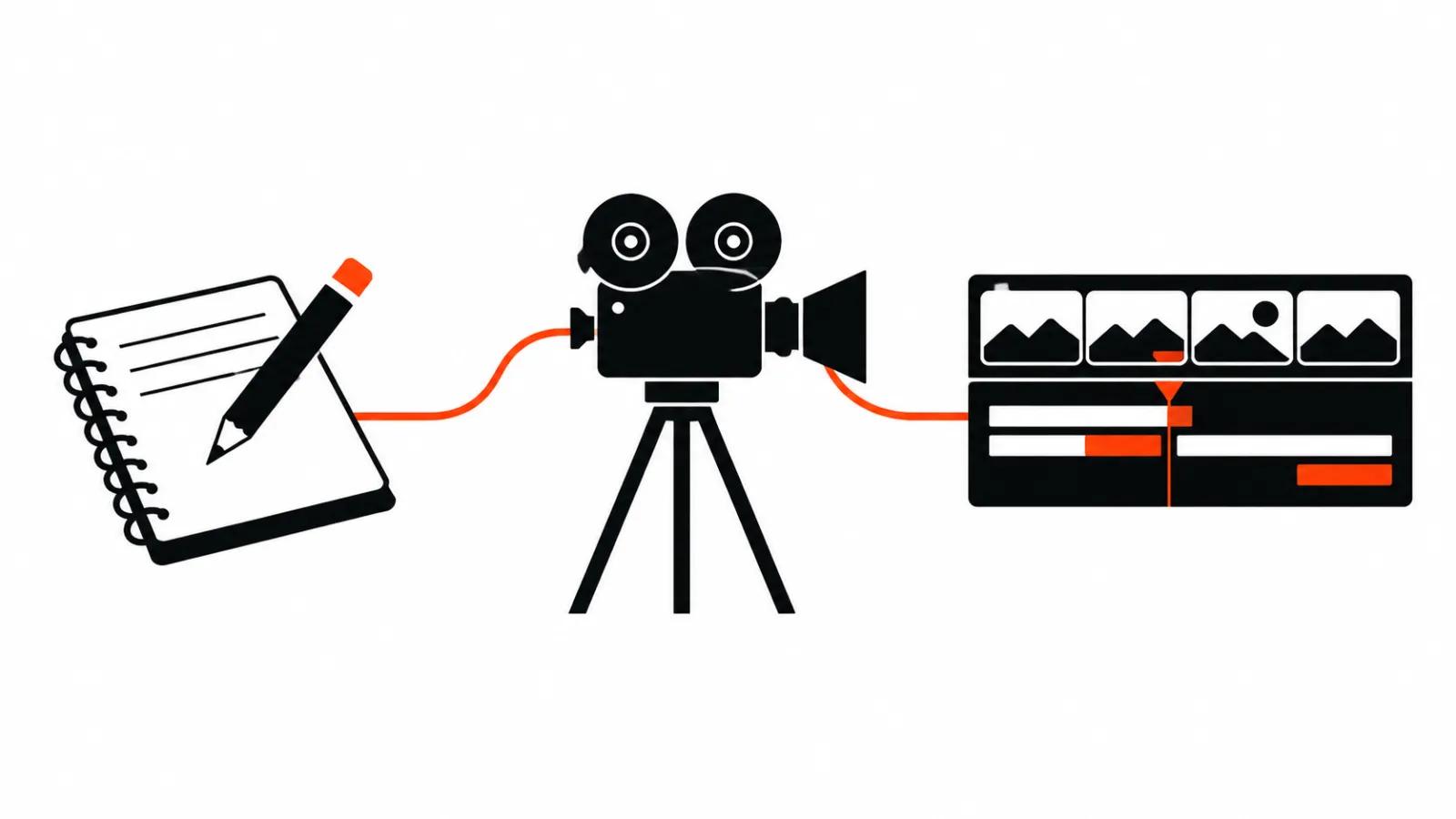
A good quote answers five questions: what, from what material, how long, with how much finishing, how many redoes. Without them the number moves.
What video editing services actually include
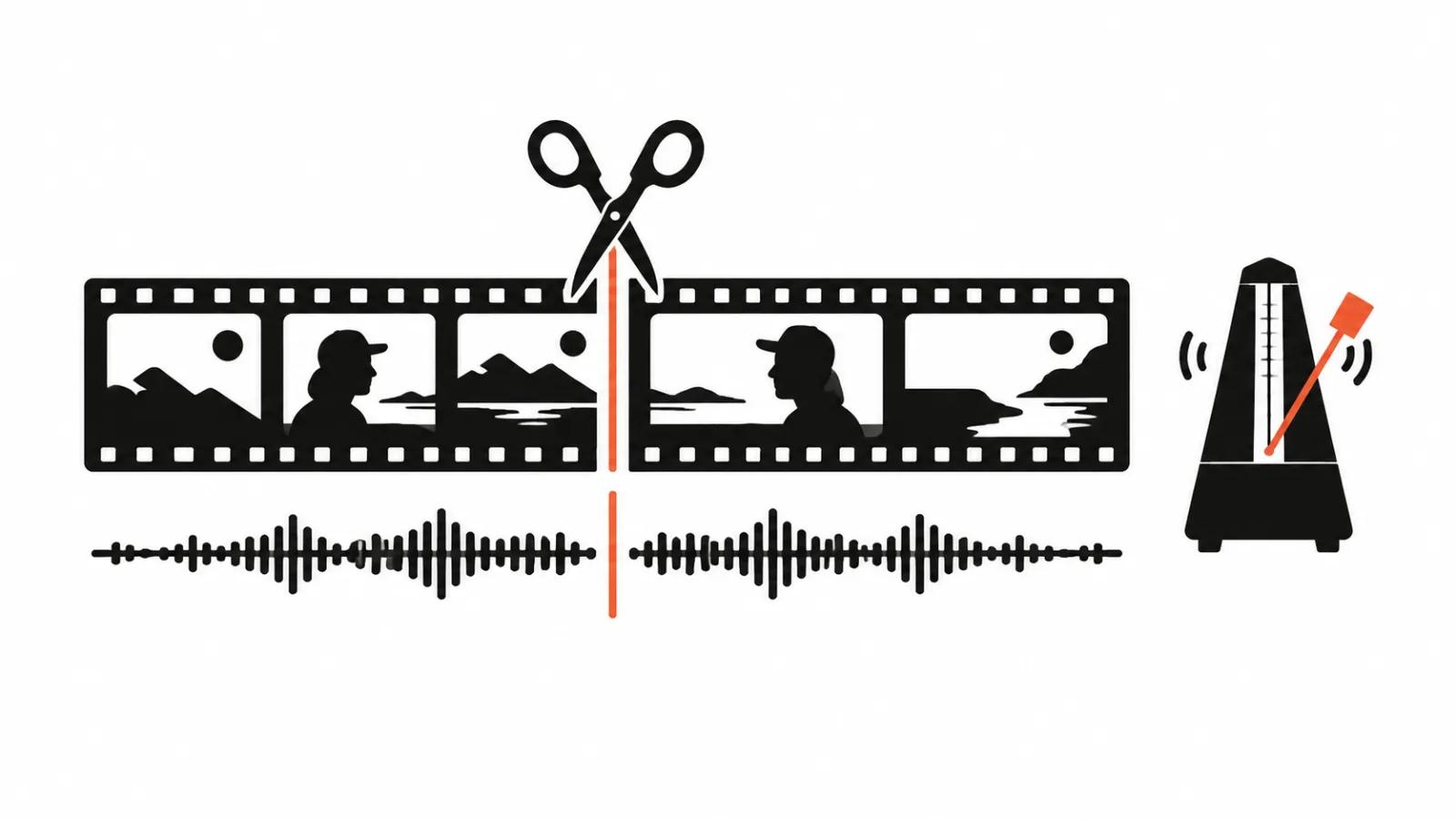
The base package is fairly stable. Assembly of a rough sequence, meaning footage placed in a sensible order. Then the cleanup: dead air, false starts, technical faults. Then rhythm and transitions, titles, the logo, and a final cut for the required aspect ratio.
After that come colour correction and grading. Sound work: cleanup, loudness, music, ambience. Graphics: diagrams, captions, animated figures. Export in several formats and a check on a phone.
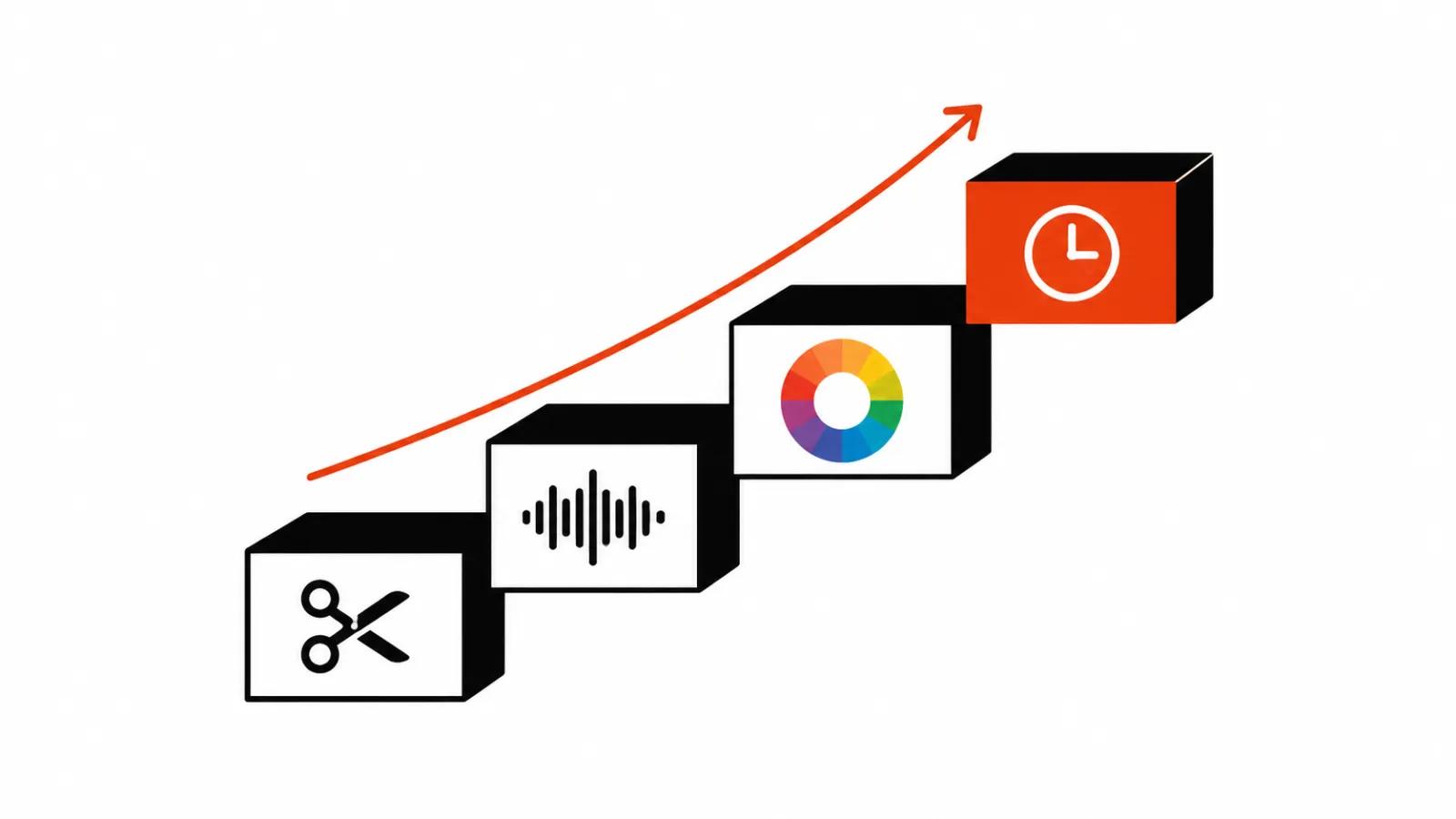
Runtime and source footage are the two multipliers
Duration affects price non linearly. The first thirty seconds take the longest, because attention lives there, and every extra minute adds work in proportion to the number of cuts. A ten minute piece cut from a finished interview can cost less than a thirty second commercial teaser.
One camera, clean lavalier audio and material shot to a plan cost less than three cameras, a humming room, mixed white balance and a speaker who ignores the script. Sorting that footage takes days, and somebody pays for the days.
The practical conclusion: productions economise on the shoot day more often than on the edit, and then pay twice. Shooting ten extra minutes is far cheaper than rescuing a frame that has no close up.
Colour, sound and graphics: the three lines that get cut
Colour is usually the first line removed, because the difference is invisible on a preview. It appears when the clip sits next to someone else's material in a feed: the picture looks washed out, skin turns green, white drifts to grey.
Sound is cut second and should not be. Bad audio destroys trust faster than bad picture, and viewers leave at second three without knowing why. Noise cleanup, loudness matching and a music bed cost less than a reshoot.
Graphics are cut third and often sensibly. Simple titles and captions cover most jobs. Complex animation earns its place when a film has to explain a product or a process, and that is where the saving shows.
Revisions: how they turn into money
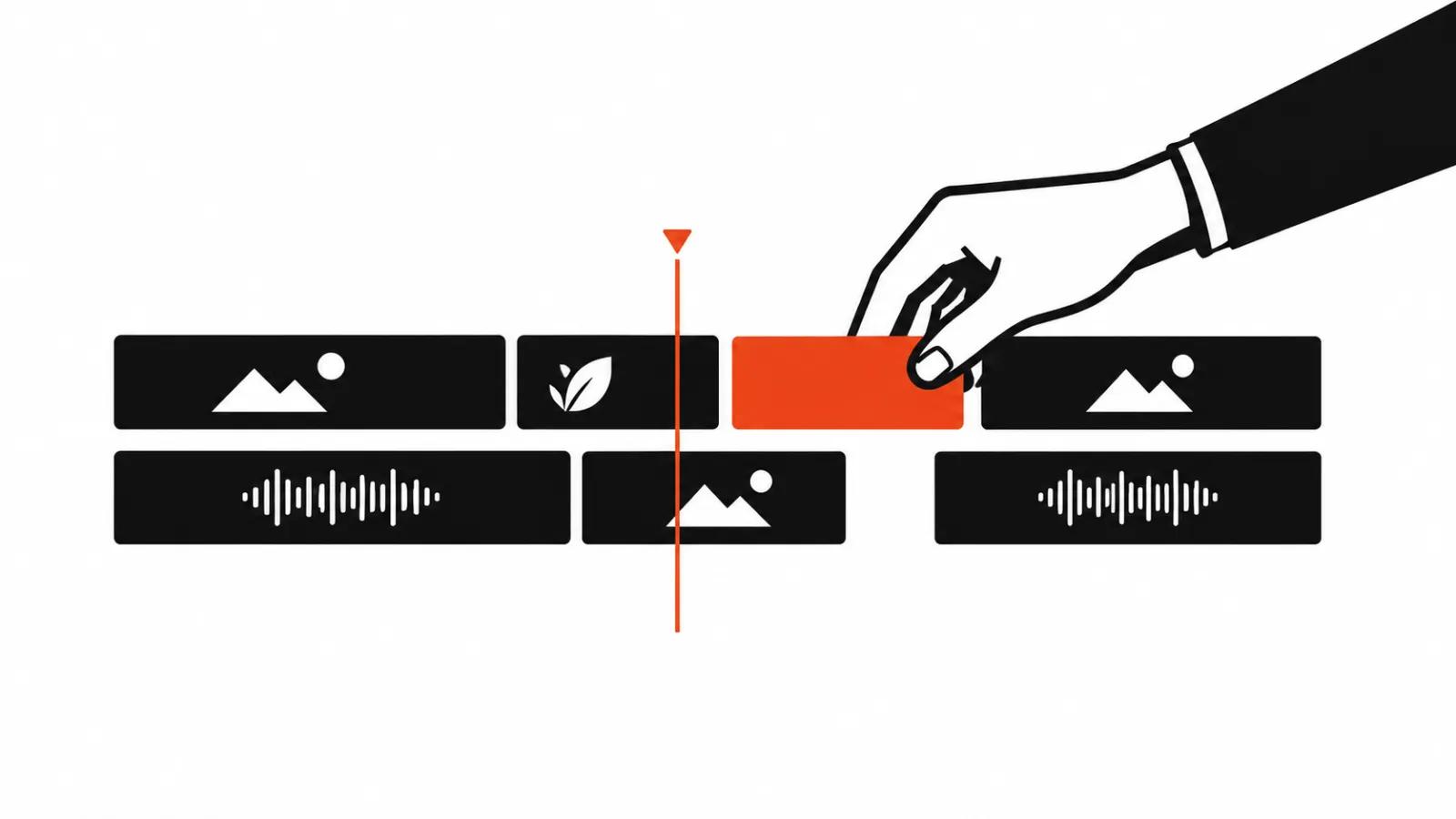
A revision is a change to a decision already made. Swapping the music, reordering scenes, rewriting an on screen line, replacing the ending. Each request starts a chain: rebuild, retime, re-export.
That is why a quote contains a number. Three rounds are included, further rounds are billed hourly. It is fair to both sides and removes the main conflict: the client stops hesitating to ask, the studio stops working for free.
One habit helps. Collect every note into a single list and send it once. Five messages with one note each are five passes through the project.
Where AI already removes hours
AI video editing did not replace editors, it removed the routine that used to burn half the budget. The table shows what tools already cover and what stays human.
The last row matters for anyone pushing one asset into dozens of channels. Mass video versioning without a human check produces dozens of versions of one idea, and platforms notice.
| Task | What AI does | What stays with the editor |
|---|---|---|
| Transcription and search | automatic transcript with timecodes | choosing the passages that matter |
| Rough cut | assembly by silence and by meaning | story and rhythm |
| Captions | speech recognition and subtitle output | layout, legibility, style |
| Sound | noise reduction, loudness, restoration | balance between voice and music |
| Formats | reframing to 9:16 and 1:1 | checking composition on a phone |
| Versioning | swapping shots and rebuilding cuts | intent and consistency across a series |
What this means for the client
AI pushes the price down where the work is mechanical: transcription, rough cuts, captions, formats. It barely touches the price of decisions: what to keep, where a pause belongs, which frame holds attention. That is what an editor is paid for.
Our own pricing follows the same logic. A handcrafted video up to ninety seconds starts at $394 per video, because assembly, sound, colour and graphics are done by hand. Volume work is priced differently, from $2.47 per 1000 views. The gap between the numbers reflects the gap in labour.
If what you need is a stream of clips for testing, look at AI video production, where the economics are built on quantity and the price per minute falls sharply. If you need a film that runs for a year, ask for a hand built quote, since the cost of an AI video at volume says little about a single production.
How to read someone else's quote
Look at the units, the total is secondary. Are you paying per hour, per finished minute, or per project. An hourly rate suits the studio and exposes the client. A per minute rate is clear but hides the volume of footage.
Then check the edges. How many versions are included, how many revisions, what counts as a new task, who clears the music and the rights. Finally ask for a sample quote on a similar project. A studio that cannot show its structure is guessing.