The camera drifts to eye level: what six models did
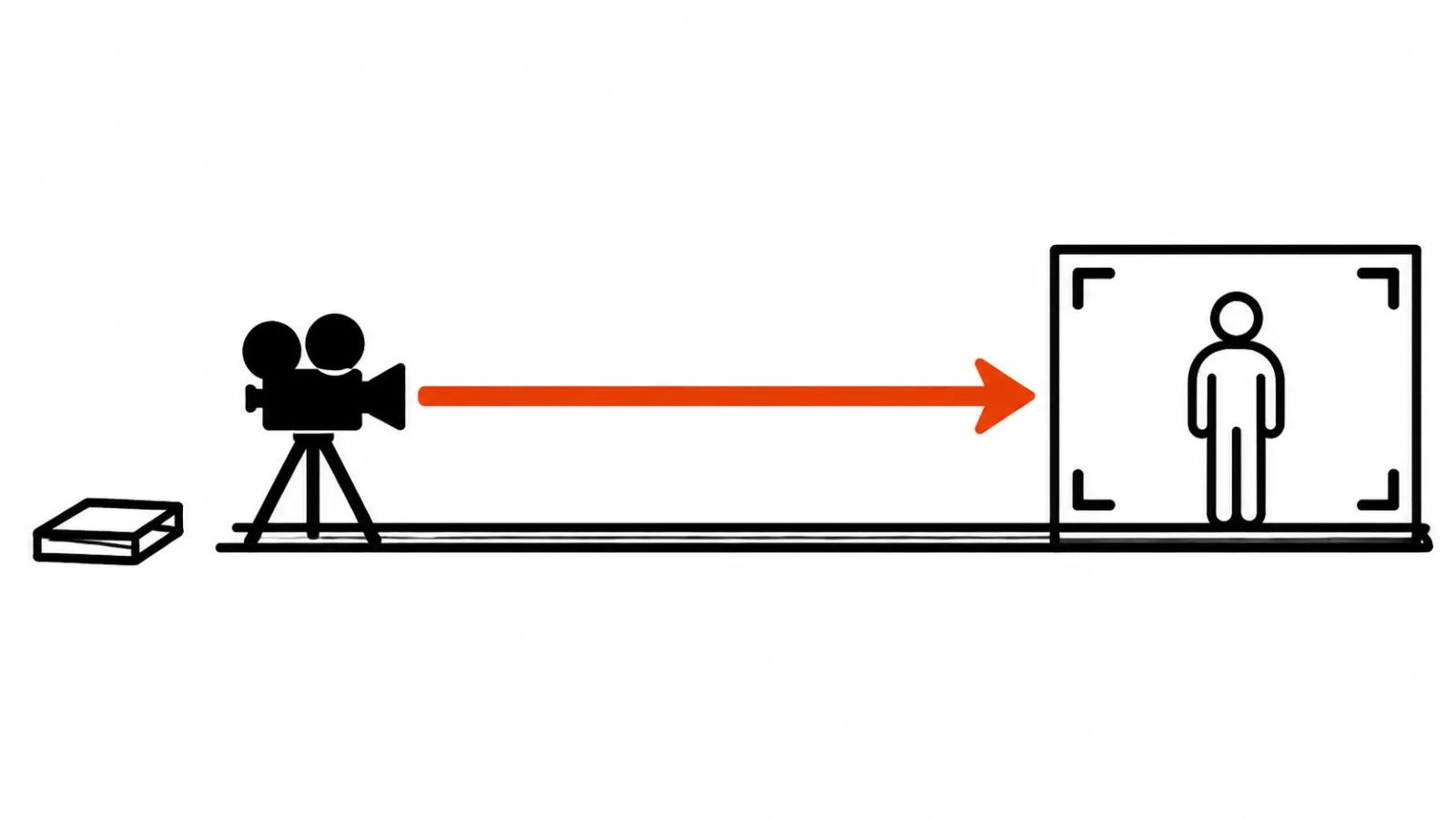
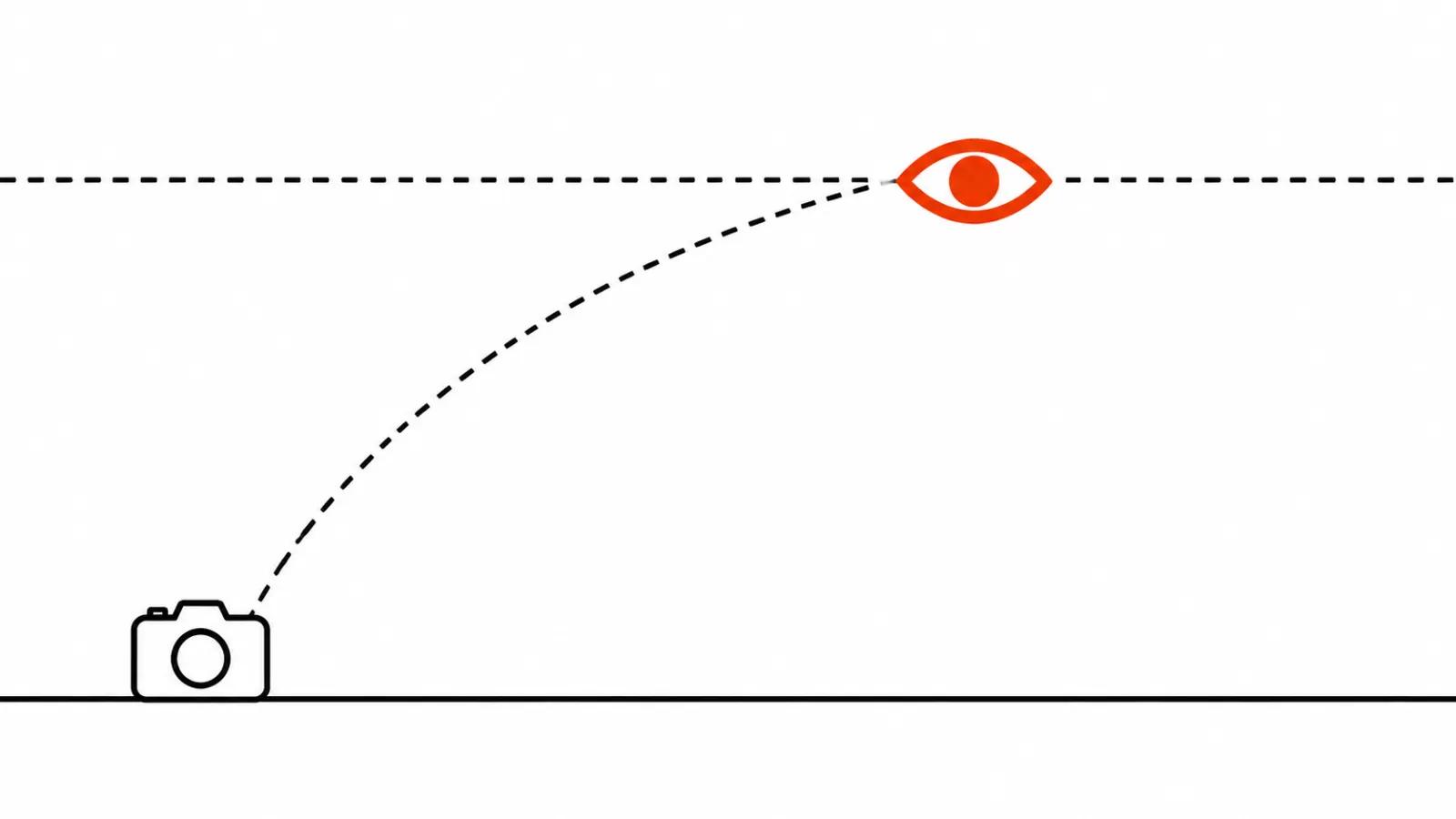
Start low, close to the floor. The shot creeps forward, the subject turns and walks back, and by the end the camera sits where a person usually holds a phone. The first frame set the height, and after a 180 degree turn the model lifted the viewpoint to its comfortable 1.1 to 1.5 metres.
The paper is "Every Camera Grows Up: Camera Height Regression in Interactive Video World Models", summarised by VideoTech Wire on 18 November 2026, and it tested six recent open interactive world models. The drift grows with the turn angle, and it starts earlier than you would expect: the opening frame is still in context while the camera is already climbing.
The numbers are blunt. For clips started at 0.15 m, only 0 to 20 percent finished within 1.3 times the starting height. The rest ended up between 1.1 and 1.5 m, which is eye level. Reference renders of the same scene held their height within a few percent. The measurement used the EyeHeight benchmark: six heights from 0.15 to 2.2 m plus four real tripod heights.
There is no camera, there is a habit
A generator has no lens, no operator and no point in space. It has numbers that describe a frame, and statistics learned from millions of clips. A camera on the floor is a rare situation in that data. A camera at eye level is the normal one.
The authors put the failure down to training data: the models learned from footage shot by people, and floor level shots are close to absent there. The habit outranks the opening frame, and on a long walk it wins.
Why the error builds up on a turn
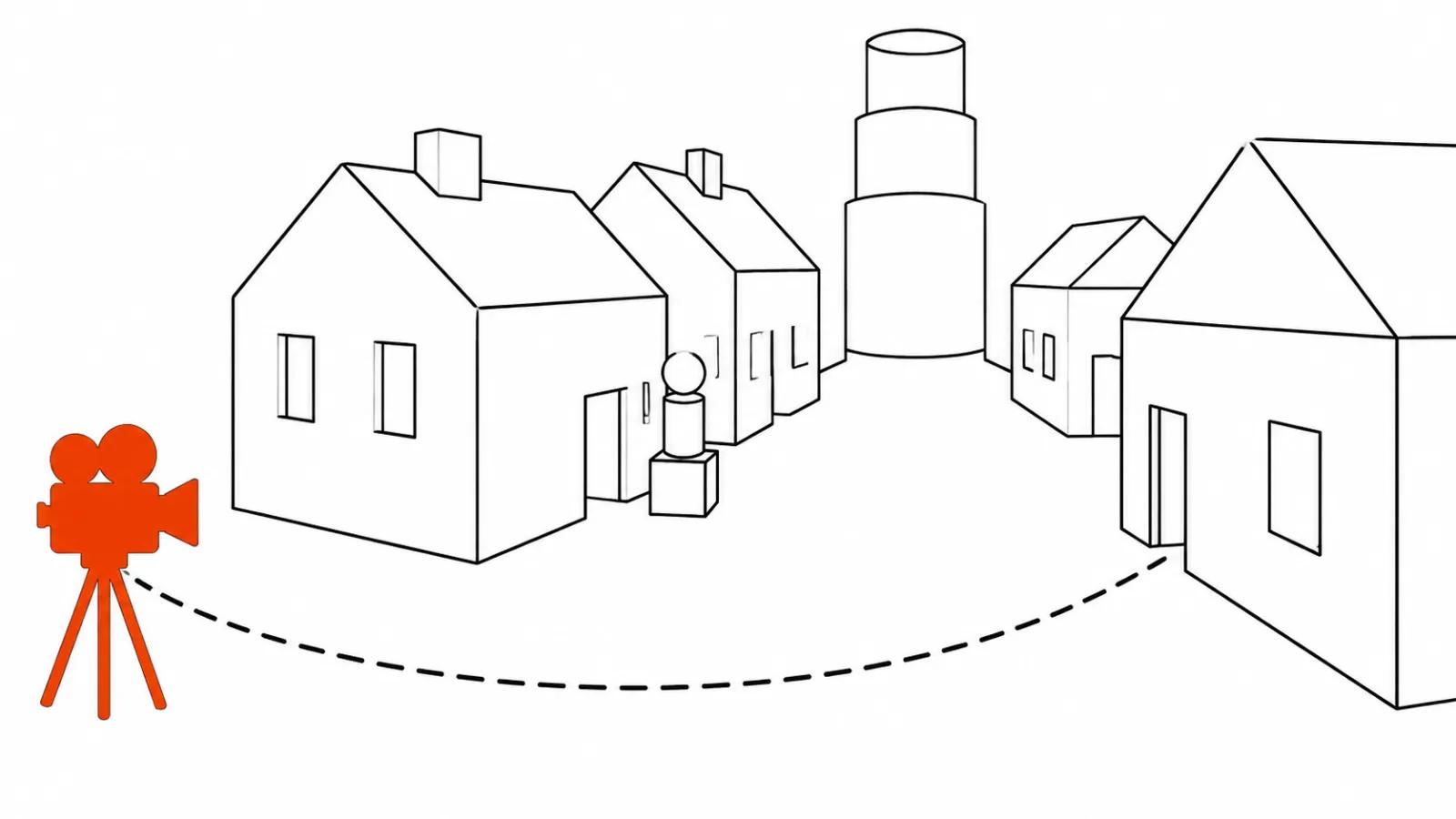
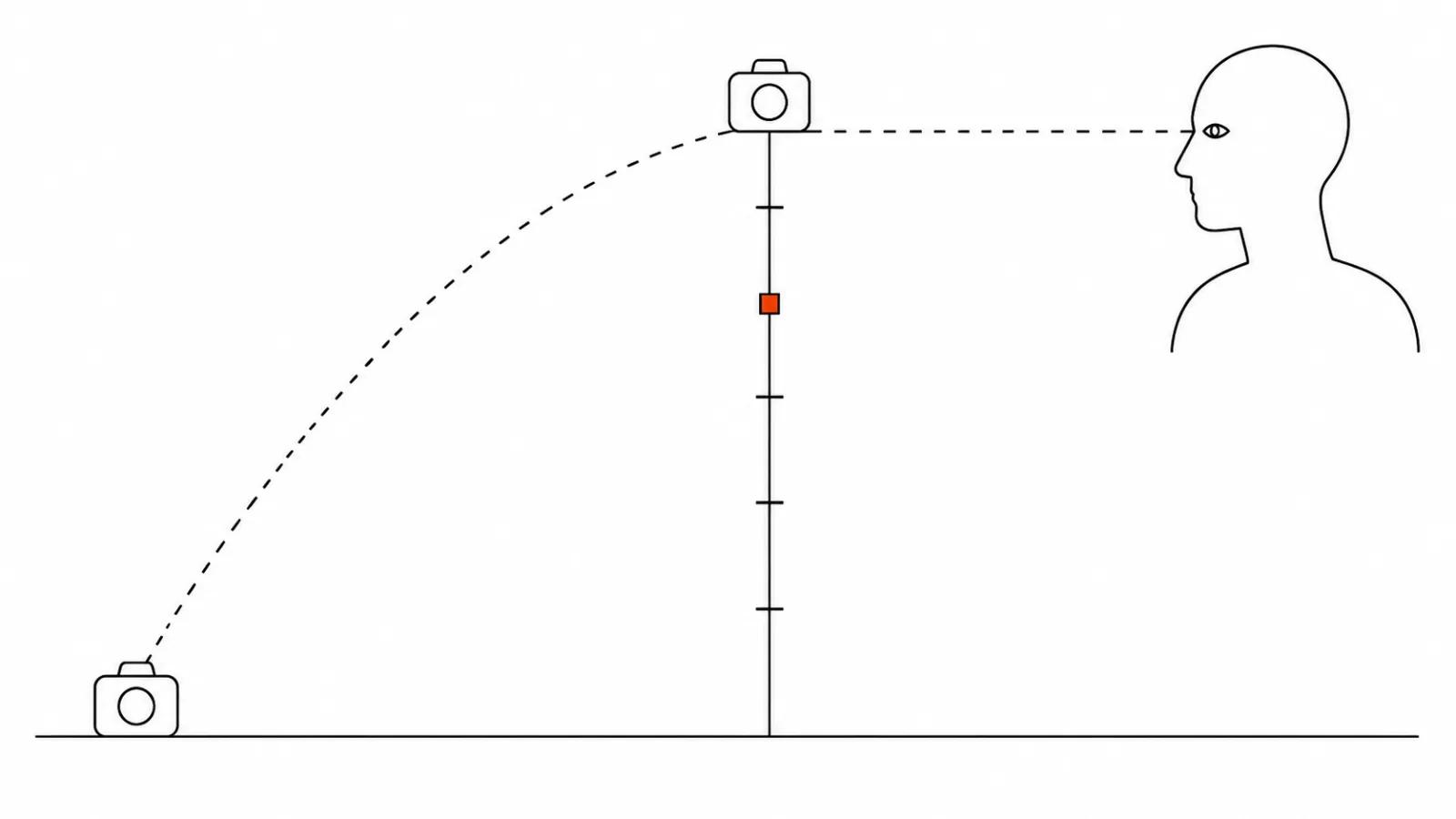
The model sees the first frame and holds its height. Then the redrawing begins: the turn reveals part of the room that the opening frame never showed, and the model builds that part from its average idea of the world. The average idea lives at eye level.
Two consequences follow. The bigger the turn, the more unseen scene there is and the further the height travels. And the error does not wait for the opening frame to leave the context, it starts earlier.
In Matrix-Game models the floor moved as if the height stayed constant while the newly drawn room geometry pointed to a higher viewpoint. Floor and walls told different stories about the same camera.
Camera movement in AI video on a turn: why a prompt often fails
The tempting fix is to write "low angle, camera at fifteen centimetres" and expect obedience. In SANA-WM the text hints about height did not help, and neither did floor depth maps. Strong text guidance (classifier-free guidance) during the first half of the denoising steps made the drift worse.
Fine-tuning on height balanced data brought some of the height back and cost 5 points of the MUSIQ quality metric. That is the price of pulling a habit out of a model.
The careful conclusion: one experiment on one model does not describe every generator. Text about height sometimes works, and the only way to know is your own scene.
A second route shows up in AVM (Autoregressive View Model, VideoTech Wire, 19 November). It builds a scene as a stream of views along a given camera path without an explicit 3D model: it pulls suitable views from the input and from its own history into a limited active context. Training covered about 8 million scenes and clips, and a second stage on its own rollouts cuts the drifting on long walks.
Google, discussing Genie 4 on 18 November, listed camera latency and long scene persistence among the unsolved problems. The wording is honest: the maker does not call the question closed.
What works in practice: short shots and key frames
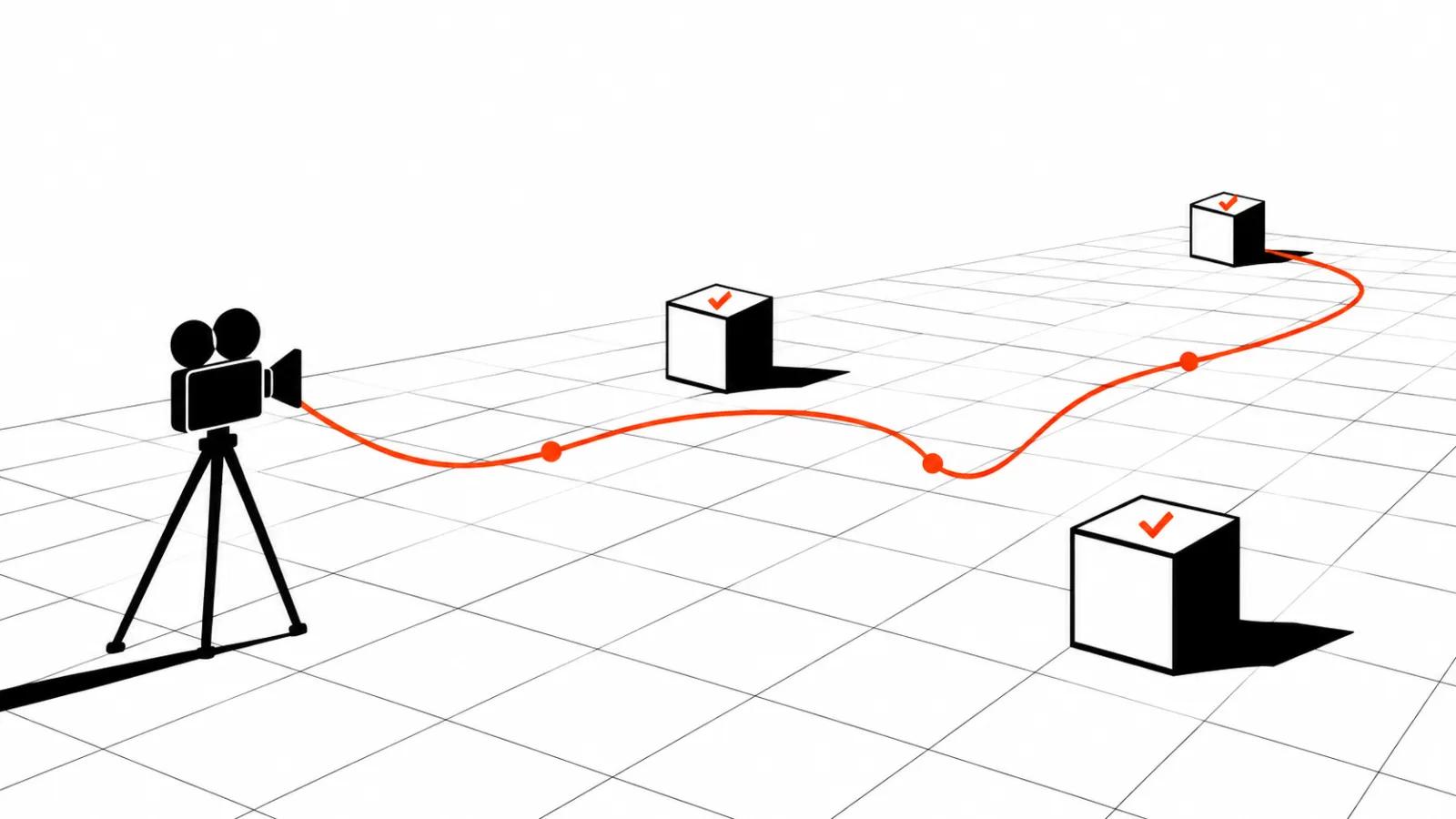
While models cannot hold the height by themselves, the shot list does the work. A short shot with one move leaves less room for guessing. A twenty metre walk is easier as four short pieces.
Key frames at the start and at the end give a second anchor: the height at the finish is drawn into the picture. That logic is covered at the frame level in the piece on how the model picks the next frame. For wording there is a separate guide on camera movement in the prompt, and it covers the words a model reads.
The third habit is a geometry check. The floor gives one line, the horizon gives another. Two lines show the height of the camera and the moment it starts to rise. This quick check catches the drift before a viewer does.
The third route: let code drive the camera
A workaround is gaining weight: pull a 3D scene out of the clip, drive the camera with ordinary code and render the frames in a 3D engine. In that pipeline the camera height is a number in a matrix, and a turn does not move it. The cost sits in the input: the scene has to be built from the footage, and busy scenes make that a separate job.
What to check when you approve a clip
Three checks. Floor: the floor line should not rise in the frame unless the camera is meant to rise. Horizon: on a turn it stays at its own height. Objects: a chair, a table, a door on the new wall match the size of the same objects in the opening frame.
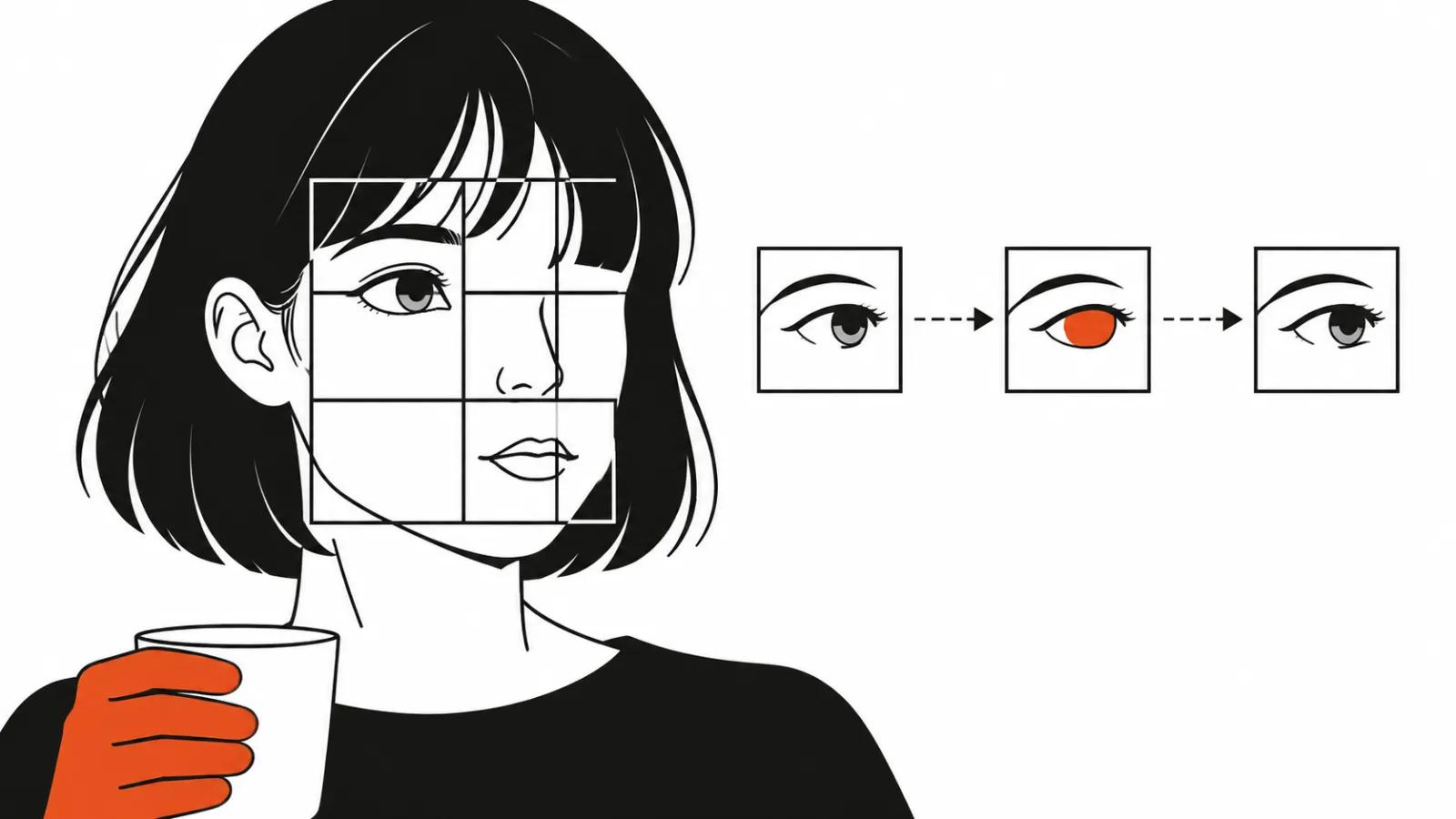
A fourth check for long walks. Put the first and the last frame side by side and look at where the subject's eye line sits against the horizon. A small drift shows in that relation while a single frame still looks fine.
My conclusion
Camera drift is a result of how these models were trained. While the data leans towards handheld footage, the model will return to eye level on every long turn.
Better to say that before the shoot. If the script needs a long walk with the camera near the floor, some takes will go into rebuilding from short shots or into the 3D route. In AI video production this check is worth making part of the normal loop: short shots, key frames, control of floor and horizon. The same test applies to handcrafted videos, except that a person holds the camera there.
One honest limit. How the commercial models inside a studio work is not published, so everything above comes from open work and its summaries. The mechanism holds either way: the pull towards eye level shows up in the benchmark numbers and in test clips.