How the story unfolded
The opening coincided with operational trouble at the neighbouring Cornwall Winter Wonderland attraction. The ice rink and Kernow Lodge were not ready, a fireworks display was moved, and Sunday's programme was cancelled because of strong wind. That was reported on 23 November, the day before the market's announcement.
The organisers' first response was measured. Some expectations had not been met, and the reasons given were ordinary: weather, last-minute problems and limits of the site. Improvements were promised for the following weekend. Then the decision changed. Instead of fixes, bookings were cancelled and money returned.
One detail matters for accuracy. The refunds apply to bookings for Kernow Christmas Market. There is no separate confirmation that every attraction at Cornwall Winter Wonderland has closed: that attraction's page stayed live and listed a closing date of 3 January 2027. No timeline for processing refunds was given.
The scale of the coverage explains why a single venue travelled so far. BBC, The Times, The Telegraph, The Independent and People all ran the story over several days. On 27 November The Independent returned to it with a wider piece on AI posters at British Christmas markets. The story stopped being about one hall in Cornwall and became an example for the whole category of seasonal events.
AI advertising: the gap between a poster and a hall
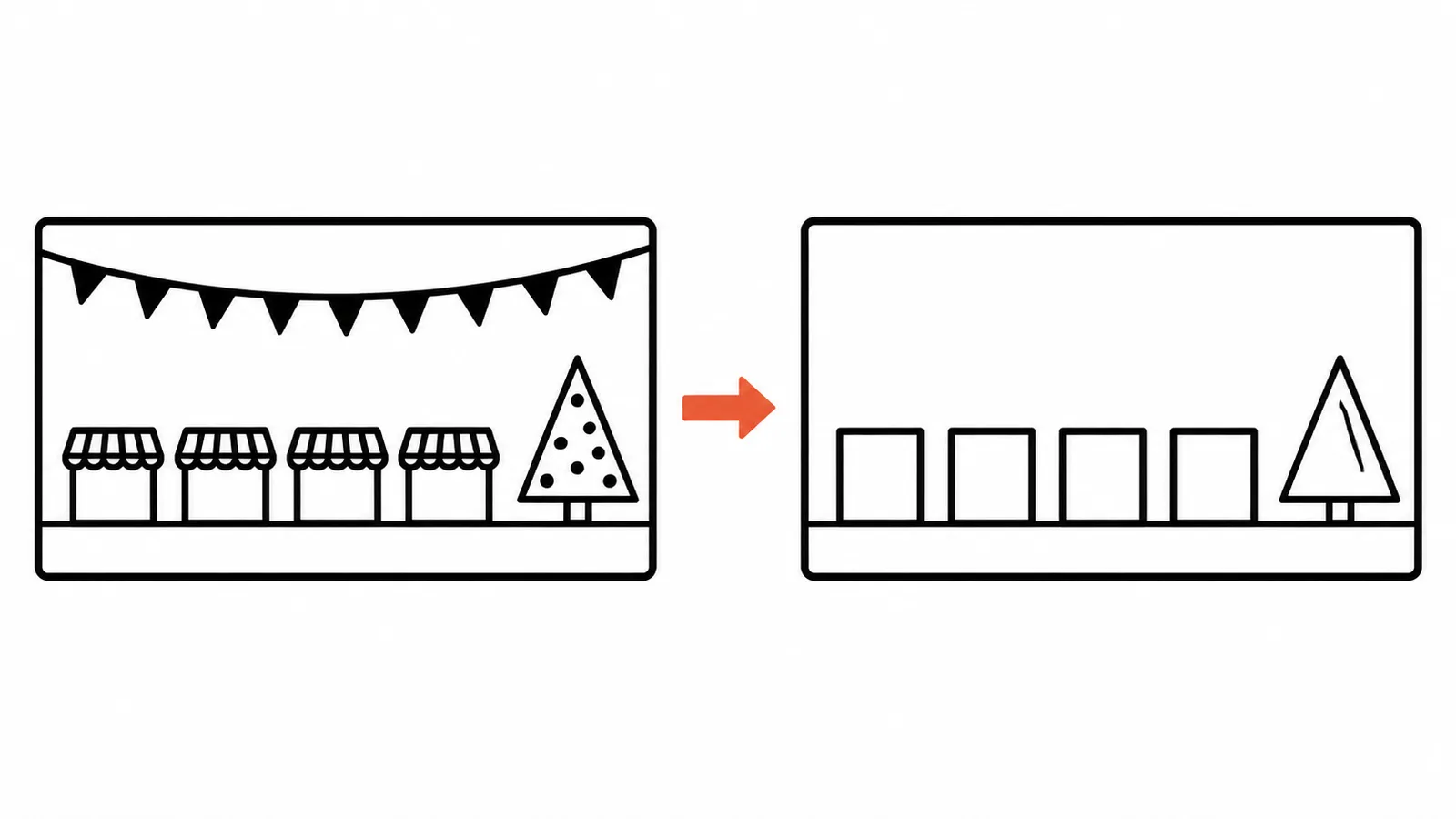
There is no technical failure anywhere in this case. The images were generated exactly as asked: warm light, garlands, stalls, a tree hung with baubles. AI advertising did precisely what it was told, and that is what makes the case uncomfortable. The mistake was not born in the generation. It was born in the relationship between the image and the place.
A promotional image works as a promise with a date attached. A visitor pays for the evening they pictured from the poster, and then checks that promise on foot a few days after paying. By then nothing can be changed, which leaves a refund as the only way to close the conversation.
Hence a rule worth keeping in mind when commissioning visuals. The image shows the state of the venue that the client can reproduce on the advertised day. If the decorations are not up, the garlands are not hung, some stalls have not arrived, an honest shot will look plain, and that is fine. A plain shot loses some clicks and keeps the revenue of the rest of the season. That trade gets settled in bookings.
Ad creative that gets checked on site
A single ad creative on social media has a short life: its job is to stop a thumb, and the temptation to show a flawless frame is strong. The problem is that an offline event comes with a physical check that an online store does not have. The visitor shows up and compares.
The case is widely told as an AI story, although the complaints were first of all about mismatch. People reported it plainly: what angered visitors was the gap between the promise and the hall. The fact of generation came second. No law was broken here, the grievance is entirely reputational, and it cannot be settled by labelling the image as AI made. A label answers an accusation of concealment, and the accusation was about something else.
An opposite case from the same field came earlier: Coca-Cola dropped AI from its holiday ad. There the argument was about generation itself. Here the argument is about whether the image matched the venue, and a different production method does not solve it: there was nothing worth filming, because the hall stood half empty.
The difference between the two arguments is practical. A disclosure label answers the question of who made the picture. It says nothing about what a visitor will find at the gate.
Refunds as a line item
The bill in this story has two parts. The first is the revenue the market will not earn for the rest of the season, with bookings closed and no new ones coming. The second is the cost of refunds and handling requests, for which no timeline was published. Nobody has published figures, so the size of the loss cannot be estimated from outside. The structure of the bill is known. The amount is not.
For a client the useful part is the fact itself: a mistake in an image is paid for in money. Reputation is only the mechanism that delivers the bill, and there is no separate reputational loss to discuss. The bill lands on the venue, the till and the calendar. The season is short, and lost December weeks cannot be recovered.
The timing shows how the calculation works. Cancelling bookings in late November means the organisers walked away from the part of the season that was still available. A choice like that gets made when continuing looks more expensive than stopping.
What to do when commissioning this kind of advertising
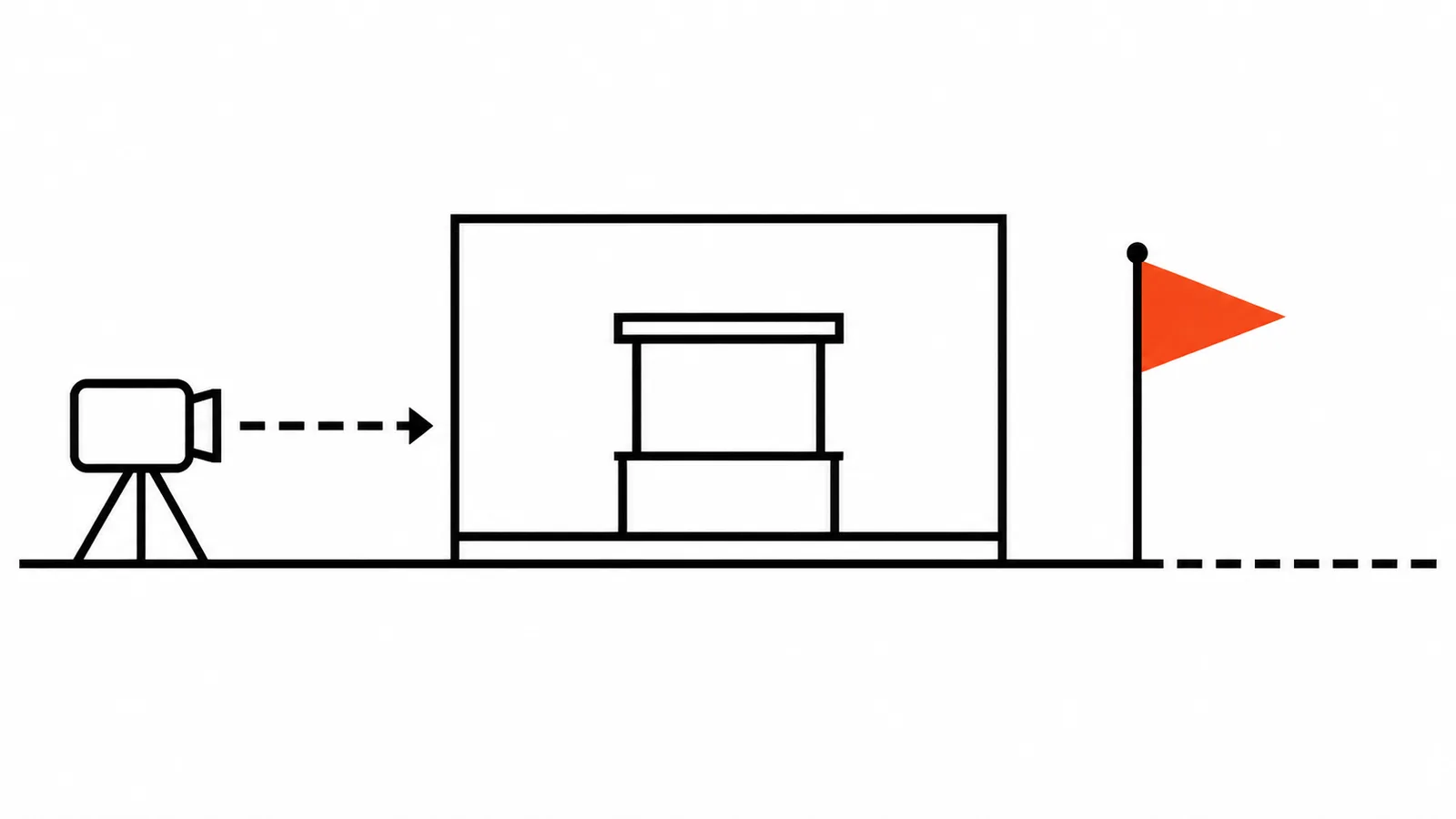
The first step is cheap and dull: photograph the real state of the venue the day before launch and build the poster from that. If the site is still being built, the frame shows what already stands, and the completion date goes in the text. Such a frame looks poorer than a generated one and survives contact with reality.
The second step concerns the copy. The promise gets lowered in words, because by then the picture is the wrong place to fix it. A line saying the venue is open and the decorations follow within a week or two reads worse than a perfect poster and ends better than a scandal. Readers remember that sentence less and arrive without inflated expectations.
The third step is about format. For an event with a physical check, the video ad gets shot on site, and generation covers the thumbnail, the teaser and cutdowns for short-form placements. In those, the frame sells a mood, and the visitor brings the mood along. A story-driven AI ad is a different matter: its promise is about an emotion, and nothing needs checking at the gate because there is nothing to check.
The fourth step is the calendar. If a venue depends on weather, decorators and contractors, the date on the poster gets room to slip. Moving a date on social media costs one post. Cancelling bookings costs a season.
The conclusion is dull and therefore useful. A model is good at rendering a state that does not exist yet. The trouble starts on the day that state has to be presented in person. The closer the check, the plainer the frame should be, and the more precise the words beside it.