Kling 4.0 Flash is open to everyone
Kuaishou lifted the restrictions on Flash on November 4. The model sits on the Kling AI site, runs through a public API, and ships with MCP, a command line client and plugins. The plugin installs into Photoshop, Premiere Pro and After Effects, so a shot can be generated inside the project where the edit already lives.
Before that day Flash came bundled with an expensive subscription. There was no public API and no published price, and only a paying subscriber could test the model on real scenes.
This piece covers the price and the limits of Flash after general availability. The closed-access period and the gap to the full model are in our breakdown of Kling 4.0 access.
Pricing: $0.094 per second
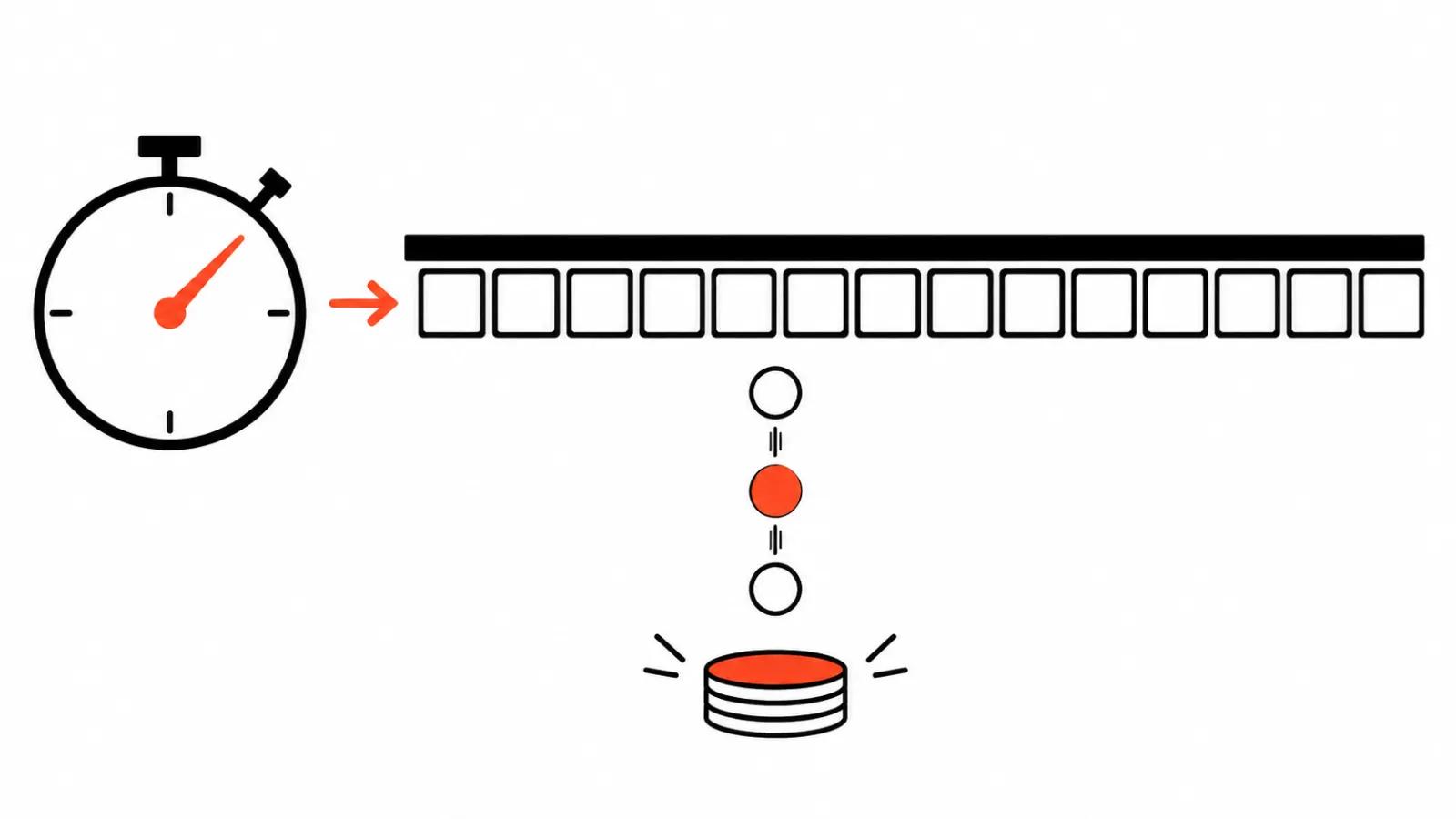
The rate card is easy to read: $0.094 per second of generation without input video. A ten-second clip costs $0.94, a twenty-second clip $1.88.
The full 4.0 costs more. At 720p it charges $0.157 per second, at 1080p $0.235. Flash is 1.7 times cheaper at 720p and 2.5 times cheaper at 1080p.
4K for the full model is announced with no date attached. The only Kling model with 4K today is 3.0, at $0.42 per second.
The Flash numbers come from the OrcaRouter blog on November 4, 2026. The model has no independent public benchmark score yet, so quality talk rests on vendor demos.
The input-video trap at $0.063
The second line of the rate card looks like a discount: with input video a second costs $0.063, a third less. It comes with a condition, and the condition hides in the footnote.
When the input video is no longer than the result, Kling doubles the output duration in billing. A ten-second clip made from a ten-second reference bills as twenty seconds at $0.063, which is $1.26 against $0.94 for plain generation. The discount on the card turns into a 34% surcharge.
The math depends on your clip lengths. A reference longer than the result escapes the doubling: twenty seconds of input and ten seconds of output bill as ten seconds, $0.63, roughly 33% below the plain rate. That saving is real.
So check the reference length before you queue a batch. The discount line on the card describes a narrow case.
A 720p ceiling and a single first frame
Flash outputs 720p and nothing else. Clips run from 3 to 20 seconds, while the full 4.0 reaches 30.
Image-to-video takes one first frame. There is no last frame and no keyframe track, where the full 4.0 accepts up to 10 keyframes. Morphs between two states and precise product reveals therefore stay with the senior model.
Omni accepts up to 15 inputs and mixes images, video and a character reference in one request. Building a scene from several references works well, and the output is still 720p.
Cheap video generator: where Flash pays off
The draft arithmetic. One scene in ten variants of 10 seconds costs $9.40, in variants of 20 seconds $18.80. A minute of generation without input video runs to $5.64.
Volume shows the gap. Thirty clips of 10 seconds on Flash come to $28.20, on the full 4.0 at 720p to $47.10, at 1080p to $70.50. The saving on a trial batch covers the subscription that used to gate access.
That is the lane for Flash: drafts, selection, hypothesis testing. For work at scale, short-form video at scale runs on a different budget, where you count versions and views, and AI video production in that setup moves in batches.
What the rate card leaves out
Kling published no request limits, no concurrency number and no queue policy. In an API those are the first things a pipeline needs: without a concurrency figure the budget is guesswork, and a queue can stretch an overnight run into a full day.
Quality is the second gap. Flash has no independent measurement, and no leaderboard lists it. Comparing it with the full 4.0 on vendor demos is possible, yet the result tells you about marketing.
Hence a working rule: keep a fallback model next to Flash. If the queue stalls, the batch moves elsewhere and the estimate already reflects the seconds.
Our review of Kling 4.0 pricing covers the wider picture, including units and the gap to 3.0.
My take: budgeting with Flash
I use Flash at the front of a job and for volume. Three rules drive the numbers.
First, a second at $0.094 is the price of a test. Until a scene is approved, paying for 1080p or 4K buys nothing, and the money belongs in more variants.
Second, finish on the full 4.0 or another model that shoots 1080p. A client clip in 720p looks soft on any screen today, and rebuilding the scene on the senior model costs the same money twice.
Third, keep the reference longer than the result. That is the only case where the input-video discount puts money back in the budget.
Work with a person on camera follows different arithmetic: handcrafted videos run from $190 per finished clip, the most predictable line in any estimate. High-volume short versions rest on another model, up to $2.40 per 1000 views. A hybrid, with Flash doing drafts and the studio handling the edit and the finish, usually lands in between.