What the Pennsylvania AI ad disclosure law actually says
The Artificial Intelligence Deceptive Advertising Act, AIDAA, was signed on 22 October 2026 and takes effect on 21 December 2026. Enforcement sits with the state attorney general or a district attorney, and the remedies are named in the text: an injunction, a civil penalty and litigation costs.
The title reads narrow, as if it were about false claims in ad copy. The body is about where a frame came from. If an ad contains content created or altered with artificial intelligence, the consumer has to learn that from the material itself. The wording is fixed: the advertisement contains content that was altered or created using artificial intelligence.
Who the requirement covers
The law addresses advertisers who create and distribute such ads, or who commission their creation and distribution. Commissioning appears in the text next to creating, so passing the work to a vendor changes nothing by itself. A brand that outsources AI video production stays inside the law.
That detail matters for agencies and studios. The usual arrangement, where the brand signs off the creative and the vendor answers for the picture, is not split into two safety zones. The party whose ad ran is the party in scope.
What disclosure looks like in practice
The requirement is written around the outcome: disclosure must be clear and conspicuous, so a consumer does not form a false impression about the nature, origin or authenticity of the goods and services. In other words, the test is whether a viewer understood they were looking at altered imagery, and the presence of a label proves nothing on its own.
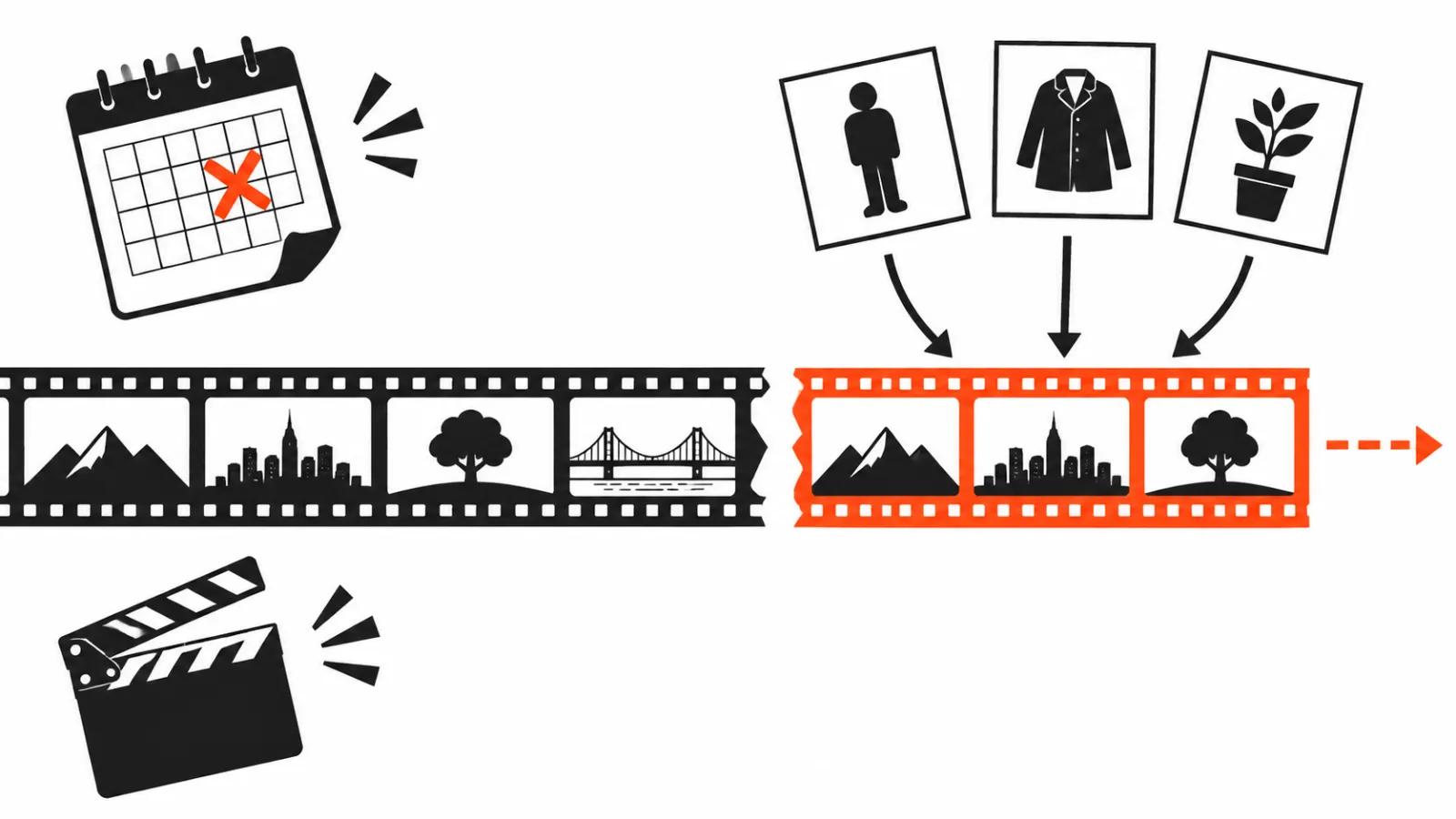
The practical weight sits on the word altered. Take finished footage and swap the product in an actor's hand, remove a stray object from a table, or paint in a background. None of that is generation from scratch, and all of it is AI. All three fall inside the requirement, and all three are routine in advertising videos: clean-up, package replacement, environment extension.
Clear and conspicuous, medium by medium
The law does not leave the judgement to good intentions, and a disclosure cannot contradict the rest of the material. For audio, volume and pace have to let a listener hear and understand it. For visuals, size, tone and time on screen have to let a viewer read and understand it. For print and point-of-sale material, font size, placement and contrast against the background are the measures.
That list is uncomfortable for editing. A caption that flashes past in small type technically exists, and it fails the standard, because nobody can read it. The same goes for a voice disclosure delivered at speed or buried under music. Size, tone and time are named in the text, so the argument about them will be settled with a stopwatch.
How it differs from California and New York
The California and New York laws regulate synthetic performers in advertising. Their question is about a person: a stand-in actor, a digital double, a face that was never on set. Pennsylvania asks about the frame as a whole, including images, video and audio segments that were generated or altered.
That difference reaches ordinary work. A different package on a shelf, a different product colour, a cable removed from a shot, a background assembled in an editor. No stand-in performer appears in any of it. From 21 December the disclosure question arises anyway.
A penalty of up to $3,000 and an injunction
The penalty looks modest: a civil fine of up to $3,000, plus actual litigation costs and expenses. That figure will not sink a campaign on its own.
The injunction beside it, temporary or permanent, is the heavier half. It stops the ad from running. By that point the media plan and placement are paid for, and a halt mid-flight is measured against the whole campaign budget.
The penalty line is the smallest of the losses. The slower effect is reputational: a deceptive advertising proceeding is about consumer trust, and that costs more than any filing fee.
Platform labels and hidden provenance marks
A platform label and this law answer different questions. The label says what the video was made with. AIDAA asks whether a consumer got a false impression about the product. Those questions do not line up, so one label does not satisfy the other.
How AI content labeling rules work across platforms and jurisdictions is covered separately.
The Mayer Brown analysis adds a detail that rarely comes up. Model developers may embed their own disclosures in the file, driven by content provenance laws, and the analysis points to California's AI transparency law as an example of that approach. Those marks are hidden. A technical trace exists in the file, the viewer sees nothing, and AIDAA is written about what the viewer sees.
What to do before 21 December
The analysis lays out a sequence that transfers into production work almost unchanged.
First, an inventory. List every place AI touched advertising: banners, video, audio, digital screens, print, point-of-sale.
Second, disclosure templates per medium. One line for vertical video will not suit an audio spot and a shelf sticker, because the law names different measures for each.
Third, show the disclosure at the first presentation of synthetic content, in the same medium it appears in, and build it in where possible so it survives forwarding.
Fourth, where content is obviously fictional, parody, satire or commentary, document the basis for that conclusion. In doubtful cases the advice is to disclose anyway.
Fifth, require agencies and vendors to disclose AI use in delivered material. Put the disclosure check into creative sign-off and legal review, so it does not rest with an editor on the last evening before delivery.
What it changes for a campaign
Disclosure consumes screen time, and screen time in advertising costs money. The decision therefore belongs in the script stage, next to the duration, and it lands in the budget as its own line. Who writes the line, who voices it, who makes sure it survives into the final master are all worth settling before the shoot.
The second consequence is at delivery. Disclosure is checked the way other mandatory frame elements are checked, and the AI video QA checklist before publish gets one more item. The check covers two things beyond the picture itself: whether a viewer can read the line, and whether a title or logo covers it.
The third is timing. Less than a month remains before 21 December. Campaigns already in production will need pickup work or a rebuild with disclosure, and print and point-of-sale layouts need re-typesetting. Doing that now is cheaper than doing it after the first letter from a prosecutor.