Why the background slides between shots
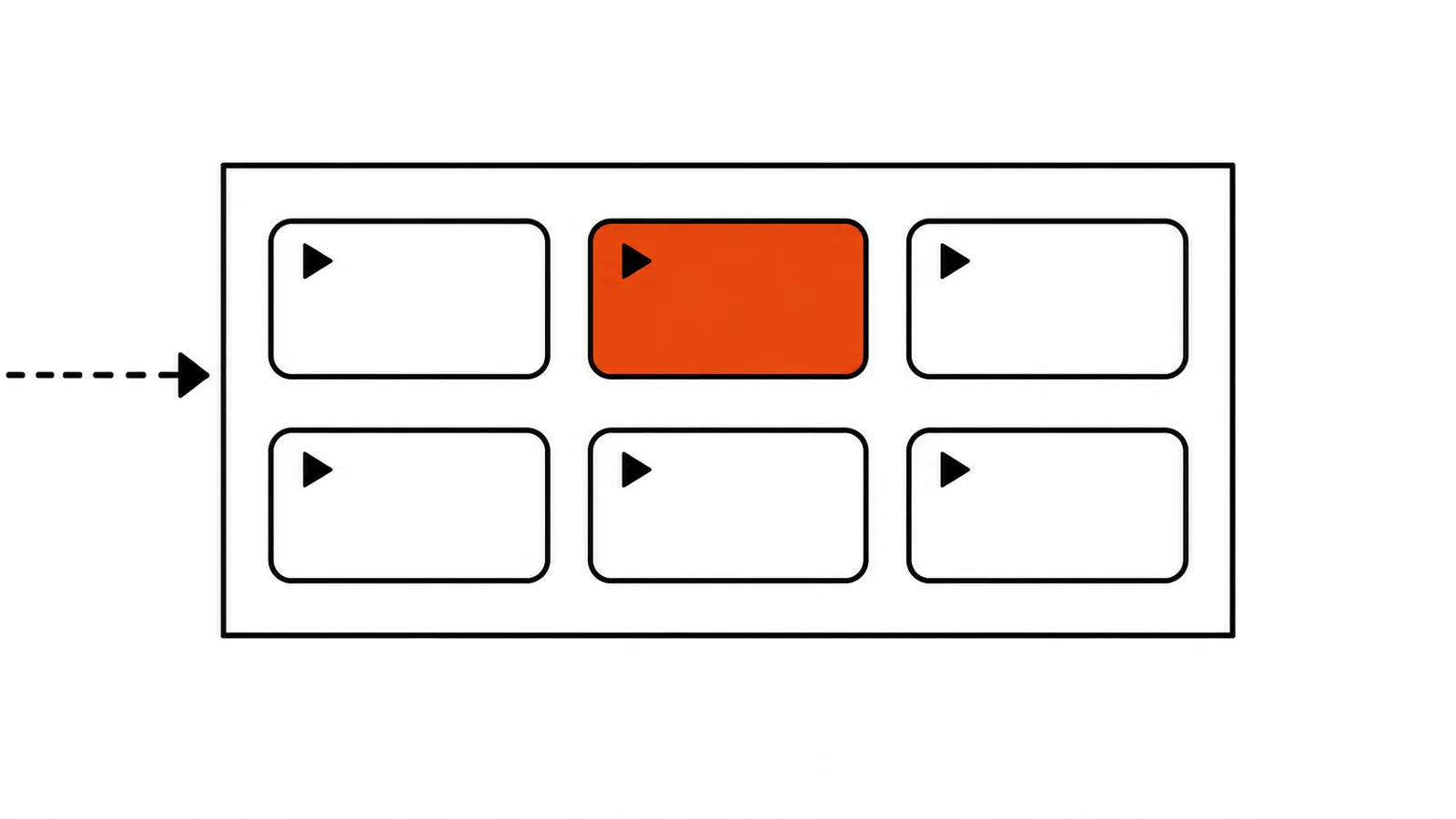
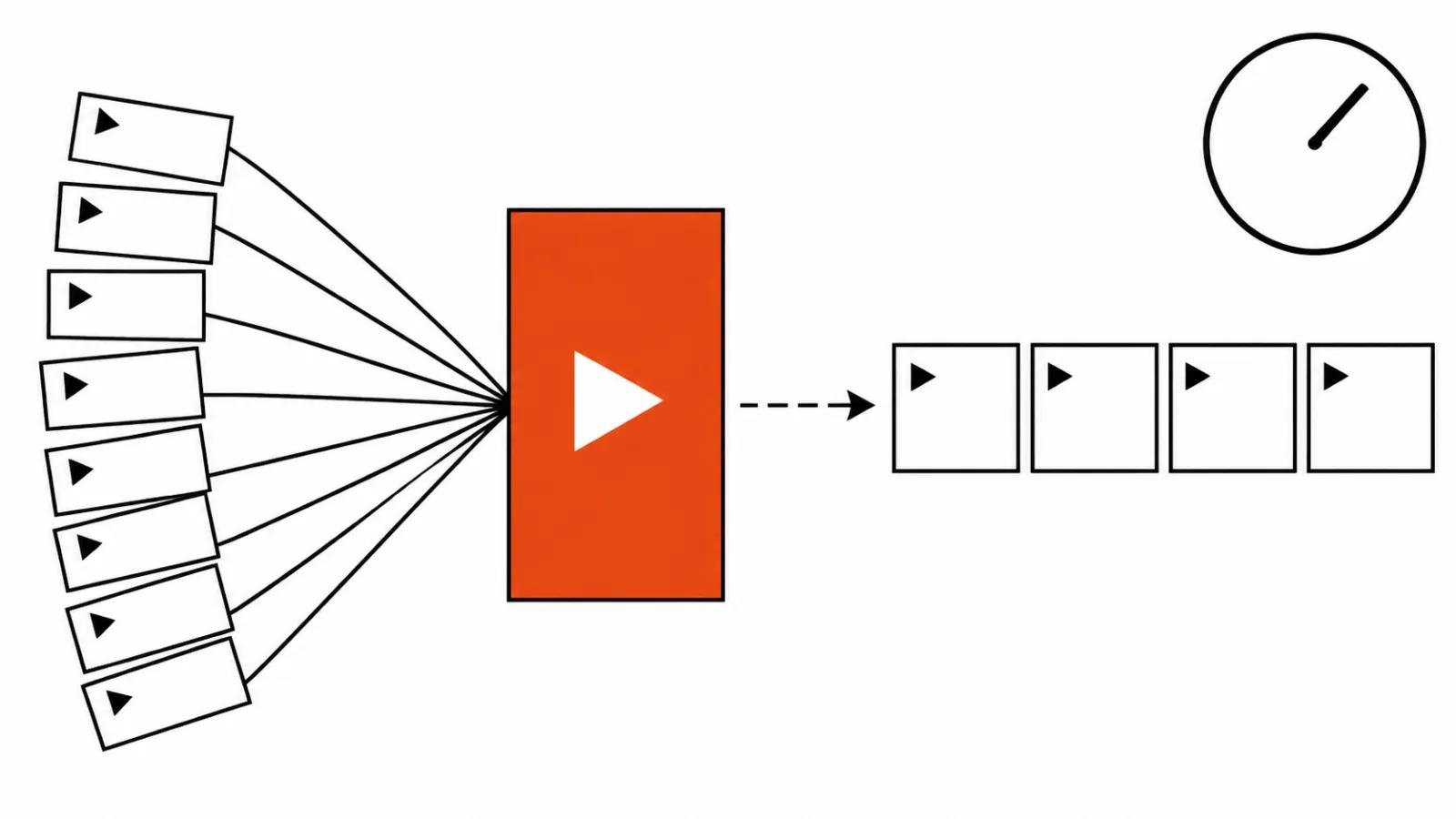
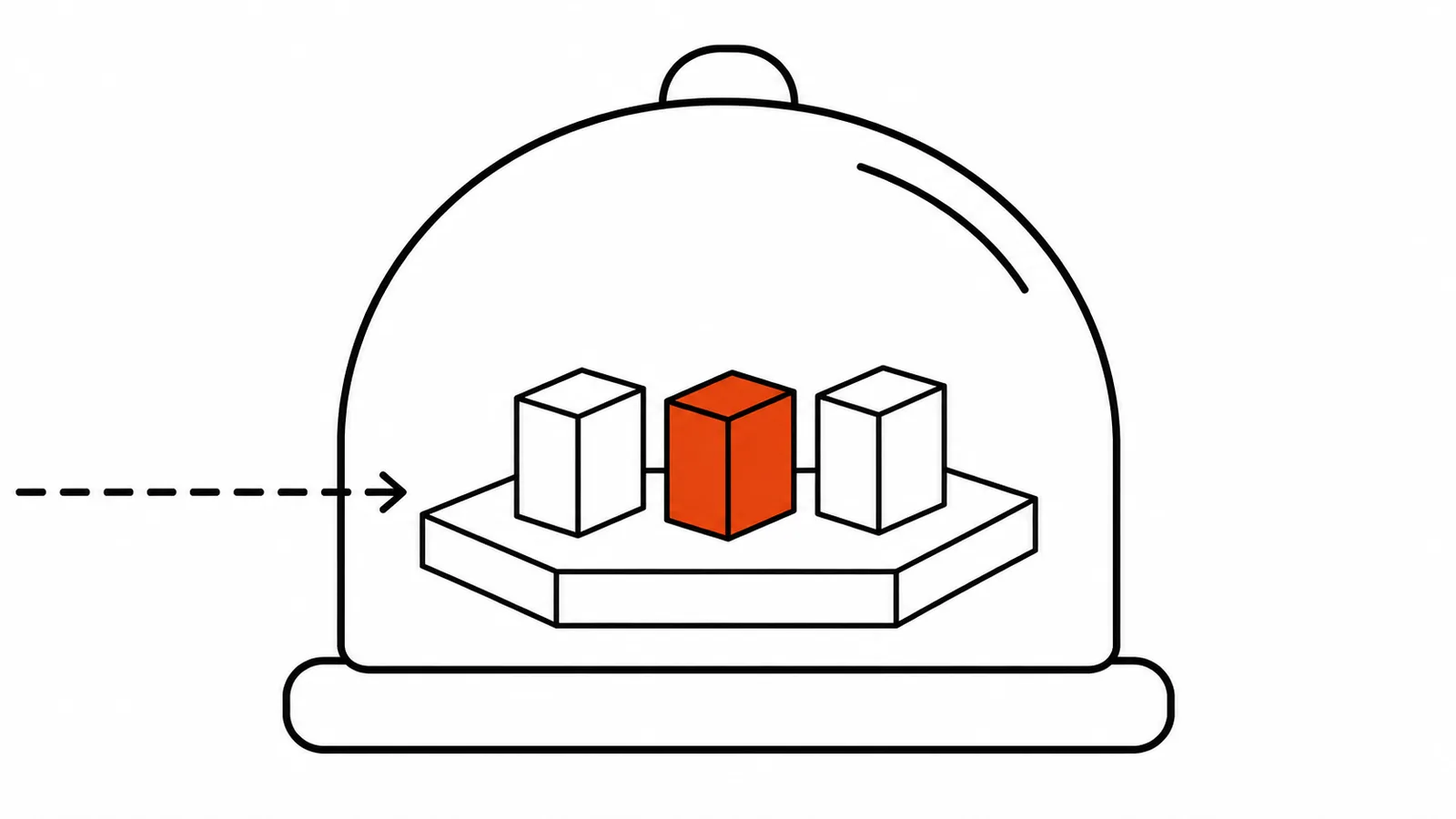
Every shot in generative video starts from nothing. The model gets a prompt and an image, invents a street, places buildings, decides where the light comes from. In the next shot it does the same thing again, and you get a similar city that is not the same city: windows have moved along the facade, the sun has crossed from the left edge to the right, the sidewalk got wider. What follows is what crews call re-rolling, regenerating until the backgrounds roughly match. Each attempt costs money and time, and the match stays approximate.
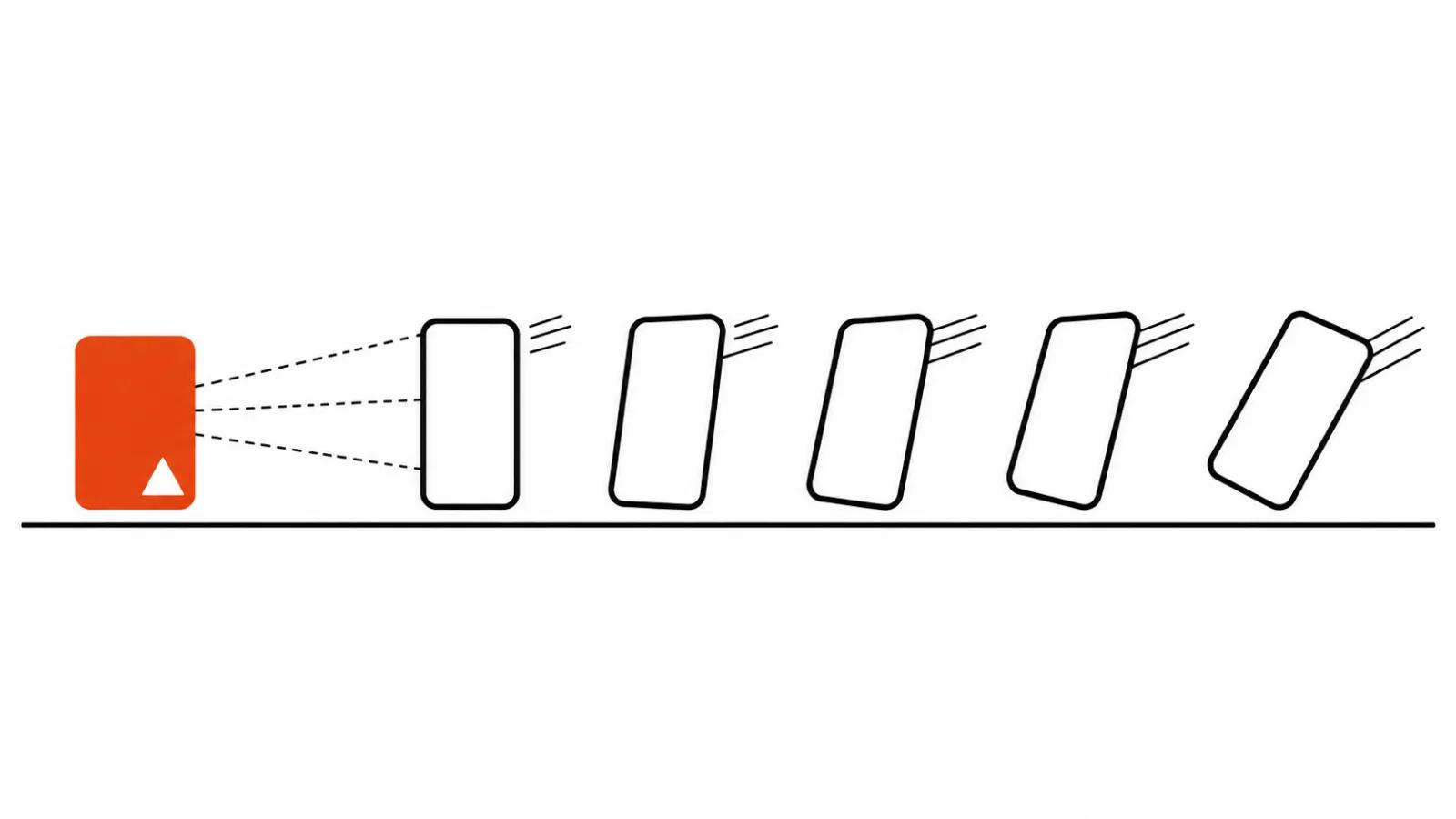
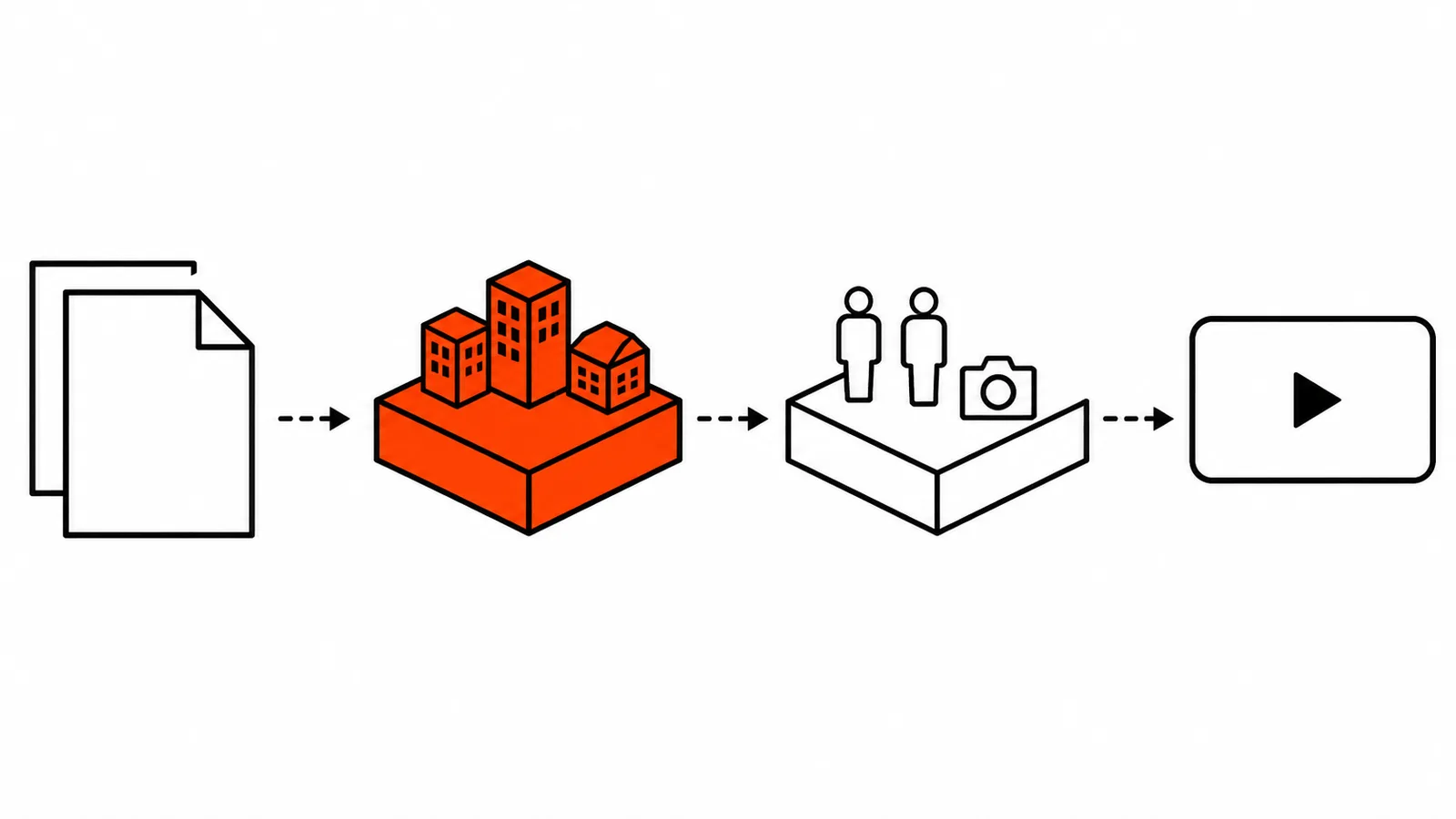
VP Land ran a breakdown of Snowglobe on November 23. The workflow there runs in the opposite direction: an editable 3D set is built first, then actors are blocked inside it, cameras are placed and takes are recorded. Recorded takes go into AI video generation. Because every shot is filmed inside the same world, streets, buildings and light direction hold between setups. That is the company's claim, and it answers exactly the problem described above.
What Snowglobe builds from one line
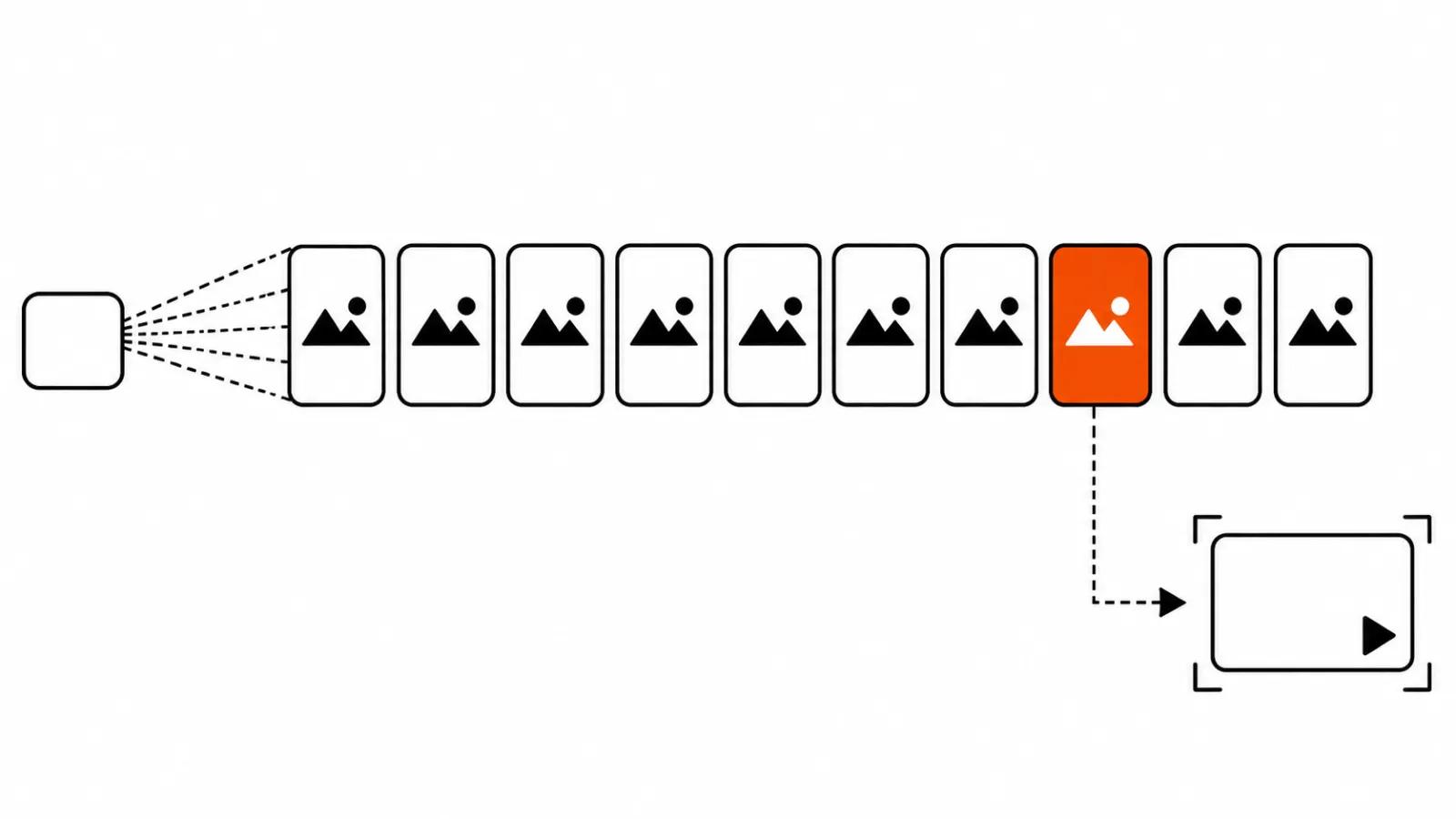
A set comes together from a single line of text or a single image. From there it behaves like an ordinary 3D scene: it gets edited by hand, not just looked at. You can place a camera anywhere, put an actor in frame, record a take and send it to generation.
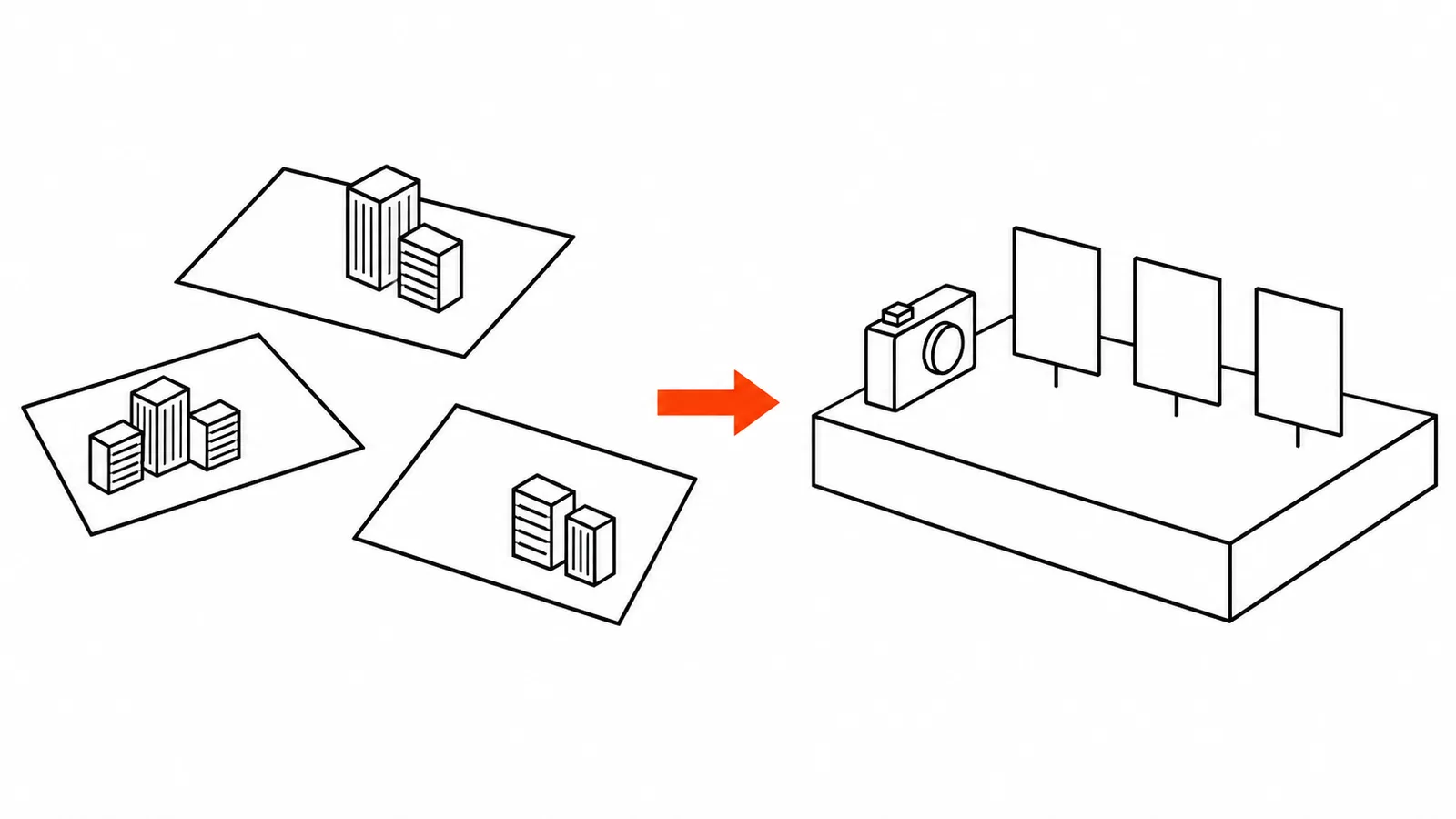
Scout photos work as a base too. The rebuild from image mode reconstructs terrain, layout and the source camera angle from a reference or a scout photo. For advertising that is a convenient way in: find a location on site, shoot it on a phone, then build the set from the picture.
Assets follow a fixed order. Snowglobe checks your own library first, then a built-in library of nearly 500 objects, and models something new only when neither has it. Buildings marked Can go inside open an interior, so a scene cuts from the street into a hallway without changing worlds. For a piece built from several shots that is a real difference: the hero walks through a door and ends up inside the same house, where a separate generation would have handed you a different facade. Structurally the set sits closer to a 3D animation scene than to an image a model paints from a prompt.
Where one world saves money and where it fences you in
The saving is measured in attempts. The same facade, the same light direction and the same geometry stop being a negotiation with the model. Edits go into the set: move the camera, change the sun height, shift a sign.
The fence is obvious too. The whole piece lives inside one world. If the script has the hero leave a house and arrive at an airport a second later, you need a second set, and the seam between worlds gets built in the edit. It is a paid, narrow tool: an ad in one location, a walkthrough of a room, a conversation in a cafe where the character moves from the counter to a table. The more tightly the story is tied to one place, the more you get out of it.
Payment runs on Plot Points. Recorded takes render on Plot Party Canvas, and the charge varies by model, length and resolution. The breakdown carries no rate card, so a price comparison with other engines is premature. Browsing ready-made worlds needs no account, which is a cheap way to see what a set looks like before paying for anything.
How this compares with Gaussian splats
The neighbouring technique solves a similar problem from the other end. Gaussian splats reconstruct a scene from a clip you already shot and give you new angles from it, so footage comes first and the world appears afterwards. Snowglobe builds the world before the shoot, and footage arrives inside finished geometry. The underlying logic is shared: shots need one source of truth about the space. The difference is where that source appears.
Hybrid production solves the same problem differently. On a studio shoot, live footage and generation live in one project, and the background seam is still the problem. It gets solved on set with lighting and a green screen, where here it is solved by a set that exists before the first take.
Where to start if the scene is for an ad
First, answer honestly how many locations the piece has. One location, or one location plus its interior: Snowglobe fits. Three cities, two times of day and a final shot on a roof: you need as many sets as worlds, and as many generations. If the piece is produced as AI video production, the estimate comes down to the number of worlds.
Second, collect references before building. A scout photo, a frame from someone else's ad, a rough floor plan, all of it saves edits. Rebuild from image works from a picture, so take the picture in advance and from the angle you need in frame. In spirit this is closer to animated video work than to prompt generation: the scene has geometry, and an edit changes the geometry itself.
Third, decide who owns camera placement. A recorded take is already a directing decision, and a prompt does not replace it. If the piece runs in a paid campaign, cameras belong to someone who knows what the final cut looks like. When you need the whole thing, script and assembly included, it is simpler to price it as one job with the set than to buy it in pieces. For an AI commercial that shows up clearly: every camera move is already timed to the music.
The practical conclusion is simple. Re-rolling a backdrop is a hidden cost line, rarely counted on its own, and it eats time and budget all the same. A shared 3D set attacks exactly that line. The one-world limit is real, and a second set is sometimes unavoidable. But where the story holds inside one location, the gain shows up before the first generation.